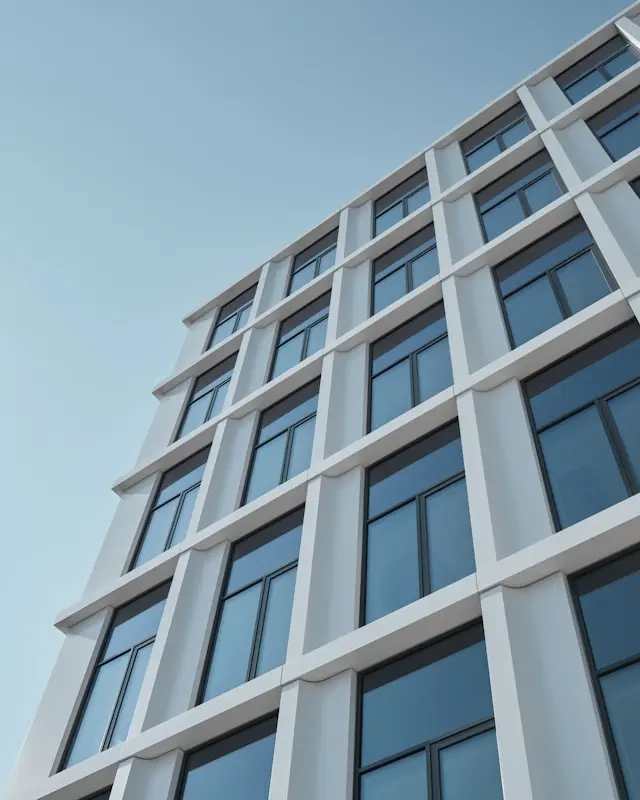
01 · Fenestration Profiles Thermal Break Windows & Doors
High-precision extruded aluminum profiles featuring 24mm to 38mm Polyamide PA66-GF25 thermal insulation strips, achieving passive-house level thermal efficiency.
International procurement managers, facade consultants, and general contractors are increasingly shifting their specification criteria toward Turkish architectural aluminum extrusions to balance high structural performance with aggressive project schedules.
Turkey’s modern aluminum extrusion cluster represents one of the world's most sophisticated manufacturing ecosystems. Operating at the intersection of European metallurgical standards and high-efficiency production logistics, Turkish extruders utilize advanced primary aluminum billets—predominantly EN AW-6063 T6, EN AW-6060 T6, and structural EN AW-6005A T6 alloys—processed through multi-thousand-ton automated extrusion presses equipped with precision air and water quench systems.
When global buyers evaluate Turkish Architectural Aluminum Extrusions against Asian or traditional European alternatives, three core technical parameters drive the decision: dimensional tolerance accuracy adhering strictly to EN 12020-2, seamless integration of high-density Polyamide PA66-GF25 thermal insulation strips, and compliance with stringent international surface treatment certifications including Qualicoat Class 2 / Seaside powder coating and Qualanod anodizing.
Understanding the physical properties, alloy compositions, and structural inertia thresholds of architectural aluminum profile systems sourced from Turkey.
| Alloy & Temper Standard | Yield Strength (Rp0.2) | Tensile Strength (Rm) | Recommended Application | Primary Surface Certification |
|---|---|---|---|---|
| EN AW-6063 T6 | ≥ 170 MPa | ≥ 215 MPa | Architectural Windows, Slim Doors, Louvres, Interior Profiles | Qualicoat Class 1 & 2 / Qualanod 15–25 μm |
| EN AW-6060 T6 | ≥ 150 MPa | ≥ 190 MPa | Complex Geometry Profiles, Decorative Trim, Partition Systems | Qualicoat Powder Coating / Anodized Matte |
| EN AW-6005A T6 | ≥ 200 MPa | ≥ 260 MPa | High-Rise Structural Curtain Wall Transoms, Heavy Louvres, Pergola Beams | Qualicoat Seaside / Industrial Anodizing |
| EN AW-6082 T6 | ≥ 250 MPa | ≥ 290 MPa | Load-Bearing Canopy Framing, Skylight Structural Beams, Solar Substructures | Qualanod Anodized / Protective Clear Seal |
From ultra-slim panoramic sliders to heavy-duty unitized structural glazing envelopes—specified, extruded, surface-finished, and exported directly from Turkey.
01 · Fenestration Profiles High-precision extruded aluminum profiles featuring 24mm to 38mm Polyamide PA66-GF25 thermal insulation strips, achieving passive-house level thermal efficiency.
02 · Envelope Systems Stick and unitized structural silicone glazing mullions engineered to withstand extreme wind loads (≥ 3.0 kPa), integrated with continuous internal water drainage tracks.
03 · Outdoor Architecture Heavy-gauge structural extruded beams and motorized hollow louvre blades designed with internal gutter channels, tested for snow load capacity up to 150 kg/m².
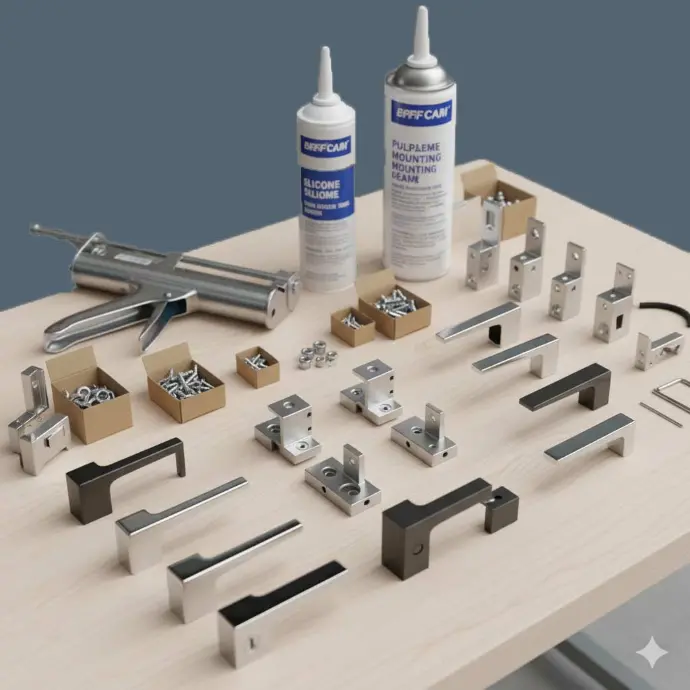
04 · Hardware Systems Custom-fit extruded aluminum corner keys, concealed hinges, multi-point locking gear, and EPDM perimeter gaskets calibrated for exact groove tolerances.
An executive analysis of macro-economic shifts, carbon regulations, and supply chain strategies influencing how global buyers procure extrusions from Turkey.
With the European Union’s Carbon Border Adjustment Mechanism (CBAM) enforcing strict carbon accounting on imported aluminum products, Turkish extrusion mills are leading the transition by utilizing low-carbon primary billets, renewable hydroelectric energy in smelting, and high ratios of clean post-industrial recycled scrap. Buyers procuring from Turkey receive certified Environmental Product Declarations (EPDs) to verify Scope 1 and Scope 2 emission compliance.
Unpredictable maritime freight costs, port congestion, and geopolitical friction have forced developers in Europe, North America, and the Middle East to near-shore their extrusion procurement. Turkey offers an unbeatable geopolitical pivot: short shipping routes (3 to 7 days container transit to main EU ports), truck transport options across Eastern Western Europe, and duty-free customs integration under European Union customs union agreements.
Modern architectural projects demand unique profile geometries to fit bespoke facade elevations. Global buyers are moving away from restrictive standard stock profiles in favor of Turkish extrusion partners capable of rapid matrix/die engineering. Turkish toolmakers manufacture custom extrusion dies within 10 to 14 days, drastically cutting prototype-to-production lead times at fractional tooling costs compared to Western European mills.
How next-generation engineering is elevating the performance, aesthetics, and structural capabilities of Turkish extrusions.
Architectural trends favor floor-to-ceiling glass envelopes with virtually invisible frames. To meet this structural challenge, Turkish extrusion engineers are developing specialized aluminum alloys and profile geometries with reinforced internal ribbing (higher Moment of Inertia, Ix and Iy). This allows face widths as narrow as 18mm to 20mm on sliding interlocking profiles while maintaining wind resistance ratings above 2.4 kPa.
As international energy codes demand tighter envelope U-values, profile manufacturers are expanding beyond basic single polyamide strips. Modern Turkish thermal break extrusions incorporate multi-cavity polyamide bars, low-emissivity thermal insulation foams inserted within profile chambers, and warm-edge glass spacers. These innovations push system U-values down to passive house metrics (Uw ≤ 0.8 W/m²K) without expanding overall frame depth.
Environmental degradation caused by coastal salt air and aggressive UV exposure demands advanced powder coating solutions. Future-focused extruders in Turkey are standardizing Qualicoat Class 2 super-durable fluoropolymer coatings and hyper-anodized finishes (up to 25 microns). These surface treatments guarantee color retention and corrosion resistance for over 25 years in harsh tropical or maritime climates.
Operating under GOMAX Emlak Gayrimenkul Insaat Dis Ticaret Ltd. Şti., ALUCCO is more than a commercial supplier—we are an engineering-driven export institution for architectural aluminum systems in Turkey.
Our senior facade engineers analyze your architectural DWG and PDF schedules before quotation, performing cross-sectional stress calculations, wind load simulations, and thermal bridge modeling to prevent on-site installation failures.
We work directly with Turkey’s premier extrusion presses and systems integrators—including ASAŞ, Saray, Çuhadaroğlu, and Mitacco—matching your technical specification to the most cost-effective and mill-qualified press line rather than pushing stagnant warehouse stock.
Every single extruded profile undergoes dimensional tolerance inspections (EN 12020-2) and film protection coating before placement into ISPM-15 fumigated wooden crates, packaged with internal silica gel protection to prevent oceanic moisture oxidation.
We unite Turkey's top extrusion foundries and premier European hardware manufacturers under a single accountable contract.


Upload your architectural elevations, schedule, and structural load requirements for analysis.
Receive optimized die selection, U-value calculations, and transparent FOB/CIF pricing within 72 hours.
Production supervised by ALUCCO engineers with billet mill test certificates and coating micron checks.
Fumigated wooden crate packaging, elevation-coded tagging, and full customs documentation cleared.
Turkish architectural aluminum extrusions offer a unique equilibrium of European engineering rigor, EN standards compliance, and competitive cost structures. Located within close proximity to major European and MENA trade routes, Turkish extrusion mills operate high-capacity automated presses using prime international-grade aluminum billets (such as EN AW-6063). Lower logistical overhead, zero customs tariffs under EU trade agreements, and flexible lead times make Turkey an ideal strategic sourcing hub for developers seeking premium performance at optimized budget thresholds.
The primary alloy utilized in architectural extrusions is EN AW-6063 T6, which provides an optimal balance of structural strength, superior surface finish for anodizing or powder coating, and intricate section capability. For high-stress structural curtain wall mullions or heavy-duty canopy beams, EN AW-6005A T6 or EN AW-6082 T6 alloys are specified due to their elevated yield strength (≥ 200–250 MPa). All extrusions supplied by ALUCCO conform strictly to EN 573-3 chemical composition and EN 755-2 mechanical property benchmarks.
Thermal break aluminum extrusions separate the interior and exterior aluminum profile chambers using low-conductivity Polyamide PA66-GF25 insulation strips reinforced with 25% glass fiber. This mechanical thermal barrier prevents conductive heat transfer across the frame, eliminating interior surface condensation and drastically reducing building energy consumption. Combined with warm-edge glass spacers and multi-chambered polyamide profiles (ranging from 24mm to 38mm widths), system thermal transmittance (Uw) values reach down to 0.9–1.2 W/m²K under EN ISO 10077-2 testing standards.
ALUCCO operates on a project-based supply framework rather than rigid mill minimums. For standard profile geometries in catalog systems, consolidated project loads (e.g., one 20ft or 40ft container containing windows, curtain walls, and accessories) represent the most cost-efficient procurement baseline. For custom die extrusion designs, die manufacturing takes approximately 10–14 working days, followed by sample approval and full mill run extrusion within 2–3 weeks. Mixed container loads are routinely accommodated.
We offer full Qualicoat Class 1, Class 2 (Super Durable Powder), and Qualicoat Seaside certified polyester and fluoropolymer powder coatings in all RAL and NCS color codes with a minimum coating thickness of 60 to 80 microns. For harsh marine or coastal locations, Qualanod certified anodizing (Class 15 to 25 microns in natural matte, bronze, or black tones) provides robust oxide protection against atmospheric corrosion and salt air pitting.
Every extrusion batch undergoes automated optical scanner and micrometer checks in compliance with EN 12020-2 precision tolerances (covering wall thickness, straightness, twist, and profile contour accuracy). Profiles are backed by Mill Test Certificates (EN 10204 3.1), packed with protective film, and loaded into fumigated ISPM-15 wooden crates engineered specifically to endure sea freight vibration and multi-stage site handling.
Send us your project elevations and BIM drawings today. Our engineering team will analyze your schedule and deliver a comprehensive technical proposal with certified performance data.