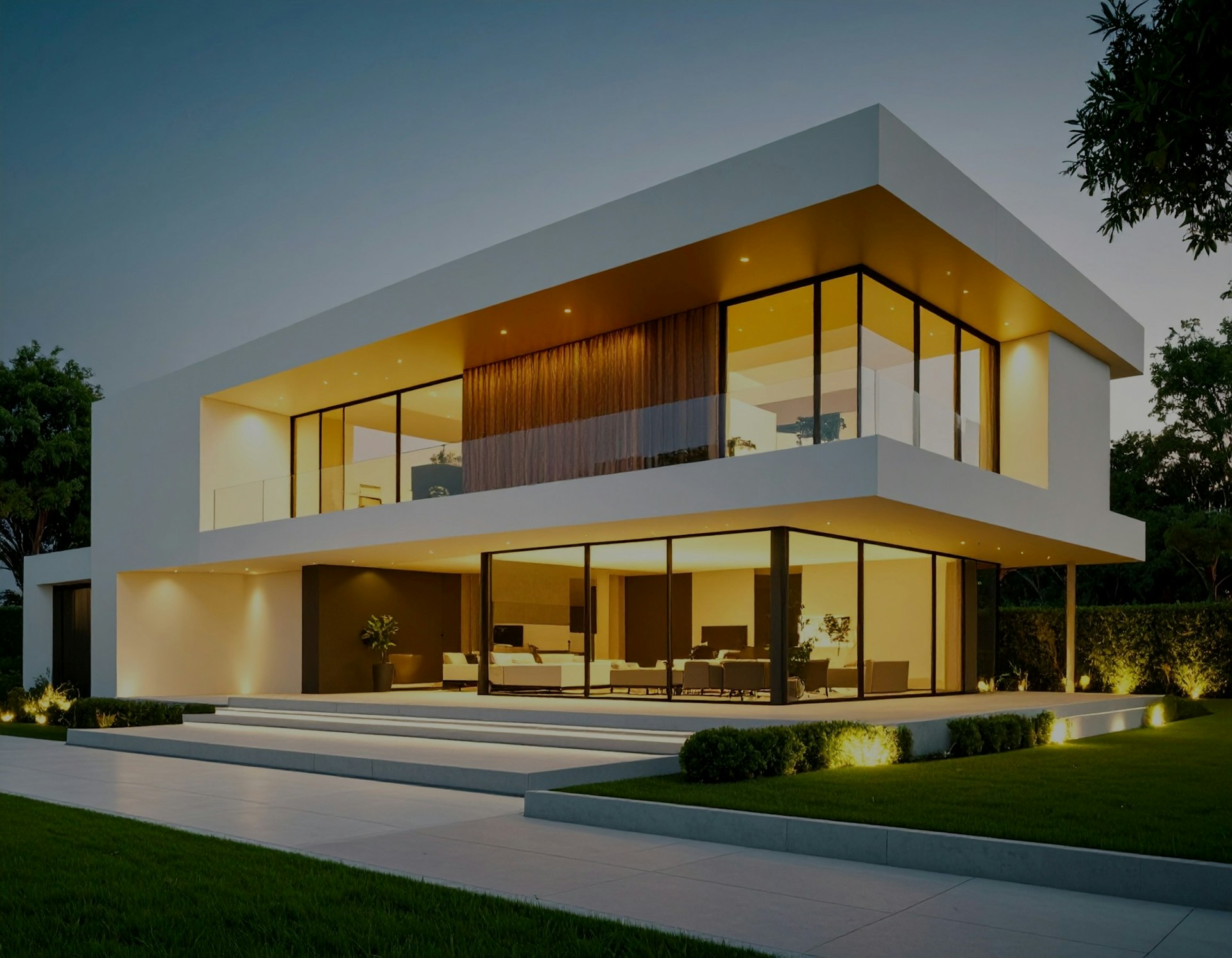
01 · Fenestration Thermal Break Casement & Tilt-Turn Windows
Engineered for maximum airtightness and structural stability. Features multi-point peripheral locking, concealed European hinges, and custom PA66 polyamide insulation strips.
Aluminum is celebrated in modern architecture for its exceptional strength-to-weight ratio, structural rigidity, corrosion resistance, and sleek aesthetic. However, raw aluminum exhibits a high thermal conductivity ($k \approx 160-200 \text{ W/m·K}$), creating an unimpeded bridge for heat flow.
To overcome this physical constraint, high-performance Thermal Break Aluminum Windows utilize a precision-engineered structural insulator inserted between the interior and exterior aluminum profile extrusions. ALUCCO integrates mechanically crimped Polyamide 66 reinforced with 25% glass fiber (PA66 GF25). With a thermal conductivity of merely $k \approx 0.30 \text{ W/m·K}$, this polyamide thermal barrier reduces overall profile heat transfer by over 500%, physically severing thermal bridging and dramatically optimizing the overall window U-value ($U_w$).
Compare profile depths, insulation strip geometry, airtightness rating, and thermal transmittance values to specify the ideal system for your regional energy codes and structural wind loads.
| System Series | Frame Depth | Thermal Strip Width | Thermal Transmittance (Uw) | Air / Water / Wind Certification | Optimal Architectural Application |
|---|---|---|---|---|---|
| ALU-TB60 Eco System | 60 mm | 20 – 24 mm PA66 | Uw 1.6 – 1.9 W/m²K | Class 4 / 9A / C4 (EN 1026/1027/12211) | Standard residential apartments, commercial offices, mild climate zones. |
| ALU-TB75 Prime High-Performance | 75 mm | 34 mm PA66 + Foam | Uw 1.1 – 1.4 W/m²K | Class 4 / E1050 / C5 (EN 1026/1027/12211) | Luxury villas, high-rise residential towers, extreme coastal weather regions. |
| ALU-TB95 Passive Thermal Master | 95 mm | 42 mm PA66 Aerogel | Uw 0.78 – 0.95 W/m²K | Class 4 / E1200 / C5 (Passive House Standard) | Cold climate regions (Northern Europe, Canada, North US) & Net-Zero builds. |
| ALU-SLIM120 Minimal Lift & Slide | 120 mm Track | 24 – 30 mm PA66 | Uw 1.3 – 1.6 W/m²K | Class 3 / 8A / C3 (Heavy-Duty Roller System) | Large panoramic patio openings, high-end hospitality suites, seaside resorts. |
| ALU-CW60 Integrated Thermal Curtain Wall | 60 mm Sightline | 28 – 38 mm Isolator | Ucw 1.2 – 1.7 W/m²K | AE 1300 / RE 1500 / 3.0 kPa Structural Load | Commercial building facades, shopping malls, institutional towers. |
Precision-crafted in Turkey to international engineering benchmarks. Select a product line to request custom elevations, shop drawings, and B2B pricing.
01 · Fenestration Engineered for maximum airtightness and structural stability. Features multi-point peripheral locking, concealed European hinges, and custom PA66 polyamide insulation strips.
02 · Panoramic Doors Combines ultra-slim 20mm interlocking vertical sightlines with concealed bottom tracks and heavy-duty stainless steel rollers capable of carrying 400kg glass panels seamlessly.
03 · Facade Envelope Structural pressure-equalized facade systems engineered for wind pressures up to 3.0 kPa. Fully integrated drainage channels and pressure plates ensure absolute weatherproofing.
04 · Outdoor Living Motorized adjustable louvre systems integrated with vertical thermal guillotine glass units, creating all-weather outdoor environments for luxury villas and commercial venues.
How changing energy legislation, material innovation, and manufacturing technologies are reshaping the architectural aluminum fenestration sector worldwide.
Global building standards like the European Union’s EPBD directive and North American IECC codes are mandating strict carbon emissions targets. As wall insulation improves, fenestration becomes the primary focus for thermal leakage. Demand is rapidly shifting from standard non-thermal aluminum to multi-chamber 75mm+ thermal break systems with warm-edge glass spacers and argon gas filling to meet mandatory target U-values below 1.2 W/m²K.
Architectural design demands maximal natural daylighting and unhindered spatial transitions. Modern product development focuses on concealing frame profiles into structural wall cavities while utilizing high-tensile 6060-T66 aluminum alloys. This allows 3.5-meter-high sliding sash panels to operate effortless under heavy glass loads without sacrificing thermal isolation values.
With the implementation of Europe's Carbon Border Adjustment Mechanism (CBAM), importers are scrutinizing the embodied carbon footprint of raw aluminum extrusions. Factory production is transitioning to hydro-powered primary aluminum ingots and post-consumer recycled aluminum, dropping embodied carbon from 18 kg CO₂/kg Al down to under 4.0 kg CO₂/kg Al.
Thermal Break Aluminum Windows are increasingly combined with dynamic electrochromic glazing (smart glass) and Building-Integrated Photovoltaics (BIPV). Internal profile hollows are precision-machined during extrusion to accommodate concealed wiring, motorized micro-actuators, and sensors connected directly to central Building Management Systems (BMS).
Super-durable Qualicoat Class 2 & 3 architectural powder coatings are replacing traditional finishes. Advanced fluoropolymer (PVDF) chemistry and high-precision woodgrain sublimation offer lifetime UV stability, anti-graffiti performance, and coastal salt-spray resistance exceeding 3,000 hours of continuous exposure.
To reduce expensive site labor costs and eliminate weather delay risks, commercial architecture is rapidly adopting off-site unitized curtain wall fabrication. Entire wall panels—complete with thermal break profiles, structural silicone glazing, and spandrel insulation—are fully assembled and quality checked inside factory walls prior to shipping.
How international developers, architects, and trade importers are modernizing their window supply chain management.
Global procurement in fenestration has evolved far beyond standard off-the-shelf buying. Today's commercial developments demand absolute customization, rapid engineering validation, and direct factory accountability to safeguard project timelines and profit margins.
Under the legal entity GOMAX Emlak Gayrimenkul Insaat Dis Ticaret Ltd. Sti., ALUCCO combines master engineering expertise, factory-floor quality supervision, and direct export delivery.
Our supplied profile systems undergo rigorous physical laboratory testing per European Norms: EN 1026 for air permeability, EN 1027 for watertightness under heavy rain, and EN 12211 for wind load resistance. Official certified test dossiers are supplied for every major project.
All aluminum profile surface treatments strictly follow international Qualicoat (powder coating min. 60 µm) and Qualanod (anodizing min. 15–25 µm) standards. We guarantee zero surface peeling, fading, or micro-cracking even in harsh desert or salt-laden marine environments.
We solve cross-border supply complexities by offering consolidated mixed-container loads. Windows, slim sliding doors, curtain wall extrusions, bioclimatic pergolas, and matching hardware accessories are securely packed and loaded into a single coordinated shipment.
Every window assembly is corner-protected, film-wrapped, and loaded into fumigated ISPM-15 wooden crates featuring internal wood framing and desiccant packs. Crate labels match elevation shop drawings directly for efficient site un-crating.
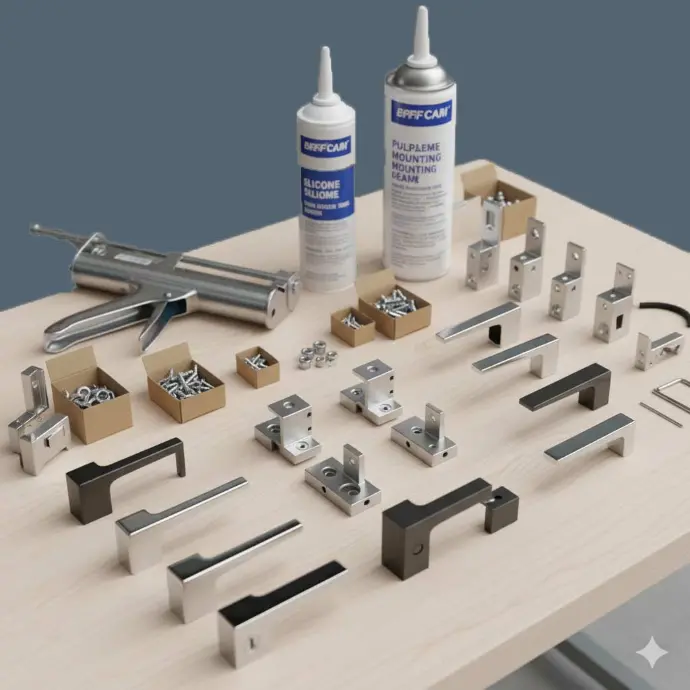
ALUCCO integrates top-tier European hardware brands including STAC, Roto, Siegenia, and Giesse. Every handle, multi-point lock mechanism, concealed hinge, and friction stay is cycle-tested up to 50,000 operations for total peace of mind.
From initial CAD drawing audits to production supervision, custom extrusion dies, coating certification, and bill-of-lading issuance—ALUCCO serves as your single accountable technical partner in Turkey.


In-depth technical and logistical answers addressing search queries from international architects, developers, facade contractors, and trade importers.
Thermal break aluminum windows introduce a structural insulating barrier between the inner and outer extrusions of an aluminum frame. Raw architectural aluminum is an efficient thermal conductor ($k \approx 160-200 \text{ W/m·K}$). Without a thermal break, energy rapidly escapes in winter and heat penetrates in summer, leading to massive HVAC loads and interior condensation.
ALUCCO utilizes structural Polyamide 66 reinforced with 25% glass fiber (PA66 GF25). PA66 GF25 has a low thermal conductivity of just $0.30 \text{ W/m·K}$. Crucially, the 25% fiberglass reinforcement matches the linear thermal expansion coefficient ($\alpha$) of aluminum. This ensures that when the window experiences extreme seasonal temperature fluctuations (e.g., from -20°C to +40°C), both materials expand and contract at identical rates, preventing internal stress, strip shearing, or perimeter seal failure.
Overall thermal transmittance ($U_w$) is calculated via the European standard EN ISO 10077-1 formula:
Uw = [ (Af * Uf) + (Ag * Ug) + (Lg * Ψg) ] / (Af + Ag)
To reach ultra-low values down to 0.9 W/m²K (Passive House standard), ALUCCO combines four technical engineering layers:
Global developers and trade importers are actively diversifying their supply chains toward Turkey due to key competitive advantages:
To prepare an accurate technical dossier, system structural check, and Bill of Quantities (BoQ), our engineering team requires:
Within 72 hours of receiving your drawings, ALUCCO returns a detailed proposal including CAD profile cross-sections, structural calculations, U-value estimations, and itemized B2B pricing.
International sea transport subjects freight to severe physical vibration, humidity shifts, and ocean container movement. ALUCCO enforces an export packaging protocol:
Every commercial shipment from ALUCCO is accompanied by an authoritative quality dossier containing:
Yes. Because Thermal Break Aluminum Windows are fabricated from two separate inner and outer aluminum extrusions joined by a polyamide thermal strip, they offer complete dual-color surface customization.
For example, your project can feature a dark architectural powder coating (such as RAL 7016 Anthracite Grey or matte black) on the exterior facade to match building exterior aesthetics, while using a clean matte white (RAL 9016) or warm woodgrain sublimation finish on the interior frame to harmonize with interior architectural finishes. Both powder coating (Qualicoat Class 2/3) and anodizing finishes are available.
ALUCCO works on a flexible, project-driven basis tailored to global commercial buyers:
From initial elevation review to container un-crating at your job site, ALUCCO guarantees quality and precision at every stage.
Send your DWG/PDF elevation drawings, window schedule, and climate targets for initial engineering review.
We deliver CAD cross-sections, structural calculations, U-value validation, and a detailed Bill of Quantities (BoQ) within 72 hours.
Aluminum profile extrusion, polyamide crimping, Qualicoat coating, and assembly proceed under strict QA checks.
Finished units are securely packed into ISPM-15 wooden crates, loaded into containers, and shipped with complete CE technical dossiers.
In-depth technical analysis written by ALUCCO facade engineers to help you make informed fenestration decisions.

Discover why upgrading from a 24mm to a 34mm PA66 polyamide thermal break can lower your window U-value by over 25%.

Evaluating crane rental costs, site installation labor, and wind-load performance for commercial high-rise towers.
.webp)
Key parameters for specifying motorized louvre span limits, internal column drainage capacity, and anchor embedment depth.

How corner buffers, desiccant placement, and ISPM-15 wooden crates ensure 100% defect-free arrivals at job sites.
Upload your architectural drawings or window schedule. Our engineering team will analyze your elevations and provide a comprehensive system recommendation, U-value calculation, and commercial proposal.