Direct factory supply of certified thermal-break aluminum profiles, high-altitude solar-control glazing, and heavy-duty hardware systems engineered for high solar radiation and extreme diurnal temperature swings in Addis Ababa and across East Africa.
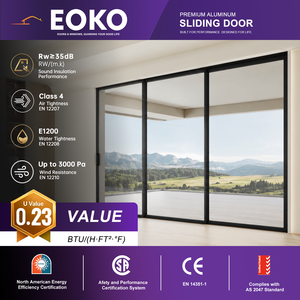
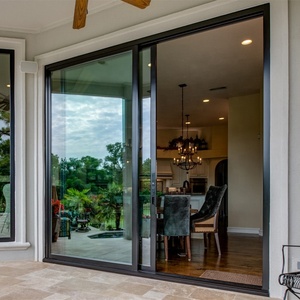
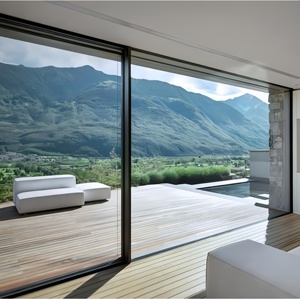
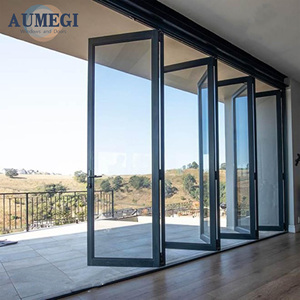
Ethiopia’s construction landscape is undergoing an unprecedented architectural metamorphosis. Centered around Addis Ababa’s urban renewal initiatives, the commercial corridor along Bole Road, the expanding financial district in Kazanchis, and luxury residential developments in Bishoftu and Entoto, modern infrastructure demands advanced building envelope engineering. The architectural envelope is no longer a passive barrier; it is a complex, high-performance thermal engine that directly governs a building's energy efficiency, occupant comfort, acoustic isolation, and structural longevity.
Developing structural facade systems in East Africa presents a unique set of microclimatic challenges. Addis Ababa sits at an elevation of approximately 2,350 meters above sea level. At this altitude, solar radiation intensity is significantly higher than at sea level, presenting elevated levels of Ultraviolet (UV-A and UV-B) radiation. Furthermore, the Horn of Africa experiences pronounced diurnal temperature fluctuations—often swinging by up to 20°C within a 12-hour cycle—alongside torrential rainy seasons during the Kiremt period. Standard uninsulated aluminum profiles or raw uncertified PVC frames rapidly exhibit thermal bridging, frame warping, seal degradation, and color fading under these rigorous environmental stresses.
Consequently, property developers, main contractors, and structural engineering consultants in Ethiopia are moving away from commodity glass traders toward engineered building envelope manufacturers capable of delivering certified thermal-break aluminum windows, structural silicone unitized curtain walls, minimal-frame sliding systems, and ventilated aluminum composite panel (ACP) cladding systems that comply with European Norms (EN) and international building standards.
When specifying fenestration and structural envelope systems for high-rise commercial towers or luxury villa developments in Ethiopia, architectural specifications must address four critical engineering vectors:
High elevation solar radiation mandates low Solar Heat Gain Coefficients (SHGC ≤ 0.28) paired with spectrally selective Low-E double or triple glazing to prevent interior greenhouse overheating without sacrificing daylighting visual transmittance (VLT).
Frame profiles must incorporate polyamide 6.6 with 25% glass fiber reinforcement (PA66 GF25) thermal breaks (24mm to 34mm width) to accommodate differential movement between interior and exterior aluminum extrusions without structural shear failure.
Rapid urban density along major transportation arteries requires heavy acoustic damping (Rw ≥ 42 dB). High performance EPDM continuous gasket systems tested to EN 1027 ensure complete watertightness under torrential driving rains.
To assist developers, architects, and procurement heads in vetting reliable facade suppliers, the following analysis evaluates the top 10 manufacturers providing architectural aluminum systems, curtain walls, and premium fenestration solutions to Ethiopia. Rankings are established based on technical compliance (CE/EN testing), manufacturing capacity, engineering export expertise, and logistical support via the Djibouti shipping corridor.
Headquarters: Turkey | Global Operations: Worldwide Export & Project Engineering
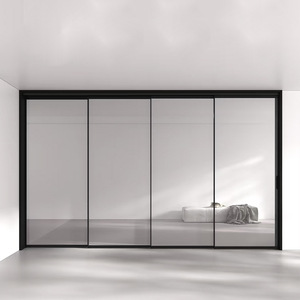
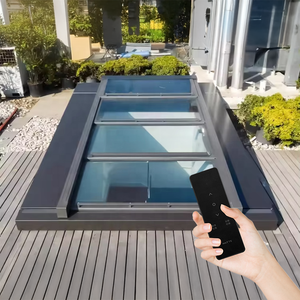
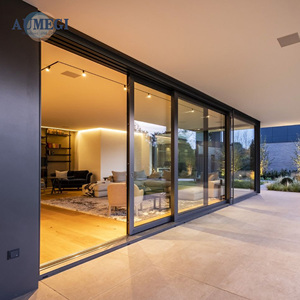
Core Competencies: Thermal Break Aluminum Windows, Slim Minimalist Sliding Doors, Unitized Curtain Walls, Bioclimatic Pergolas & Architectural Hardware Systems.
Overview: ALUCCO operates as a project-driven architectural aluminum manufacturer and engineering partner rather than a passive catalog trader. Operating from Turkey’s advanced aluminum extrusion cluster, ALUCCO specializes in taking architectural DWG elevations and structural wind load data to engineer custom fenestration dossiers tailored for African microclimates. Every profile system supplied by ALUCCO utilizes CE-marked 6063-T6 aluminum alloys, Qualicoat-certified powder coating (minimum 60 µm thickness for UV protection), and factory-crimped polyamide thermal breaks. For Ethiopian developments, ALUCCO provides complete consolidated container shipping with ISPM-15 fumigated wooden crating, elevation-coded tagging for rapid site assembly, and comprehensive EN 1026 (air permeability), EN 1027 (watertightness), and EN 12211 (wind resistance) test certifications.
Headquarters: Belgium | Focus: Ultra-Luxury Architectural Systems
Overview: Reynaers is a European leader in high-end aluminum solutions. Known for systems like the MasterLine 8 window series and Hi-Finity minimal sliding doors, Reynaers supplies high-end commercial headquarters and luxury residential projects in Addis Ababa. While offering exceptional engineering, lead times and premium price points require long-term project planning.
Headquarters: Germany | Focus: High-Performance Fenestration & Smart Facades
Overview: Schüco sets global benchmarks for building envelope technology, offering curtain wall systems, integrated solar shading, and burglar-resistant security fenestration. German-engineered systems are specified for embassy buildings and international institutional projects across East Africa, though local fabrication requires highly certified regional partner networks.
Headquarters: France / Norway | Focus: Sustainable Low-Carbon Aluminum Envelope Systems
Overview: Part of the Norsk Hydro group, Technal focuses on low-carbon recycled aluminum profiles (Hydro CIRCAL). Their curtain wall and sliding door series cater to environmentally conscious commercial developments seeking LEED or EDGE building certifications in Ethiopia.
Headquarters: Turkey | Focus: Aluminum Composite Panels & Architectural Extrusions
Overview: Saray is a major supplier of architectural aluminum extrusions and aluminum composite cladding panels (SARAYbond) across East Africa. Their fire-rated A2 mineral-core composite panels are widely specified for high-rise commercial exterior refits in Addis Ababa due to their competitive price-to-quality ratio.
Headquarters: Turkey | Focus: Industrial Extrusions & Facade Systems
Overview: Asas operates one of Europe's largest integrated aluminum extrusion facilities. Supplying both raw aluminum profiles and engineered facade systems (Rescara series), Asas provides substantial volume capability for large-scale housing projects and industrial park envelope construction in Ethiopia.
Headquarters: Turkey | Focus: High-Rise Curtain Walls & Security Glazing
Overview: Specializing in complex stick and unitized curtain wall facades, Cuhadaroglu has an extensive track record in commercial tower engineering across the Middle East and Africa. Their INTERAX brand covers sliding and door hardware designed for heavy daily foot traffic.
Headquarters: Germany | Focus: Aluminum-Wood Hybrid Systems & Structural Glazing
Overview: Gutmann offers specialized architectural systems tailored for high thermal performance and premium aesthetics. Their hybrid aluminum-wood window systems are chosen for exclusive boutique residential projects and executive retreats in Entoto and Bishoftu.
Headquarters: Greece | Focus: Comprehensive Architectural Windows & Doors
Overview: Alumil is an established international supplier with extensive distribution across Africa. Offering wide product lines ranging from thermal sliding doors to bioclimatic pergolas, Alumil provides versatile architectural system options suitable for warm and highland climates.
Headquarters: Ethiopia | Focus: Local Fabrication & Standard Profiles
Overview: Comprising regional extrusion mills and local Addis Ababa fabricators, this network serves domestic commercial retail and standard housing developments. While local assembly offers rapid turnaround for basic non-thermal profiles, high-rise projects requiring certified structural U-values and wind-load performance rely on international engineering suppliers like ALUCCO.
To enable objective specification evaluation, the following data table compares key performance parameters across primary system suppliers serving the Ethiopian architectural sector:
| Manufacturer / Brand | Origin | Thermal Value (Uw) | Max Wind Load (kPa) | Qualicoat Coating | Djibouti Transit Lead Time |
|---|---|---|---|---|---|
| ALUCCO (GOMAX) | Turkey | 0.9 – 1.6 W/m²K | ≥ 2.4 kPa (Class C5) | Qualicoat Class 2 (Min 60µm) | 3 – 4 Weeks (Consolidated) |
| Reynaers Aluminium | Belgium | 0.8 – 1.5 W/m²K | ≥ 2.0 kPa | Qualicoat Seaside | 6 – 8 Weeks |
| Schüco International | Germany | 0.7 – 1.4 W/m²K | ≥ 2.5 kPa | Certified ISO 12944 | 7 – 9 Weeks |
| Saray Aluminium | Turkey | 1.4 – 2.0 W/m²K | ≥ 1.8 kPa | Qualicoat Standard | 3 – 4 Weeks |
| Asaş / Rescara | Turkey | 1.2 – 1.8 W/m²K | ≥ 2.0 kPa | Qualicoat Standard | 3 – 5 Weeks |
| Local Fabricators | Ethiopia | 2.8 – 3.5 W/m²K (Uninsulated) | ≤ 1.2 kPa | Mill Finish / Standard Powder | 1 – 2 Weeks (Standard Stock) |
A frequent error in East African window specification is utilizing uninsulated aluminum profiles under the assumption that non-tropical highland zones like Addis Ababa do not require thermal insulation. This overlooks the physical mechanics of solar radiation conductance and diurnal building physics.
Aluminum possesses an extremely high natural thermal conductivity ($k \approx 200 \text{ W/m·K}$). When exposed to intense high-altitude sunlight in Addis Ababa, raw aluminum extrusions absorb intense heat energy during daytime hours, transferring radiant thermal loads directly into air-conditioned interior spaces. Conversely, during cool highland nights (where temperatures drop rapidly to 8°C–10°C), uninsulated frames allow rapid internal heat escaping, creating high HVAC heating and cooling cycles.
ALUCCO’s thermal-break system solves this issue by mechanically crimping structural polyamide (PA66 GF25) insulation strips between inner and outer extruded aluminum profiles. Polyamide has a thermal conductivity of just $0.25 \text{ W/m·K}$—800 times lower than solid aluminum. This structural thermal barrier drops whole-window frame U-values ($U_f$) from an inefficient $5.8 \text{ W/m²K}$ down to $1.3 \text{ W/m²K}$, reducing structural thermal transfer, preventing interior air-condensation, and protecting structural wall finishes from mold and moisture staining.
Navigating cross-border logistics is a vital factor for successful construction delivery in Ethiopia. As a landlocked country, foreign building material imports enter primarily through the Port of Djibouti before moving via container truck transport along the Djibouti-Addis Ababa freight corridor.
Standard glass and aluminum shipments often suffer high damage rates due to sea-salt air corrosion, rough container handling, and unpaved site transit. ALUCCO mitigates shipping risks through a comprehensive export packaging protocol:
All pre-glazed fenestration frames and curtain wall units are secured inside custom-built, heat-treated, fumigated wooden crates with internal steel-strapped bracing to prevent movement during sea and overland transit.
Profiles receive PE protective film masking (resistant to UV glue residue for 6 months), corners are shielded with shock-absorbing foam block caps, and sealed crate cavities contain industrial silica desiccants to absorb marine humidity.
Every crate and window frame carries explicit elevation codes (e.g., Tower A - Floor 08 - Window W-04) matching project architectural schedules, allowing local installation teams to unpack directly at the designated floor level without site confusion.
Submit your architectural elevations, DWG schedules, or BOQ for a comprehensive engineering review, U-value calculations, and competitive factory-direct pricing within 72 hours.
Get Catalog