Certified thermal efficiency, air tightness, and structural wind resistance tailored for Nordic architectural projects.
Procuring architectural windows and glass doors for the Swedish building market requires navigating some of northern Europe’s most stringent energy performance regulations. As Sweden accelerates its transition toward zero-emission architecture and net-zero energy buildings under the Boverket Building Regulations (BBR 29), importing double and triple glazed window systems demands meticulous technical scrutiny. Standard double glazing specifications suitable for central Europe frequently fail when subjected to Sweden’s severe winter isotherms, coastal salt winds along the Baltic, and freezing sub-zero temperatures spanning Kiruna to Skåne.
As a leading international manufacturer and direct-factory exporter of architectural aluminum and thermal break window systems, our production framework integrates deep polyamide thermal isolation, argon-filled low-emissivity glass matrices, and Swiss warm-edge spacer technology. We bridge the gap between high-precision Turkish extrusion manufacturing and strict Nordic site requirements, delivering bespoke structural glazing that satisfies both commercial developers and luxury residential architects in Stockholm, Gothenburg, Malmö, and Uppsala.
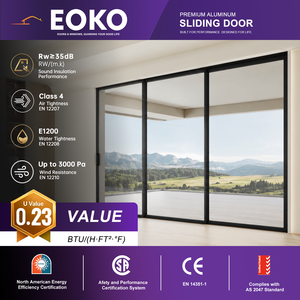
In Sweden, window performance is evaluated based on the total thermal transmittance of the entire window assembly (Uw-value), combining glass (Ug), frame (Uf), and linear thermal bridging along the spacer bar (Ψg). Under current BBR guidelines, new residential constructions typically mandate an overall envelope U-value threshold where windows must reach Uw ≤ 1.0 to 1.2 W/m²K, with high-efficiency Passivhaus developments requiring extreme isolation down to Uw ≤ 0.8 W/m²K.
To prevent condensation at the glass perimeter during harsh Swedish winters (where exterior temperatures easily drop below -20°C), our double and triple glazed units incorporate Low-E hard or soft coatings applied to glass surfaces #2 and #5, coupled with 90%+ pure Argon gas filling. Furthermore, standard aluminum spacers are replaced with advanced structural composite warm-edge spacers (such as Technoform or Swisswarm), drastically reducing cold bridging along the interior glass border.
Custom-engineered fenestration solutions matched to specific microclimates, structural wind loads, and architectural typologies.
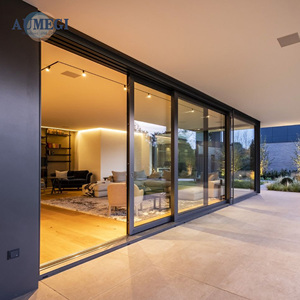
High wind loads and salt-spray corrosion require heavy-duty thermal break aluminum lift-and-slide doors equipped with Qualicoat Class 2 or Class 3 marine-grade anodized surface treatments. Multi-point locking mechanism prevents air leakage during autumn Baltic gales.
Key Spec: EN 12211 Wind Resistance Class C5Dense urban environments demand superior acoustic mitigation alongside thermal efficiency. Acoustic laminated double glazed units achieve Rw + Ctr values up to 42 dB, filtering street noise while maintaining low solar heat gain (g-value ≈ 0.35-0.45) for summer comfort.
Key Spec: Acoustic Isolation Rw ≥ 42dBIn regions like Norrbotten and Kiruna, prolonged freeze cycles necessitate extra-deep polyamide thermal breaks (up to 34mm-39mm) filled with expandable insulation foam cores. Triple glazed configurations with dual Low-E layers provide warmth retention down to -35°C.
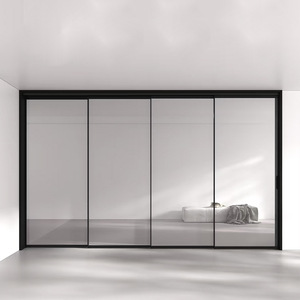
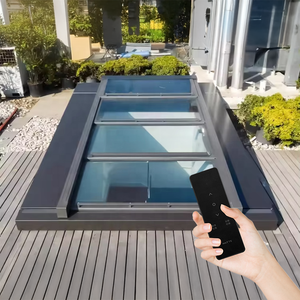
Key Spec: Extreme Thermal Uw ≤ 0.78 W/m²KRetractable double glazed electric roof hatches and minimal-frame hidden sliding doors provide contemporary architectural upgrades for 1970s Swedish housing stock (Miljonprogrammet renovations), dramatically enhancing natural daylighting.
Key Spec: Integrated Electric Retractable SystemsWhile double glazing remains popular for internal partitions and mild weather zones, the Swedish market has overwhelmingly adopted triple-pane glass (e.g., 4mm Low-E + 16Ar + 4mm Float + 16Ar + 4mm Low-E) for exterior building envelopes to comply with strict climate tax credits and energy declarations.
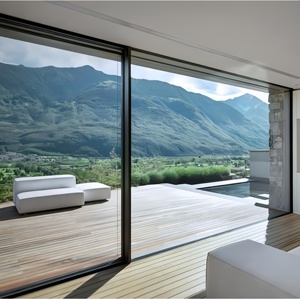
Architects in Stockholm and Gothenburg increasingly request ultra-slim interlock profiles (20mm-25mm visible sightline) on large sliding glass patio doors, requiring structural glass bonding techniques to withstand severe coastal wind suction pressures.
Swedish developers require Environmental Product Declarations (EPDs) detailing the embodied carbon footprint of extrusions. Our aluminum profiles utilize recycled billets and green energy powered extrusion lines to support BREEAM-SE and Miljöbyggnad certifications.
Preserving traditional Swedish exterior aesthetics (e.g., Falu red or Anthracite grey RAL 7016) while keeping interiors light and Scandinavian (pure white RAL 9016) is achieved through our dual-extrusion polyamide assembly lines.
Direct technical data for architectural specifiers, general contractors, and B2B procurement managers.
| Glazing System Type | Profile Material & Depth | Thermal Transmittance (Uw) | Air / Water / Wind Class | Acoustic Rating (Rw) | Swedish BBR Suitability |
|---|---|---|---|---|---|
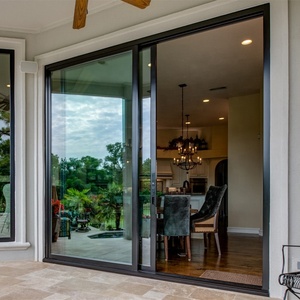
| EOKO Lift-and-Slide Patio Door | Thermal Break Aluminum (110mm) | 0.85 – 1.1 W/m²K | Class 4 / E750 / C4 | 38 - 42 dB | Luxury Villas / High-Wind Coast |
| ROTO Hardware UPVC Sliding Door | Multi-Chamber UPVC (76mm) | 1.1 – 1.3 W/m²K | Class 4 / 9A / C3 | 35 - 40 dB | Multi-family Suburban Housing |
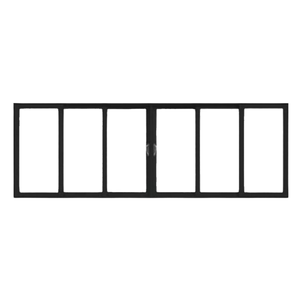
| Minimalist Hidden Frame Sliding Door | Slim Polymer-Aluminum (140mm) | 1.0 – 1.4 W/m²K | Class 3 / 7A / C3 | 36 - 41 dB | Modern Architectural Residences |
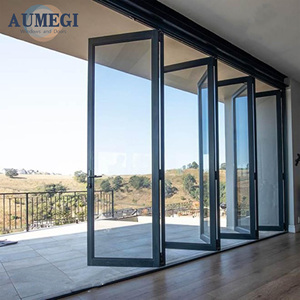
| Heavy-Duty Aluminum Bi-Fold Door | Thermal Break Aluminum (75mm) | 1.2 – 1.5 W/m²K | Class 4 / 9A / C4 | 34 - 38 dB | Patio & Terrace Extensions |
| Electric Retractable Roof Hatch | Reinforced Aluminum (90mm) | 1.1 – 1.3 W/m²K | Class 4 / E900 / C5 | 37 - 42 dB | Stair Access & Atrium Roofs |
ALUCCO (GOMAX Ltd. & Co.) stands as a premier manufacturing powerhouse originating from Turkey’s top-tier industrial extrusion cluster, supplying certified window, door, and curtain wall hardware across Europe, the Middle East, and the Americas. By controlling the entire chain from aluminum extrusion, polyamide thermal break insertion, CNC milling, and double/triple glazing unit assembly to ISPM-15 export crating, we offer Swedish procurement directors direct factory pricing without broker markups.
Our dedicated structural engineers analyze your DWG architectural drawings, perform localized wind pressure calculations according to Swedish Eurocode standards, and return fully engineered elevation shop drawings within 72 hours.
All profile series and complete assemblies undergo third-party laboratory verification strictly following EN 1026 (Air Permeability), EN 1027 (Watertightness), and EN 12211 (Wind Load Resistance), providing full CE dossiers for Swedish site inspections.
We arrange consolidated FCL container shipments or custom A-frame crating directly to the ports of Gothenburg, Stockholm, or Helsingborg, including export customs declaration, EUR.1 movement certificates, and door-to-site delivery options.
Addressing essential technical, logistical, and compliance questions regarding double and triple glazed imports.
Yes. Our windows and sliding doors can be custom-configured with polyamide thermal breaks up to 34mm and triple-pane Low-E glass combinations (with argon gas and warm-edge spacers) to achieve overall window values of Uw ≤ 0.8 to 1.1 W/m²K, easily meeting or exceeding current Boverket Building Regulations (BBR 29) requirements for new residential and commercial builds in Sweden.
Interior surface condensation occurs when thermal bridging brings the inner glass pane below the dew point. We eliminate this issue by utilizing warm-edge composite spacer bars (such as Swiss warm-edge spacers with thermal conductivity λ ≤ 0.13 W/mK) alongside multi-chambered polyamide breaks, ensuring the inner glass perimeter remains warm even during severe winter cold spells.
We partner exclusively with world-class European hardware manufacturers, including German-made ROTO Frank and Spanish STAC hardware systems. This guarantees smooth operation for heavy glass sashes up to 400kg, durable multi-point locking for burglar resistance (RC2 / RC3 standards), and long-term corrosion resistance against humid coastal conditions.
Production lead time generally takes 3 to 4 weeks upon CAD sign-off. Sea freight shipping to major Swedish ports (Gothenburg, Stockholm, Helsingborg) takes approximately 12 to 16 days. Thanks to the Customs Union agreement between Turkey and the EU, goods accompanied by an EUR.1 certificate enter Sweden duty-free, with standard import VAT clearance handled smoothly by local freight forwarders.
Absolutely. We offer complete Qualicoat-certified architectural powder coating in all standard RAL colors (e.g., popular Scandinavian tones like RAL 7016 Anthracite Grey, RAL 9005 Jet Black, and RAL 9016 Traffic White). Dual-color frames (e.g., dark exterior with white interior) and high-durability wood-sublimation finishes are also produced in-house.
Every unit undergoes strict factory quality control before being loaded into fumigated ISPM-15 compliant heavy-duty wooden crates. Glass units are isolated with protective rubber corner blocks, shrink-wrapped, and braced with internal steel-reinforced framing to ensure zero breakage during ocean transit and local site handling.
Submit your project window schedules, DWG elevations, or performance requirements. Our engineering department will return a detailed bill of quantities, U-value calculation dossier, and direct factory pricing within 48 hours.
