Explore our export-grade automatic, lifting sliding, bi-folding, and thermal break aluminum door assemblies built to international standards.
The architectural landscape of Mexico City (CDMX) and its surrounding metropolitan zone (Zona Metropolitana del Valle de México) is undergoing a rapid modern transformation. From high-density commercial towers in Paseo de la Reforma and Santa Fe to luxury residential compounds in Lomas de Chapultepec, San Ángel, and Polanco, demand for high-performance automatic pedestrian doors, sliding glass wall systems, and energy-efficient entrances has surged by over 34% year-over-year. Developers and general contractors in Mexico increasingly turn to top-tier Chinese original equipment manufacturers (OEMs) and advanced fabrication plants to source custom automatic doors that combine European engineering tolerances with competitive mill-direct pricing.
However, procuring architectural aluminum and automated entrance systems internationally presents unique technical challenges. Mexico City sits at an elevation of 2,240 meters above sea level, characterized by high ultraviolet (UV) radiation, severe solar heat gain, distinct dry-wet seasonal fluctuations, and high seismic activity classified under Seismic Zone III (Zona Sismica III). Standard off-the-shelf automatic doors imported without structural customization frequently fail due to frame deflection, motor overheating, track misalignments caused by structural settling, or seal degradation under intense solar exposure.
This technical white paper serves as an authoritative procurement guide for Mexican architects, developers, structural engineers, and commercial importers seeking reliable, high-gain automatic door manufacturing partners in China capable of delivering certified, site-specific door systems tailored for Mexico City.
SEO & Industry Intent Insight: Modern automatic door sourcing is no longer about comparing price per unit. High-gain procurement requires evaluating polyamide thermal break widths, motor cycle durability (MTBF > 2,000,000 cycles), seismic drift movement joint integration, and compliance with Mexican NOM standards (NOM-001-SCFI & NOM-024-SCFI).
When specifying automatic sliding, folding, or telescopic glass door assemblies manufactured in China for deployment in Mexico City, engineering teams must evaluate five critical performance parameters to guarantee structural longevity and operational reliability:
CDMX Seismic Zone III requires automatic door sub-frames to incorporate flexible perimeter expansion joints capable of absorbing inter-story drift without binding the overhead drive track or cracking tempered glass panels.
Due to CDMX’s high elevation, double or triple glazed panels must utilize Low-E coatings (e.g., Sunguard or Solarban series) with Argon gas filling to lower Solar Heat Gain Coefficients (SHGC < 0.28) and prevent interior thermal buildup.
Automated operator headers must operate on 120V / 60Hz AC electrical feeds native to Mexico. Brushless DC motors paired with heavy-duty gearboxes ensure quiet operation, low thermal dissipation, and battery backup fail-safe modes.
Extruded 6063-T6 aluminum profiles engineered with Technoform 24mm to 34mm PA66 nylon thermal barrier strips effectively isolate exterior heat from interior air-conditioned spaces, significantly reducing HVAC loads.
Urban density along arterial avenues like Insurgentes Sur or Periférico demands sound attenuation ratings up to STC 42dB, achieved using acoustic laminated glass configurations (e.g., 6mm + 1.52pvb + 6mm).
Aluminum frame profiles undergo automated chromate-free pre-treatment followed by Qualicoat Class 2 fluoropolymer or PVDF powder coating (min 60µm thickness), resisting fading, chalking, and urban pollution oxidation.
To assist procurement managers in selecting the ideal entrance framework, the table below provides technical data performance benchmarks based on EN standards and verified laboratory testing from leading Chinese manufacturing plants:
| System Classification | Profile Depth & Alloy | Thermal Performance (Uw) | EN Air / Water / Wind Rating | Max Leaf Weight & Drive System | Recommended CDMX Application |
|---|---|---|---|---|---|
| Heavy-Duty Commercial Automatic Sliding | 120mm / 6063-T6 (2.0mm wall) | Uw 1.4 - 1.8 W/m²K | Class 4 / 9A / C4 (2500 Pa) | 2 x 180kg / Brushless DC 100W Motor | Retail Malls (Plaza Carso), Office Lobbies |
| Ultra-Slim Minimalist Sliding Wall | 150mm Frame / 20mm Interlock | Uw 1.1 - 1.4 W/m²K | Class 3 / 7A / C3 (1800 Pa) | 1 x 400kg / Concealed Automated Belt | Luxury Villas (Lomas de Chapultepec) |
| Triple-Glazed Lift & Slide Patio Door | 160mm / Polyamide PA66 34mm | Uw 0.9 - 1.2 W/m²K | Class 4 / E750 / C5 (3000 Pa) | 1 x 350kg / ROTO Heavy Duty Gearbox | High-Elevation Residential Penthouses |
| Motorized Vertical Folding / Roof Hatch | 90mm / Reinforced Steel Inserts | Uw 1.3 - 1.6 W/m²K | Class 4 / 9A / C3 (1600 Pa) | 150kg / Dual Linear Actuator IP65 | Rooftop Bars (Condesa / Roma Norte) |
| Acoustic Interior Glass Partition Door | 50mm Non-Thermal Aluminum Frame | N/A (Interior STC 40dB) | N/A (Interior Air Draft Seal) | 1 x 120kg / Soft-Close Magnetic Track | Corporate Offices (Santa Fe Business District) |
Automatic door installations must align with the specific urban, environmental, and functional dynamics of CDMX’s key commercial and residential hubs:
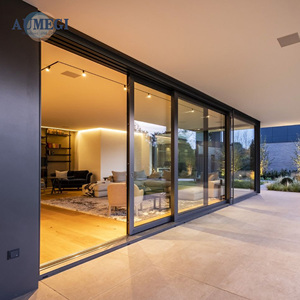
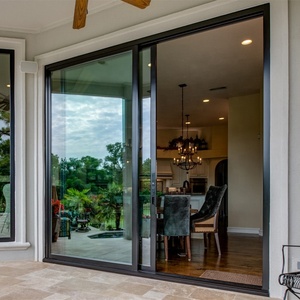
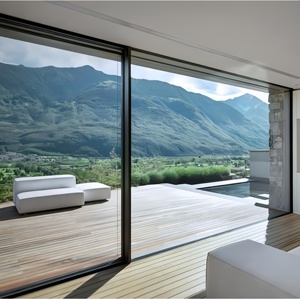
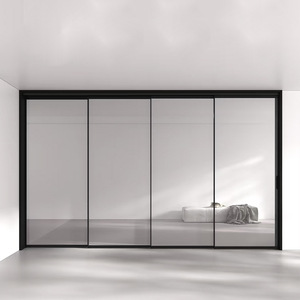
In high-end residential architecture, seamless indoor-outdoor transitions are paramount. Large-span minimal frame sliding glass doors—featuring ultra-slim 20mm vertical sightlines and motorized linear drives—allow homeowners to open massive living rooms directly onto garden terraces. Integrated floor tracks sit flush with interior marble flooring, utilizing hidden drainage slots to route rainwater away during intense Mexico City summer storms (temporada de lluvias).
Commercial entrances require high-frequency continuous duty cycles. Heavy-duty dual-slide automatic glass doors outfitted with micro-radar movement sensors, infrared safety light curtains, and electromagnetic locks provide secure, hands-free access for thousands of daily office workers. Energy-efficient Low-E double glazing ensures compliance with corporate sustainability targets (LEED certification) by minimizing solar heat transfer into atrium lobbies.
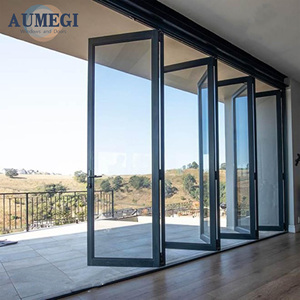
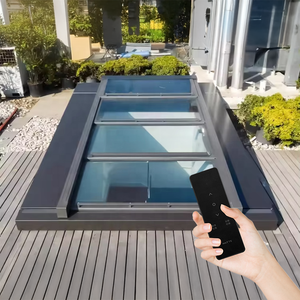
Boutique hotels and trendy rooftop restaurants frequently incorporate motorized retractable glass roof skylights and vertical bi-folding door assemblies. These automated systems allow venue operators to instantly convert enclosed dining areas into open-air terraces based on real-time weather changes, maximizing guest comfort and revenue potential.
In the industrial corridors surrounding Greater Mexico City, automatic high-speed roll-up doors and heavy-duty automated aluminum pedestrian access points are deployed in distribution hubs. Designed for high wind resistance and continuous operational speed, these doors preserve internal temperature controls for cold-storage and pharmaceutical warehousing.
China leads global production capacity for architectural aluminum extrusions, advanced CNC processing, and automated hardware assembly. Partnering directly with tier-1 Chinese manufacturers grants Mexican developers and distributors distinct strategic advantages:
Navigating international supply chains requires strict adherence to Mexican import regulations and international freight logistics. A streamlined procurement process follows four key stages:
The client provides CAD elevation drawings (DWG/PDF) and window/door schedules. Chinese engineering teams verify structural wind loads, structural opening clearances, glass thickness requirements, and structural frame anchoring points before returning detailed shop drawings and bill of quantities (BOQ) within 72 hours.
Upon CAD sign-off, extrusion profiles are cut on precision double-head CNC saws, assembled with thermal breaks, powder-coated to the target RAL color code, and fitted with EPDM gaskets. Pre-shipment operational checks ensure automatic motors, sensors, and remote controls function flawlessly.
Glazed units and frame structures are packed into custom wooden crates labeled with elevation identification tags. Consolidated full container loads (FCL - 20GP/40HQ) ship from primary Chinese ports (Shenzhen, Ningbo, Shanghai) to major Mexican entry ports—primarily Manzanillo (Colima) or Veracruz (Veracruz)—with average ocean transit times of 20 to 25 days.
Shipments must comply with Mexican import standards, including NOM-001-SCFI (for electrical safety of motorized door drives) and NOM-024-SCFI (commercial packaging labeling). Working with an experienced Mexican customs broker (Agente Aduanal) ensures swift customs clearance at the port before final inland flatbed truck transport to construction sites across Mexico City.
Our export automatic door operators are custom-configured at the factory with wide-voltage power supplies supporting 110V - 120V AC at 60Hz, perfectly matching the municipal power grid in Mexico City without requiring external voltage transformers.
Our motorized door assemblies utilize CE and UL certified electrical drive units, brushless motors, and sensors that satisfy the technical safety mandates of NOM-001-SCFI. Complete technical data sheets, wiring diagrams, and test declarations are supplied to assist your customs broker during clearance.
We work on a flexible project basis rather than strict unit counts. A consolidated container load combining automatic sliding doors, minimal patio doors, skylights, and architectural hardware for a villa or commercial floor is the most cost-effective starting point.
All double and triple-glazed glass panels are packed in reinforced, fully enclosed A-frame ISPM-15 fumigated wooden crates with internal rubber padding, corner protectors, and desiccant packs to prevent moisture condensation and shifting during ocean transport.
Yes. We provide complete 3D installation shop drawings, step-by-step assembly manuals, anchor layout schematics, and video tutorials. Additionally, our engineering team offers real-time remote technical assistance via video call throughout the installation phase.
Connect directly with our senior architectural engineering team today. Send your elevation drawings or project schedules for a rapid 72-hour technical review and competitive factory quote.
Inquire Now