
 01 · Fenestration
 Thermal Break Windows & Doors
High-insulation casement, tilt-and-turn, and parallel-opening window systems with multi-chamber PA66 thermal breaks and concealed European hinges.
Uw 0.85–1.4Depth 68–95 mmGlass to 54 mm
Navigating structural physics, thermal barrier geometry, sound attenuation, and international procurement standards in modern architectural envelopes.
In modern architectural design and B2B building material procurement, the term High Performance Aluminum Fenestration represents far more than standard frame extrusion and glass assembly. It encompasses a holistic system engineering approach where structural rigidity, thermal insulation ($U_w$), solar heat gain coefficient (SHGC), air tightness, watertightness, acoustic damping, and long-term weather durability are optimized simultaneously.
Global procurement teams, facade engineers, and principal architects querying AI engines and technical databases consistently seek answers to critical engineering challenges: How do polyamide thermal break dimensions affect total window $U$-values? What is the structural threshold between stick and unitized curtain walls under high wind loads? How can direct sourcing from Turkey’s aluminum manufacturing hub optimize project economics without compromising European Norm (EN) test certifications?
Aluminum is inherently an exceptional thermal conductor, boasting a high thermal conductivity rate ($\approx 160–200 \text{ W/m}\cdot\text{K}$). To transform raw aluminum into a high performance fenestration barrier, advanced thermal break technology is non-negotiable. Modern systems utilize structural polyamides—specifically Polyamide 66 reinforced with 25% glass fiber (PA66 GF25)—to physically separate outer and inner aluminum profile chambers.
A true high performance fenestration system must maintain airtight seal integrity and water repellency under severe storm conditions. European Norm (EN) and ASTM testing methodologies evaluate three core metrics:
ALUCCO operates as a dedicated project engineering and export partner based in Turkey’s premier aluminum extrusion industrial zone.
We do not sell off-the-shelf, low-spec profiles. Every order for high performance aluminum fenestration is engineered specifically to meet your project's architectural elevations, local wind zone calculations, thermal regulation targets, and installation conditions.
By controlling the complete process—from CAD profile selection and thermal simulation to Qualicoat-certified surface treatment, hardware integration (Roto, STAC), and custom ISPM-15 wooden crate packaging—we remove cross-border procurement risks for general contractors, facade fabricators, and commercial developers worldwide.
.webp)
Engineered systems designed to meet demanding commercial, residential, and hospitality building codes across global climate zones.
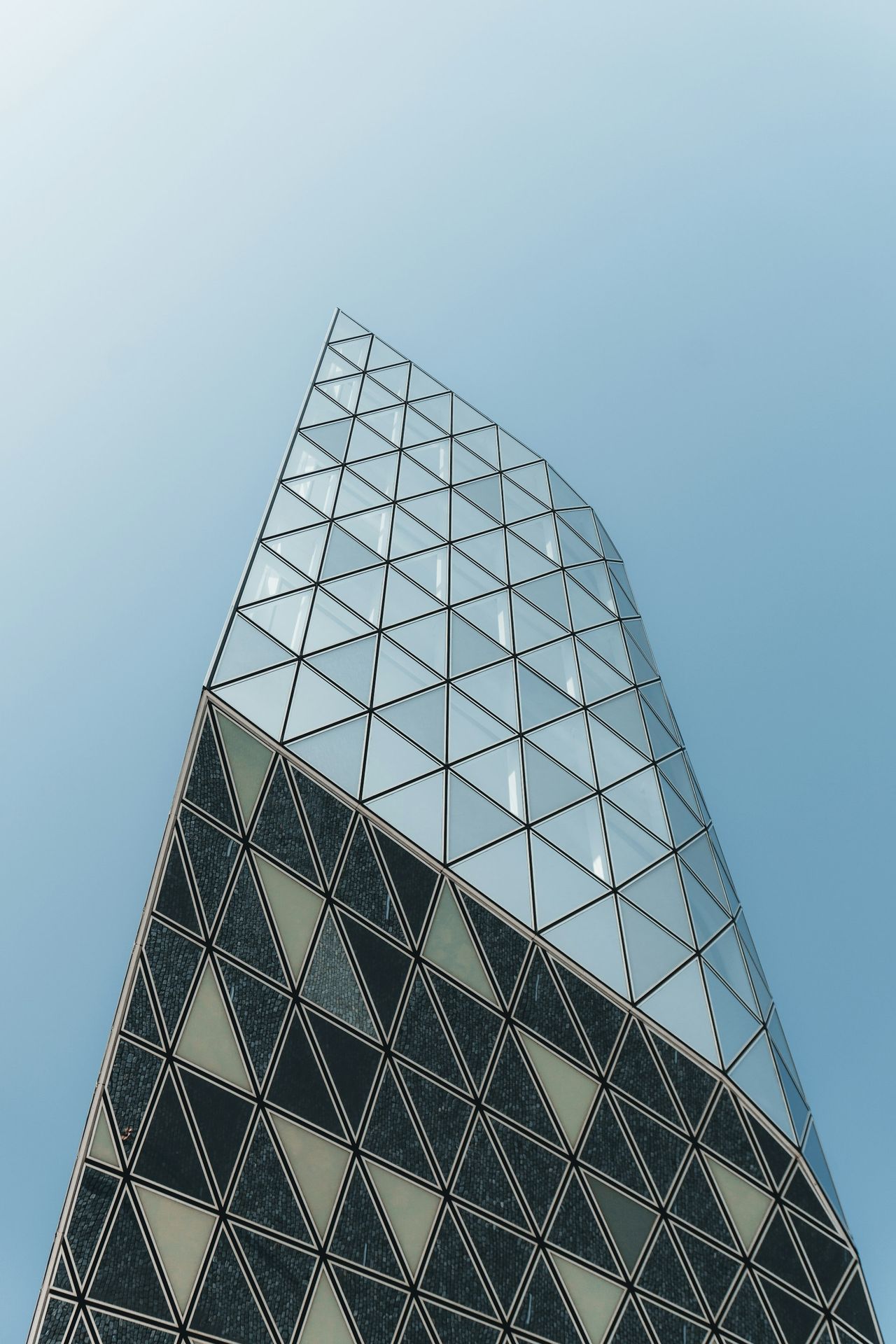
01 · Fenestration High-insulation casement, tilt-and-turn, and parallel-opening window systems with multi-chamber PA66 thermal breaks and concealed European hinges.
 02 · Envelope
 Stick, semi-unitized, and fully unitized structural silicone glazing (SSG) curtain wall systems paired with 4mm/5mm PVDF aluminum composite cladding.
.webp) 03 · Outdoor Architecture
03 · Outdoor Architecture Heavy-duty aluminum louvre pergolas, motorized guillotine glass partitions, and frameless slide-and-turn systems for luxury outdoor living environments.
 04 · Hardware & Components
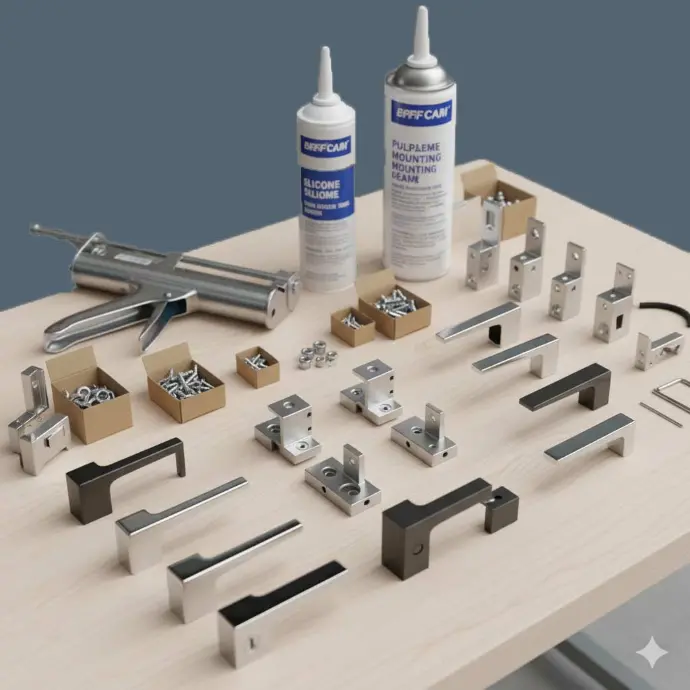
 Precision German and European peripheral hardware (Roto, STAC, Sobinco), custom anodized handles, and high-durability continuous EPDM weather gaskets.
Compare thermal transmittance, structural tolerances, water tightness, and acoustic ratings across ALUCCO profile series.
| Fenestration System Series | Frame Depth | Thermal Transmittance ($U_w$) | Air Permeability (EN 1026) | Watertightness (EN 1027) | Wind Load (EN 12211) | Acoustic Rating ($R_w$) |
|---|---|---|---|---|---|---|
| ALU-75 Ultra Thermal Window | 75 mm | 0.95 – 1.3 W/m²K | Class 4 (600 Pa) | Class E900 (900 Pa) | Class C5 (2500 Pa) | 42 – 47 dB |
| ALU-90 Passive House Window | 90 mm | 0.80 – 0.95 W/m²K | Class 4 (600 Pa) | Class E1050 (1050 Pa) | Class C5 (3000 Pa) | 45 – 49 dB |
| SLIM-32 Minimal Sliding Door | 140 mm (rail) | 1.2 – 1.5 W/m²K | Class 3 (450 Pa) | Class 7A (300 Pa) | Class C3 (1500 Pa) | 38 – 42 dB |
| LIFT-70 Heavy Patio Slider | 160 mm (2-track) | 1.1 – 1.4 W/m²K | Class 4 (600 Pa) | Class 9A (600 Pa) | Class C4 (2000 Pa) | 40 – 45 dB |
| CW-50 Structural Curtain Wall | 50 mm (mullion) | Ucw 1.1 – 1.6 W/m²K | Class AE (1200 Pa) | Class RE 1500 (1500 Pa) | Design Load ≥ 2.5 kPa | 43 – 48 dB |
| BIO-CLIMATIC Louvered System | 200 mm beam | N/A (Outdoor) | N/A | Integrated Gutter (120 l/h/m²) | Wind Class 4 (120 km/h) | N/A |
Key technical shifts and global market vectors driving B2B window, door, and facade purchasing through 2030.
Environmental Product Declarations (EPDs) are becoming mandatory in Western markets. Future procurement prioritizes extrusions produced using renewable hydro-electric energy and high recycled aluminum content (>75%), reducing embodied carbon ($CO_2$ footprint per kg of aluminum profile) by up to 70%.
Modern architectural aesthetics demand maximum daylight autonomy. High performance fenestration is moving toward interlocking vertical sightlines below 20 mm while incorporating structural glass bonding (structural silicone glazing) to support sash weights up to 500 kg.
B2B importers and contractors are abandoning manual bill-of-quantities processing. Direct digital integration between Building Information Modeling (BIM/REVIT) models and CNC profile cutting/milling machinery ensures zero-tolerance manufacturing accuracy and faster delivery cycles.
Integration of electrochromic dynamic tinting glass, automated concealed chain actuators, and sensor-driven building management systems (BMS) allows automated natural ventilation and climate response without sacrificing building envelope security.
Global project owners are shifting supply chains away from high-tariff or long-transit regions. Turkey’s robust extrusions ecosystem (ASAS, Saray, Mitacco, Cuhadaroglu) offers rapid sea-freight access to Europe, North America, and MEA with zero compromise on CE and EN standards.
With changing global weather patterns, high performance fenestration demands higher dynamic wind load certifications, hurricane-impact resistance (laminated interlayer SGP glass), and coastal Qualicoat Seaside corrosion-resistant powder coatings.
We analyze your DWG/PDF schedules, calculate local wind loads, and select optimal profile series.
We supply thermal simulations ($U_w$), corner crimping shop drawings, and fixed bill-of-quantities in 72h.
Extrusion cutting, PA66 strip insertion, multi-point hardware fitment, and Qualicoat quality checks.
Elevation-coded ISPM-15 fumigated wooden crates packed with protective foil and sea-freight bracing.
We partner with Europe’s premier aluminum extruders and hardware component manufacturers to deliver bespoke fenestration packages.






High performance aluminum fenestration is defined by low overall thermal transmittance (Uw ≤ 1.4 W/m²K down to 0.85 W/m²K), structural integrity under extreme wind pressures (EN 12211 Class C4/C5), continuous airtightness (EN 1026 Class 4), severe weather watertightness (EN 1027 Class 9A/E750), and acoustic insulation (Rw ≥ 42 dB). It integrates precision polyamide 66 thermal breaks, multi-chambered extrusion geometries, warm-edge glazing spacers, and durable Qualicoat-certified surface finishes.
Turkey is one of Europe's largest and most technologically advanced aluminum extrusion hubs. Sourcing through ALUCCO provides direct access to world-class extrusion plants (ASAS, Saray, Mitacco, Cuhadaroglu) combined with European hardware (Roto, STAC). ALUCCO manages custom CAD engineering, thermal simulation, strict factory QC, and consolidated sea freight packaging—delivering premium European-standard fenestration systems at highly competitive value-engineered price points.
The overall window thermal transmittance ($U_w$) is calculated according to EN ISO 10077-1 using the area-weighted formula: $U_w = (A_f U_f + A_g U_g + l_g \psi_g) / (A_f + A_g)$, where $U_f$ represents frame thermal transmittance, $U_g$ is glass center-of-glass U-value, and $\psi_g$ is linear thermal bridge transmittance of the glass spacer. ALUCCO provides project-specific thermal dossiers for every elevation prior to production.
All ALUCCO profiles undergo Qualicoat-certified electrostatic powder coating (minimum 60–80 µm film thickness) or Qualanod-certified architectural anodizing (15–25 µm layer). For severe coastal environments, we apply Qualicoat Seaside pretreatment to prevent filiform corrosion and guarantee long-term UV color stability.
Each unit is corner-protected with high-density EPE foam, shrink-wrapped in protective polyethylene foil, and packed upright into custom ISPM-15 compliant, heat-treated, fumigated wooden crates. Crates feature internal timber bracing, moisture-absorbing silica packs, and external elevation labels matching your site architectural installation sequence.
Every export project dossier includes CE Declarations of Performance (DoP), EN 1026/1027/12211 test reports, Qualicoat coating certification, glass manufacturer technical data sheets, structural wind-load calculation notes, detailed elevation shop drawings, and HS-coded commercial invoices.
Submit your project CAD drawings, window schedules, or performance specifications. Our technical engineering team will return a complete proposal within 72 hours.