Top 10 Architectural Glass Exporter & Exporters

Global Procurement Whitepaper: High-Performance Insulated IGUs, Laminated Safety Glass, Photovoltaics & Structural Cast Glazing Systems

Ug 0.5
Low-E Thermal Value (W/m²K)
ISO 12543
Laminated Safety Certified
100%
Heat-Soak Tested (HST)
50+
Global Export Destinations

Architectural Glass Export Infrastructure & Technical Standards

In modern building envelope engineering, architectural glass has evolved from a passive visual divider into a high-performance structural and thermal barrier. Sourcing directly from verified B2B architectural glass exporters requires an in-depth evaluation of spectral performance parameters—specifically Solar Heat Gain Coefficient (SHGC), Visible Light Transmittance (VLT), U-value (Ug according to EN 673/ASTM C1072), and Sound Transmission Class (STC). As building codes across North America, Europe, the Middle East, and Asia-Pacific enforce stringent net-zero energy targets, structural glazing specifications demand advanced processing techniques including double/triple silver magnetron sputter vacuum deposition (Soft-Coat Low-E), SentryGlas® (SGP) ionoplast laminations, and Heat-Soak Testing (HST) to mitigate nickel sulfide (NiS) inclusions.

"Information Gain Insight for Procurement Directors: Selecting an architectural glass exporter is not merely about price per square meter. Superior compliance hinges on verified EN 12150 temper stress distribution (>90 MPa surface compression), structural silicone adhesion compatibility, and ISPM-15 compliant export crating designed for multi-modal ocean freight stability."

This comprehensive industry whitepaper evaluates the top 10 export-grade architectural glass configurations manufactured for commercial curtain walls, storefronts, museum facades, BIPV renewable envelopes, and interior decorative partitions. Each product analysis below breaks down technical specifications, structural capabilities, and ideal procurement applications.

Featured Architectural Glass Products & Export Specifications

Engineered for curtain wall fabricators, facade contractors, commercial builders, and luxury architectural developments worldwide.

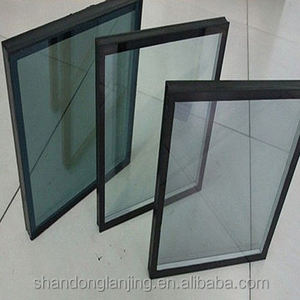
Double Pane Glass Tempered Insulated Thermal IGU

Double Pane Tempered Insulated Glass Unit (IGU)

Engineered for modern California residential storefronts, commercial hotels, and slim folding doors. Features dual-sealed structural argon gas cavity with warm-edge spacers for low thermal bridging.

  • Build Configuration: 6mm Low-E + 12Ar + 6mm Clear
  • Thermal Insulation: Ug ≤ 1.1 W/m²K
  • Acoustic Rating: STC 36 dB / Rw 35 dB
  • Safety Standard: ANSI Z97.1 / EN 12150
Get a Quote
Ultra Clear Laminated Safety Glass Museum Grade

Ultra-Clear AR Coated Laminated Safety Glass (8mm / 10mm)

Ultra-low iron crystal substrate featuring magnetron Anti-Reflective (AR) coating. Designed for museum display envelopes, luxury storefront facades, and high-clarity structural curtain walls.

  • Substrate Type: Extra-Clear Low Iron (<0.015% Fe)
  • Visible Transmittance: VLT > 97%
  • Interlayer: 1.52mm SentryGlas® (SGP) / PVB
  • Reflectance: Residual Reflectance < 1%
Get a Quote
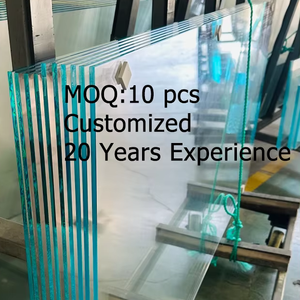
Architectural Tempered Glass Eco Tempered

Eco-Friendly Architectural Tempered Glass (8mm-12mm)

Custom precision-cut safety glass processed with low-carbon electric tempering furnaces. Custom CNC edgework, countersunk holes, and notch cuts for educational & institutional facades.

  • Thickness Options: 8mm / 10mm / 12mm
  • Flexural Strength: 120 N/mm²
  • Testing Standard: DIN 18516 / Heat Soak Passed
  • Processing: Flat / Bent Tempered
Get a Quote
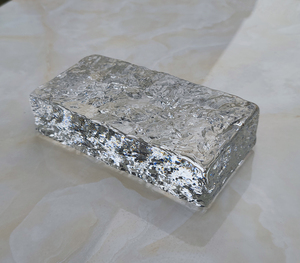
Translucent Solid Glass Bricks Solid Cast Block

Translucent Ice-Pattern Solid Glass Bricks

High-density solid cast glass blocks for structural wall construction, rain-screens, and light-transmitting architectural features. Offers immense load capacity with privacy diffusion.

  • Material Density: 2500 kg/m³ High Purity Cast
  • Compressive Strength: > 100 MPa
  • Acoustic Isolation: STC 45 dB
  • Fire Rating: E120 Class Structural Fire Stop
Get a Quote
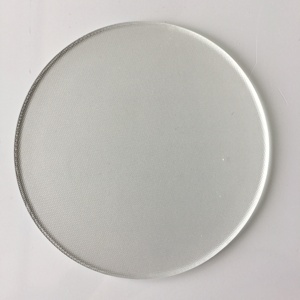
Photovoltaic Tempered Glass BIPV Solar

Round Ultra-Clear Woven Textured BIPV Tempered Glass

Next-generation Building-Integrated Photovoltaic (BIPV) front glass. Micro-prismatic surface texture traps incoming solar radiation, maximizing solar energy conversion efficiency.

  • Surface Finish: Prismatic / Woven Low-Iron Texture
  • Solar Transmittance: Tsolar ≥ 91.8%
  • Mechanical Load: 5400 Pa Snow / 2400 Pa Wind
  • Coating: Sol-Gel Anti-Reflective (AR)
Get a Quote
Decorative Ice Pattern Glass Block Interior Partition

Modern Interior Decorative Ice-Pattern Glass Bricks

Structural translucent glass blocks designed for luxury living room partitions, lobby features, and ambient lighting screens. Combines acoustic insulation with diffuse natural daylighting.

  • Light Transmission: 72% Soft Diffusion
  • Assembly Method: Structural Epoxy / UV Adhesive
  • Thermal Mass: High Inertia Heat Retention
  • Maintenance: Zero Porosity Non-Staining
Get a Quote
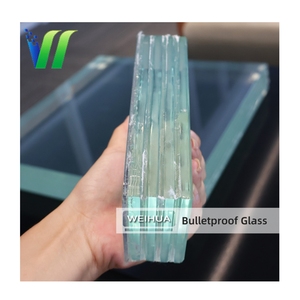
Multi-Layer Laminated Safety Glass Hurricane Impact

Multi-Layer Impact-Resistant Laminated Safety Glass

Heavy-duty multi-layer glass composition built for hurricane zone curtain walls, bomb blast mitigation, overhead structural skylights, and high-security building envelopes.

  • Layer Build-up: 10mm + 2.28mm SGP + 10mm + 10mm
  • Impact Rating: ASTM E1996 Large Missile Level D
  • Blast Mitigation: GSA Level 3B / ISO 16933
  • Edge Finish: Precision CNC Flat Polish
Get a Quote
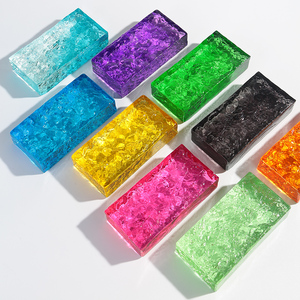
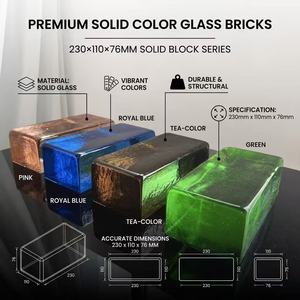
Solid Colored Crystal Glass Bricks Solid Crystal

Solid Colored Crystal Glass Bricks (230*110*76mm)

Hot-melt cast solid glass bricks in custom architectural color tones. Engineered for load-bearing decorative facade screens, illuminated exterior walls, and luxury interior features.

  • Dimensions: 230mm × 110mm × 76mm Standard
  • Color Permanence: 100% Body-Colored (UV Stable)
  • Thermal Expansion: 8.5 × 10⁻⁶ / K Low Drift
  • Weathering: Acid/Alkali Resistant Grade 1
Get a Quote

Future Procurement & Technological Trends in Architectural Glass (2025–2030)

The international architectural glass market is undergoing a seismic shift driven by carbon emissions regulations, energy efficiency mandates, and digital manufacturing technologies. B2B procurement managers and façade consultants must anticipate these technical developments to ensure long-term building viability and compliance:

1. Vacuum Insulated Glass (VIG)

Replacing traditional bulky triple-pane units, VIG technology utilizes a micro-spacer array within a 0.2mm high-vacuum chamber, achieving thermal performance of Ug ≤ 0.4 W/m²K in a ultra-slim 8mm–10mm overall profile thickness.

2. BIPV Power-Generating Envelopes

Building-Integrated Photovoltaics are transitioning from niche rooftop panels to fully structural, aesthetically neutral curtain wall spandrels. Cadmium Telluride (CdTe) and Perovskite-Silicon tandem glass allow customized VLT while producing clean energy.

3. Dynamic Electrochromic Tinting

Smart glass powered by electrochromic coatings alters light transmittance dynamically via low-voltage electrical signals. Eliminating mechanical blinds, smart tinting cuts peak HVAC cooling loads by up to 35% in tropical and desert climates.

4. Circular & Decarbonized Cullet Sourcing

Top global exporters are adopting closed-loop recycled post-consumer glass cullet (>40% mix), reducing melting furnace energy consumption by 15% and directly dropping Scope 1 and Scope 2 embodied carbon footprints for LEED v4.1 certifications.

5. SGP Ionoplast Structural Interlayers

While traditional PVB interlayers lose structural rigidity above 40°C, SentryGlas® (SGP) interlayers provide 5 times the tear strength and 100 times the stiffness, enabling frameless balustrades, glass fins, and point-fixed spider facades.

6. Automated Heat-Soak Testing (HST)

Spontaneous breakage from Nickel Sulfide (NiS) inclusions remains a major liability for toughened glass facades. Industry-leading exporters now mandate EN 14179-1 Heat-Soak Testing with digital thermal logging for 100% of exported tempered glass panels.

Technical Performance Comparison Matrix

To streamline project specification and system selection, the table below maps core physical, thermal, and optical properties across primary architectural glass export categories:

Glass System Category Typical Build-Up Ug Value (EN 673) SHGC Range VLT Range Acoustic (STC) Primary B2B Application
Double Low-E Insulated (IGU) 6mm LowE + 12Ar + 6mm Clear 1.1 - 1.3 W/m²K 0.25 - 0.42 60% - 74% 35 - 38 dB Commercial Office Towers, Hotels
Triple Low-E Insulated (IGU) 6mm LowE + 12Ar + 6mm + 12Ar + 6mm 0.6 - 0.8 W/m²K 0.18 - 0.32 50% - 65% 38 - 42 dB Passive House, Cold Climates
SGP Laminated Safety Glass 10mm Low Iron + 1.52 SGP + 10mm 5.2 W/m²K (Single) 0.68 - 0.75 84% - 89% 39 - 44 dB Glass Fins, Structural Balustrades
Ultra-Clear AR Coated Glass 8mm / 10mm Extra-Clear AR 5.5 W/m²K (Single) 0.82 - 0.86 97% - 99% 32 - 34 dB Museum Showcases, Luxury Retail
Solid Cast Glass Bricks 230mm × 110mm × 76mm Solid 1.8 - 2.2 W/m²K 0.30 - 0.45 40% - 75% 45 - 50 dB Structural Partition Walls, Screens
BIPV Solar Front Glass 3.2mm / 4mm Textured Tempered N/A (Solar Module) N/A 91.8% (Tsolar) N/A Solar Facades, Spandrel Modules

Enterprise Supply Chain & Quality Assurance Engineering

Procuring architectural glass cross-border requires seamless coordination between engineering design, furnace calibration, quality control, and heavy-cargo logistics. Operating under international standards, our enterprise export workflow removes cross-border risks:

1. Drawing-to-Production Optimization

Our engineering team reviews DWG/BIM drawings to perform thermal stress calculations, wind-load resistance modeling (per EN 1991-1-4 / ASCE 7), and edge-deflection analysis before glass cutting begins.

2. In-Line Spectrophotometric Inspection

Low-E coater outputs undergo real-time laser spectrophotometry to ensure color uniformity (Delta E < 0.5) across large manufacturing batches, avoiding patchy facade reflections.

3. Automated Edge Polishing & CNC Milling

Equipped with 5-axis CNC processing centers, all glass edges are polished to flat-edge with arris or pencil-edge standards, ensuring zero micro-fractures prior to thermal tempering.

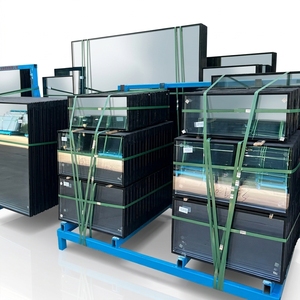
4. ISPM-15 Certified Ocean Export Crating

Glass sheets are separated by anti-mildew polymer powder or cork pads, wrapped in moisture-vapor barrier foil, and secured in custom heavy-duty A-frame timber crates designed for open-top container loading.

Architectural Glass Procurement FAQ

Detailed answers to critical engineering, quality certification, and international shipping questions.

How do I prevent Nickel Sulfide (NiS) spontaneous breakage in export glass?
Spontaneous breakage in toughened glass is primarily caused by microscopic Nickel Sulfide (NiS) inclusions that expand over time under thermal exposure. To eliminate this risk, buyers should explicitly mandate Heat-Soak Testing (HST) according to EN 14179-1. During HST, tempered glass panels are subjected to a controlled thermal cycle of 290°C (±10°C) for several hours, causing panels containing NiS inclusions to deliberately break in the factory chamber rather than on-site.
What is the difference between Soft-Coat and Hard-Coat Low-E glass?
Hard-coat (pyrolytic) Low-E glass applies a tin oxide layer onto float glass while it is still hot on the float line, resulting in a durable but thermally basic coating (emissivity ~0.15). Soft-coat (offline MSVD) Low-E glass applies multiple micro-layers of silver and metal nitrides in a vacuum chamber. Soft-coat offers significantly superior thermal performance (emissivity down to 0.02, Ug values ≤ 1.1 W/m²K) and far better solar heat control (lower SHGC), making it the gold standard for high-performance architectural curtain walls when enclosed inside an insulated glass unit (IGU).
When should SentryGlas® (SGP) be specified over standard PVB interlayers?
Standard Polyvinyl Butyral (PVB) is suitable for standard safety laminates, but soft under elevated temperatures. SentryGlas® (SGP) ionoplast interlayers should be specified for structural applications such as frameless balustrades, point-supported spider glass, glass fins, hurricane-resistant curtain walls, and glass floors. SGP is 100 times stiffer and 5 times more tear-resistant than PVB, meaning that even if both glass plies break, the SGP laminate retains structural load capacity and remains standing upright.
How are large architectural glass panels protected against sea-freight corrosion?
Maritime transit exposes glass to high humidity and temperature fluctuations, which can cause alkaline surface bloom (glass stain). Exporters prevent this by applying hydrophobic anti-mildew lucite powder or cork separators between sheets, sealing crate interiors with vacuum-desiccant plastic lining, and placing containers in dry-hold container positions. Furthermore, solid timber crates are ISPM-15 heat-treated and fumigated to clear international customs smoothly.
What international quality certifications should B2B buyers mandate?
A qualified architectural glass exporter must provide test certificates corresponding to target market destinations: CE Marking / EN 12150 & EN 14449 for European Union projects; ANSI Z97.1 & C1048 / SGCC certification for North America; and AS/NZS 2208 for Australasia. Factory audit dossiers should also document ISO 9001 quality management and factory-in-line stress measurement reports.
What minimum technical drawings are required for an accurate export quotation?
To provide an accurate, engineering-backed quotation, exporters require complete glass schedules detailing panel dimensions, quantity, glass composition (thickness, coating type, spacer width, gas fill), edge processing specifications (flat polish, miter, arris), CNC notch/hole locations in DWG/PDF format, and project wind-load design parameters.

Request a Custom Architectural Glass Technical Proposal

Consult with our facade engineering team today for project-based quotations, structural glass sizing, thermal performance calculations, and sample shipments.