Engineered to international building codes with customizable extrusion depth, thermal breaks, and premium finishes.
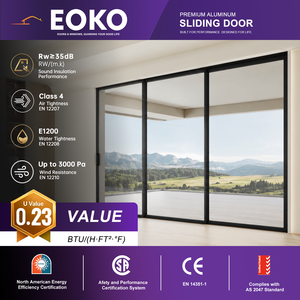
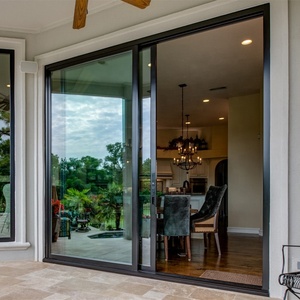
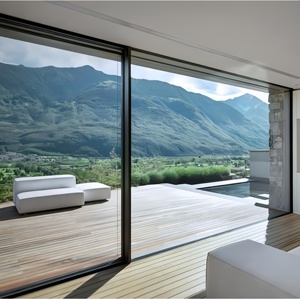
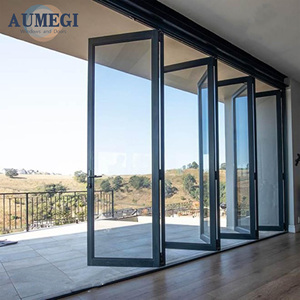
An in-depth analysis of aluminum profile extrusions, thermal break engineering, compliance testing standards, and global supply chain optimization for commercial and luxury residential projects.
In the contemporary building envelope sector, the procurement of OEM/ODM window profiles has evolved from basic component purchasing into complex structural and thermal engineering partnerships. Architects, façade contractors, and property developers no longer evaluate window profile factories solely on price per kilogram; rather, evaluation hinges on extrusion tolerances, alloy purity, polyamide thermal barrier integrity, surface coating longevity under harsh coastal or high-UV environments, and seamless integration with high-performance hardware systems like ROTO, Siegenia, or STAC.
As energy codes tighten globally—ranging from North American NFRC certification criteria to European EN standards—the demand for thermal break aluminum window profiles and minimal-frame architectural sliding systems has surged. OEM (Original Equipment Manufacturing) and ODM (Original Design Manufacturing) partnerships allow international brands and project developers to access specialized extrusion capabilities, precision CNC machining, and certified surface treatments without incurring massive capital expenditures in heavy manufacturing plant infrastructure.
Utilizing premium 6063-T5, 6063-T6, and 6061-T6 aluminum billets, our extrusion profiles ensure optimal yield strength, tensile strength, and tight wall thickness tolerances (EN 12020-2 / ASTM B221 compliance) required for structural wind load pressure up to 2.5 kPa.
By crimping high-grade PA66GF25 (25% glass fiber reinforced polyamide) thermal break strips ranging from 14.8 mm up to 34 mm, profile assemblies drastically reduce thermal conductivity, eliminating condensation risk and achieving overall window U-values down to 0.9 W/m²K.
Offering electrostatic powder coating (Qualicoat Class 1, 2, and 3 PVDF) with minimum 60 μm layer thickness, alongside anodized finishes (15–25 μm) and wood-grain thermal transfer technology engineered to resist salt spray corrosion for over 3,000 hours.
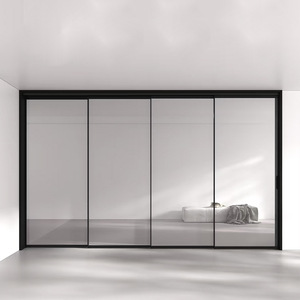
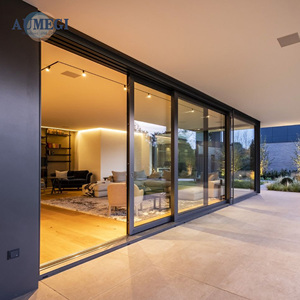
Architectural trends in luxury residential villas and high-end commercial spaces continue to demand maximized glass-to-frame ratios. This shift requires window profile suppliers to redesign traditional aluminum extrusions into ultra-slim interlocks with visible sightlines as narrow as 20 mm to 26 mm. To maintain wind load deflection compliance (L/175 or L/300) over door leaves exceeding 3.5 meters in height, ODM manufacturers integrate concealed structural steel reinforcements and multi-chamber aluminum structural ribs within the track profiles.
Global procurement teams are rapidly integrating ESG metrics into vendor evaluations. Sourcing low-carbon primary aluminum produced via hydroelectric power (under 4.0 kg CO2e/kg Al) or high-content post-consumer recycled aluminum extrusions is transitioning from an optional sustainability badge to a hard contractual tender requirement in Western Europe and North America.
On-site labor costs in destination markets have made traditional stick-built field assembly increasingly uneconomical. Top-tier OEM/ODM factories are providing precision-mitered, corner-crimped, or fully pre-punched Knock-Down (KD) window profile kits with integrated EPDM gaskets, reducing field installation labor by up to 40% while eliminating installation error margins.
Standardized laboratory test ranges for ALUCCO custom aluminum window, door, and curtain wall profile series.
| Profile System Type | System Depth (mm) | Thermal Transmittance (Uw) | Air Tightness (EN 1026) | Water Tightness (EN 1027) | Wind Load Resistance |
|---|---|---|---|---|---|
| Thermal Break Tilt & Turn Casement | 65mm – 75mm | 1.1 – 1.6 W/m²K | Class 4 (600 Pa) | Class 9A (600 Pa) | Class C5 (2000 Pa) |
| Ultra-Insulated Passive Window Profile | 85mm – 95mm | 0.8 – 1.0 W/m²K | Class 4 (600 Pa) | Class E1050 (1050 Pa) | Class C5 (2500 Pa) |
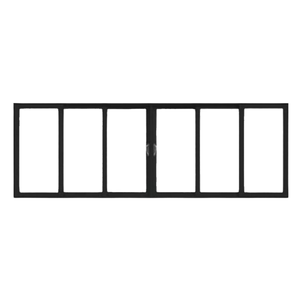
| Slim Line Minimalist Sliding Door | 120mm – 160mm track | 1.3 – 1.8 W/m²K | Class 3 (300 Pa) | Class 7A (300 Pa) | Class C3 (1200 Pa) |
| Heavy-Duty Lift & Slide Patio System | 140mm – 210mm track | 1.2 – 1.5 W/m²K | Class 4 (600 Pa) | Class 9A (600 Pa) | Class C4 (1600 Pa) |
| Unitized Curtain Wall Facade Profile | 150mm – 220mm mullion | 1.4 – 1.9 W/m²K | Class AE (1200 Pa) | Class RE1200 (1200 Pa) | Design Load ≥ 2.5 kPa |
From custom die design to sea-freight export packaging, our manufacturing control protocol ensures zero-defect production.
In-house CAD/CAM toolmakers develop custom extrusion dies from high-grade H13 steel within 12–15 days. We analyze structural inertia (Ix, Iy) and flow velocity to guarantee uniform section thickness across intricate multi-chamber profile designs.
Operating high-tonnage automated extrusion presses (ranging from 800T to 3,600T), billets are extruded under strict thermal control. Subsequent T5/T6 artificial aging furnaces deliver exact Webster hardness ratings (12–15 HW) and tensile properties.
Profile lengths up to 6.5 meters undergo automated 4-axis CNC drilling, milling for drainage slots, lock gearbox pockets, and corner key slotting to guarantee sub-millimeter precision before assembly or packaging.
As a leading export partner operating from Turkey's strategic aluminum extrusion hub, ALUCCO (GOMAX Emlak Gayrimenkul Insaat Dis Ticaret Ltd. Sti.) bridges the gap between complex architectural designs and real-world fenestration delivery. Unlike catalog trading intermediaries, ALUCCO operates as a dedicated project engineering enterprise.
Key technical and commercial inquiries resolved by our window profile engineering division.
Depending on profile depth, thermal break strip width (PA66GF25), and glass specification (double vs. triple glazed Low-E with argon fill), our standard thermal break profile series achieve system U-values (Uw) ranging from 1.8 W/m²K down to ultra-low passive house standards of 0.8–0.9 W/m²K. Detailed thermal simulation dossiers (THERM/WINDOW software) are supplied during project engineering.
We work flexibly on a project-by-project basis rather than rigid catalogue piece counts. For custom profile dies, a standard opening batch of 500 kg to 1,000 kg per section profile is typical, while consolidated export orders usually begin at one 20ft or 40ft full container load (FCL) combining profiles, glass, and hardware accessories.
Every shipment is accompanied by a comprehensive compliance dossier: CE Declarations of Performance (DoP), EN test certificates (air permeability EN 1026, watertightness EN 1027, wind load EN 12211), mill test reports for 6063-T5/T6 alloy composition, Qualicoat coating certificates, HS-coded commercial invoices, and ISPM-15 crate fumigation certificates.
Yes. Our engineering department specializes in OEM/ODM production. We accept CAD DWG/DXF or PDF architectural elevation schedules, verify section geometry, generate die drawings for approval, and can laser-print or apply protective film with your custom brand logo and elevation identification codes.
Profiles are individually wrapped with custom brand or neutral PE protective film, bundle-wrapped with woven straps, and loaded into heavy-duty fumigated wooden crates or steel-framed A-frames. Desiccant packs are distributed throughout the packaging to absorb moisture and prevent oxidation during 30+ days of sea transport.
We offer full custom surface finishing including standard RAL colors in super-durable powder coating (Qualicoat Class 2), PVDF 3-coat architectural coatings, anodized finishes from 15 to 25 microns (silver, bronze, black, champagne), matte/textured powder coats, and thermal-transfer wood grain finishes.
Submit your window elevation schedules, DWG specifications, or profile section requirements. Our engineering team will deliver a system proposal, U-value calculation, and bill of quantities within 72 hours.
