
Engineering Excellence in Architectural Laminated Glass Manufacturing
An in-depth analysis of inter-layer science, load-bearing capacities, optical clarity standards, and international building code compliance for B2B buyers and structural engineers.
In modern structural engineering, architectural glass has evolved from a passive cladding element into a primary load-bearing structural component. As a leading China wholesale laminated glass factory and exporter, our production lines operate at the intersection of material science, precise heat-pressure processing, and advanced fenestration integration. Laminated glass—fabricated by permanently bonding two or more lites of float or tempered glass with a tough polymer interlayer under elevated temperature and hydrostatic pressure inside an autoclave—delivers unparalleled safety, sound insulation, UV control, and forced-entry mitigation.
1. Material Science: PVB vs. SGP vs. EVA Interlayer Breakdown
Selecting the correct interlayer is crucial for optimizing the mechanical performance and longevity of wholesale laminated glass assemblies. Our automated cleanrooms handle three core interlayer polymer technologies tailored to specific structural demands:
Polyvinyl Butyral (PVB)
The industry standard for automotive and architectural glazing. Offers exceptional adhesion, high elasticity (300%+ elongation), and superior acoustic damping (specifically Acoustic PVB variants). Ideal for standard facade units, windows, and soundproof interior partitions.
SentryGlas® (SGP / Ionoplast)
Designed for structural applications requiring extreme strength. SGP exhibits minimal deflection under heavy wind loads or point loads. Even if both glass lites break, SGP remains upright and load-bearing. Essential for glass staircases, balustrades, and hurricane resistance.
Ethylene Vinyl Acetate (EVA)
Cross-linking polymer with high moisture resistance, making it suitable for open-edge exterior laminates exposed to high humidity. Commonly utilized for decorative laminates, embedded LED smart glass, and solar PV module lamination.
2. Technical Specifications & Structural Performance Metrics
When evaluating China glass exporters, engineering procurement teams must review rigorous physical performance parameters. Below is a comparative data matrix of glass configurations manufactured in our facility under ISO 9001 quality control protocols:
| Glass Build-Up Spec | Overall Thickness | Visible Light Trans. (VLT) | Solar Heat Gain (SHGC) | Acoustic Rating (STC) | Primary Application Field |
|---|---|---|---|---|---|
| 6mm Clear + 1.52PVB + 6mm Clear | 13.52 mm | 79% | 0.70 | 38 dB | Standard Shopfronts & Balustrades |
| 6mm Low-E #2 + 1.52PVB + 6mm Clear (IGU Double) | 28.00 mm (Air Gap 12A) | 64% | 0.32 | 42 dB | Thermal Break Sliding Doors & Windows |
| 8mm Low-Iron + 1.52SGP + 8mm Low-Iron | 17.52 mm | 88% | 0.76 | 40 dB | Structural Balustrades & Fin Walls |
| 6mm Low-E + 12Ar + 6mm Laminated (Triple IGU) | 36.00 mm | 52% | 0.24 | 45 dB | NFRC Luxury Villa Lift-and-Slide Doors |
| 10mm Temp + 2.28SGP + 10mm Temp | 22.28 mm | 86% | 0.72 | 43 dB | Walkable Glass Skylights & Floors |
3. Global Procurement Trends in Architectural Glass (2025–2030)
The international building envelope sector is undergoing a rapid transition toward carbon-neutral structures, stringent thermal efficiency mandates, and extreme climate adaptation. B2B importers, façade contractors, and project developers must align their sourcing strategies with four dominant procurement trends:
Decarbonized & Low-Embodied Carbon Glass
Global regulations (such as the EU Energy Performance of Buildings Directive) require glass factories to utilize high percentages of recycled cullet and green electric melting furnaces to achieve lower embodied carbon per square meter.
Building Integrated Photovoltaics (BIPV)
Integration of micro-solar cell arrays sandwiched directly within SGP/EVA laminated glass structures, turning curtain wall facades into energy-generating assets without sacrificing structural strength.
Smart Switchable Electrochromic Lamination
Incorporation of Liquid Crystal (PDLC) films into laminated glass assemblies allows real-time optical state switching from opaque to transparent at the touch of a button or via automated BMS systems.
Ultra-Clear Low-Iron Structural Glazing
High-end commercial projects are eliminating the natural green tint of standard float glass by specifying ultra-clear Low-Iron (High-Transmittance) glass combined with crystal-clear SGP interlayers for maximum edge clarity.
4. Factory Advantage & E-E-A-T Quality Assurance Safeguards
As an established Chinese manufacturing enterprise specializing in window systems, door assemblies, and wholesale laminated architectural glass, our manufacturing infrastructure is built upon continuous quality control, automated processing, and compliance with major world standards:
Autonomous Autoclave Heat-Pressure Control
Our state-of-the-art computer-controlled autoclaves regulate temperature ramps (up to 145°C) and pneumatic pressure (up to 13 bar) to completely eliminate micro-bubbles, delamination risks, and optical distortion.
Triple International Certifications
Products undergo rigorous batch testing to satisfy SGCC (ANSI Z97.1) for North America, CE (EN 14449 / EN 12150) for Europe, and AS/NZS 2208 for Australia and New Zealand.
Precision CNC Edge Grinding & Drilling
Every lite undergoes 5-axis CNC arrissing, flat polishing, or countersunk hole drilling prior to tempering to eliminate edge stress concentrations and prevent spontaneous thermal breakage.
Export-Grade Heavy-Duty Crate Packaging
Plywood A-frame and end-cap crates with ISPM-15 fumigation, shock-absorbing rubber spacers, and desiccant packs inside vacuum-sealed plastic wrappings guarantee zero ocean transit damage.
5. Frequently Asked Procurement & Technical Questions (FAQ)
What is the main difference between PVB and SGP laminated glass for wholesale orders?
PVB (Polyvinyl Butyral) is highly flexible and cost-effective, providing excellent acoustic dampening and impact resistance for standard doors and windows. SGP (SentryGlas® Ionoplast) is 5 times tougher and up to 100 times stiffer than PVB. SGP is required for structural applications like frameless glass balustrades, glass floors, and hurricane-rated exterior facades because it maintains structural rigidity even if both glass panels break.
How does your factory prevent edge delamination in exterior laminated glass?
Delamination occurs when moisture penetrates the edge of the polymer interlayer. We prevent this by utilizing high-grade raw PVB/SGP resins, maintaining strict humidity (18-22%) and temperature (18-20°C) controls in our lamination cleanrooms, operating precise autoclave pressure cycles, and recommending compatible neutral silicone sealants for job-site installation.
What technical drawings and specifications are needed to receive a custom quote?
To provide an accurate engineering proposal and Bill of Quantities (BOQ), we require architectural window schedules or DWG elevation drawings specifying: glass layer build-up (e.g., 6mm Low-E + 12A + 6mm Laminated), interlayer type (PVB/SGP), overall dimensions, aluminum profile series, surface finish requirements (RAL color or anodized), and target performance numbers (Uw, STC, wind load zone).
What compliance test reports do you supply with international shipments?
Every container shipment includes a comprehensive Quality Assurance Dossier containing factory mill test certificates, SGCC impact test reports (ANSI Z97.1), CE declarations of performance (EN 14449 / EN 12150), AS/NZS 2208 compliance documentation, and air/water/wind load test results (EN 1026, EN 1027, EN 12211).
Can laminated glass be integrated into thermal break aluminum sliding doors and curtain walls?
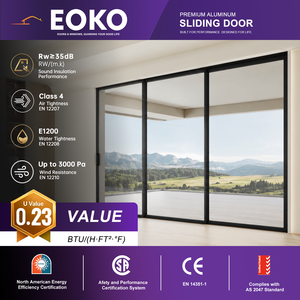
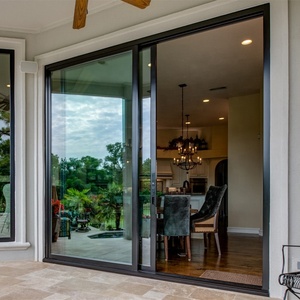
Yes. Laminated glass is frequently combined with insulated glass units (IGUs). For example, a double-glazed thermal break sliding door can feature a 6mm Low-E tempered outer lite, a 12mm Argon gas space, and a 6.38mm (3mm+0.38PVB+3mm) laminated inner lite. This configuration delivers extreme thermal insulation (low U-value), burglar protection, and high sound attenuation (STC 40+ dB).
What is your typical production lead time and minimum order quantity (MOQ)?
We work on a project-based supply model. While standard sample units can be produced in 7 days, full project container loads (FCL) typically require 20 to 25 days from final shop drawing approval. We accept mixed-container loads combining laminated glass windows, thermal break sliding doors, and structural fittings to optimize freight costs.