
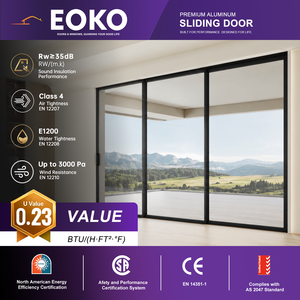
Engineered to comply with NFRC, CE, and European EN standard testing. Explore our primary architectural export systems equipped with multi-chamber thermal breaks and elastomeric sealing assemblies.
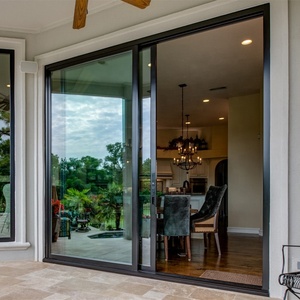
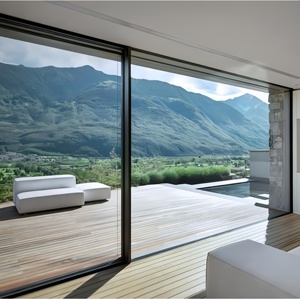
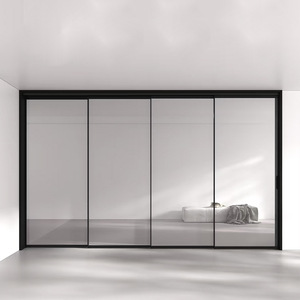
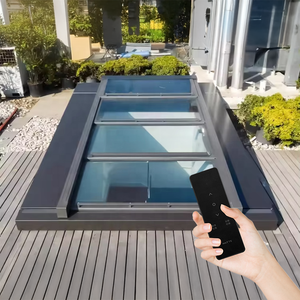
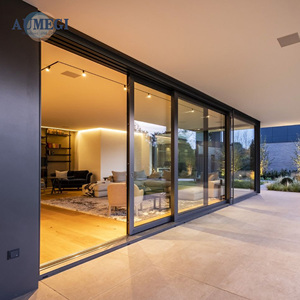
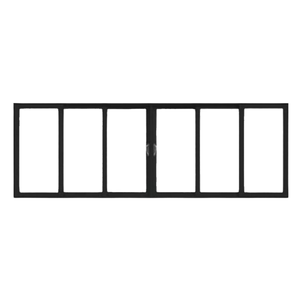
In contemporary building envelope design, windows, sliding patio doors, and architectural curtain walls are no longer evaluated merely as aesthetic glazing dividers. They are structural thermal boundaries responsible for up to 40% of a building's thermal envelope energy loss. As global building codes tighten—spurred by European Energy Performance of Buildings Directives (EPBD), US Energy Star 7.0 standards, and China's Zero-Carbon Building Initiatives—the focus of architectural engineering has shifted from basic profile thickness to complex sealing science.
As a leading China Top Window Seals Factory & Exporter, our engineering division emphasizes that a window system's thermal transmittance ($U_w$), air infiltration, and acoustic isolation ($R_w$) are fundamentally dictated by its weatherstripping geometry, elastomeric polymer selection, and thermal break integration. Without high-durability elastomeric gaskets and multi-cavity Polyamide (PA66 GF25) thermal barriers, high-performance Low-E insulated glass units (IGUs) fail to deliver their theoretical U-values in real-world climate exposures.
Elastomeric Memory: Resistance to compression set under cyclic wind loading and thermal expansion.
Co-Extrusion Tech: Combining rigid base anchors with flexible micro-foamed EPDM sealing lips for airtight mechanical locking.
Acoustic Decoupling: Dampening ambient noise frequencies from 125 Hz to 4000 Hz through multi-barrier perimeter sealing.
Selecting the appropriate seal chemistry is vital for preventing shrinkage, UV degradation, and compression fatigue over decades of weather exposure.
| Polymer / Seal Type | Tensile Strength & Elasticity | Compression Set (70°C, 22h) | UV & Ozone Resistance | Thermal Operating Range | Primary Architectural Application |
|---|---|---|---|---|---|
| Peroxide-Cured EPDM | 10 - 14 MPa / High Memory | < 20% (Superior) | Excellent (>35 Yrs) | -40°C to +125°C | Luxury Villa Windows, Lift-and-Slide Doors, Curtain Walls |
| Co-Extruded Micro-Foam EPDM | 8 - 11 MPa / Micro-Cell Structure | < 25% | Excellent | -40°C to +120°C | Acoustic Sash Seals, High-Wind Perimeter Weatherstrips |
| Thermoplastic Elastomer (TPE/TPV) | 6 - 9 MPa / Recyclable | 28 - 35% | Good to Very Good | -30°C to +100°C | Standard Residential Windows & Modular Glazing |
| Architectural Silicone Rubber | 7 - 10 MPa / Soft Flex | < 18% | Outstanding (>50 Yrs) | -60°C to +200°C | Structural Silicone Glazing, Extreme Climate Skylights |
Many commercial buyers assume that upgrading glass from double glazing ($U_g \approx 1.4 \text{ W/m}^2\text{K}$) to triple glazing ($U_g \approx 0.7 \text{ W/m}^2\text{K}$) guarantees structural energy compliance. However, engineering field tests prove that air leakage around sashes can degrade the overall frame thermal performance by up to 50%. Here is how our engineered seal profile architectures mitigate heat transfer:
Multi-chamber hollow EPDM gaskets split the air gap between the aluminium frame and sash into micro-cells. This stops thermal convection loops from forming within the profile cavity, directly lowering the frame thermal transmittance ($U_f$).
Our European-standard system designs incorporate a continuous vulcanized center gasket (often called the "third seal line"). This establishes a pressure-equalized drainage chamber that diverts wind-driven rain while preventing cold exterior air infiltration.
Placing micro-foamed flexible weatherstripping around the perimeter of Low-E double/triple IGUs buffers glass edge tension and seals thermal bridges caused by traditional aluminum spacer bars.
Match your architectural project requirements with specialized fenestration and seal integration strategies.
Recommended Configuration: EOKO NFRC Triple Glazed Low-E Thermal Break Systems.
Sealing Strategy: Employs heavy-duty EPDM drop-down perimeter seals and interlocking brush seals with synthetic weather-fins to maintain airtightness under extreme structural sash weights (up to 400 kg per panel).
Recommended Configuration: Structural Silicone Glazed Unitized Systems.
Sealing Strategy: EPDM pressure-plate gaskets paired with structural silicone sealant. Designed to absorb floor-to-floor structural movement, seismic shear, and high wind pressures (EN 12211 Class C5 / $\ge 2.0 \text{ kPa}$).
Recommended Configuration: Multi-Chamber UPVC & Thermal Break Aluminum Windows.
Sealing Strategy: Triple-barrier co-extruded TPV/EPDM profiles with embedded Polyamide thermal breaks (PA66 GF25), achieving overall window U-values as low as $0.9 \text{ W/m}^2\text{K}$.
Recommended Configuration: Slim Polymer & Hidden Frame Sliding Systems.
Sealing Strategy: Concealed polymer weatherstripping and magnetic seal strips that deliver windproof protection without compromising ultra-narrow sightlines (from 20 mm).
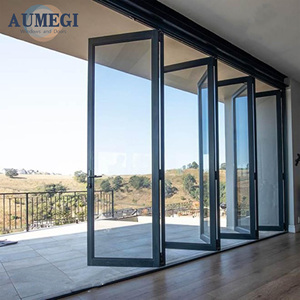
Recommended Configuration: Australian Style Heavy-Duty Folding Systems.
Sealing Strategy: Continuous vulcanized corner gaskets combined with heavy-duty top and bottom track brush seals to prevent dust and driving rain ingress during severe storms.
Recommended Configuration: Electric Retractable Double-Glazed Flat Roof Skylights.
Sealing Strategy: Dual-durometer silicone rubber compression seals with integrated condensation drainage channels, engineered for horizontal water-pooling environments.
The international window seal and window manufacturing sector is undergoing a technology shift driven by strict environmental regulations and automated construction methods:
1. Co-Extrusion and Automated Robotic Assembly: Modern factories are replacing manual seal insertion with inline co-extrusion. Aluminum and UPVC profiles are now extruded directly with bonded TPE/EPDM gaskets, reducing site labor costs and eliminating human assembly error.
2. Bio-Based and Circular Elastomers: European import regulations (such as CBAM) are incentivizing buyers to source seals manufactured from bio-based EPDM polymers and fully recyclable TPV materials, lowering the embodied carbon of building envelopes.
3. Smart Acoustic Weatherstripping: Urban density has elevated sound reduction to a primary selling point. Dual-density micro-foamed seals capable of dampening low-frequency traffic noise ($R_w + C_{tr} \ge 42 \text{ dB}$) are experiencing rapid demand across North America and Europe.
With decades of dedicated extrusion and fenestration experience, our enterprise acts as a direct strategic manufacturing partner for architects, importers, and facade contractors worldwide.
Our in-house CNC toolroom designs and cuts custom extrusion dies for aluminum profiles, UPVC sections, and complex EPDM seal geometries within 7–10 days based on your DWG/CAD drawings.
All complete window assemblies and sealing systems undergo rigorous testing for air permeability (EN 1026), water tightness (EN 1027), wind load resistance (EN 12211), and NFRC thermal performance.
Every extrusion batch undergoes laser digital dimension checking, Shore A hardness verification, tensile elongation testing, and automated optical surface inspection to eliminate defects.
Finished windows and seal reels are packaged in ISPM-15 fumigated solid wooden crates with internal bracing, corner guards, and moisture-absorbing desiccant packs for extended sea transit.
Our profile systems integrate seamlessly with world-leading hardware brands such as ROTO, STAC, SIEGENIA, and HOPO, allowing flexible sourcing to meet client project specifications.
A single dedicated facade engineer handles your account from drawing verification and thermal calculations ($U_w$) to customs documentation and site-level installation support.
Clear answers to critical technical, ordering, and shipping questions for foreign procurement managers.
Depending on profile depth, polyamide thermal break width (up to 34 mm PA66 GF25), and triple-pane Low-E glazing build-ups, our systems achieve certified $U_w$ values ranging from 1.8 W/m²K down to 0.9 W/m²K. Exact U-values are calculated per elevation layout prior to production.
Peroxide-cured EPDM offers significantly lower compression set (<20% vs. >35% for sulfur-cured), superior resistance to blooming/whitening, and extended resistance to UV light and temperature extremes (-40°C to +125°C). This ensures that window sashes remain airtight for decades without shrinking or hardening.
We operate primarily on a project order basis. For standard window systems and profiles, full container loads (FCL - 20GP/40HQ) or consolidated mixed project loads (combining windows, sliding doors, and hardware for a specific building project) offer the best cost efficiency. Custom seal extrusion dies typically require a minimum run of 500 kg to 1,000 kg.
We provide complete submittal packages including DWG profile CAD sections, structural wind load calculations, EN 1026 / 1027 / 12211 test certificates, CE declarations of performance, coating warranty certificates (Qualicoat standard), and step-by-step installation manuals.
Every glass unit and profile bundle is protective film-wrapped, corner-shielded, and packed into ISPM-15 compliant fumigated wooden crates with internal timber bracing. Silica gel desiccants are placed inside sealed plastic wrapping to prevent surface condensation and oxidation during marine transit.
Yes. We supply powder coatings in any standard RAL or NCS color code (minimum 60 µm film thickness), architectural anodizing (15–25 µm), and 3D heat-transfer wood-grain sublimation finishes. Dual-color thermal break extrusions (different interior/exterior colors) are standard options.
Send your architectural elevation schedules, DWG drawings, or custom seal specifications. Our senior engineering team will provide a comprehensive technical proposal and bill of quantities within 48–72 hours.