Explore our NFRC and CE-certified aluminum sliding doors, thermal break windows, and structural glazing solutions designed for high-end residential and commercial developments worldwide.
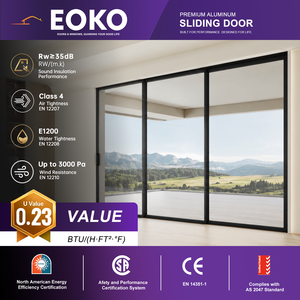
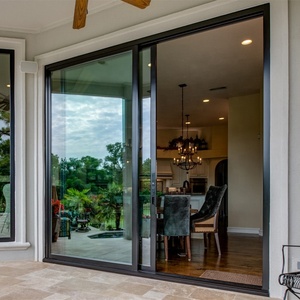
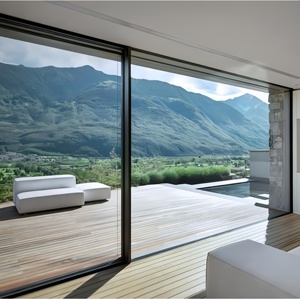
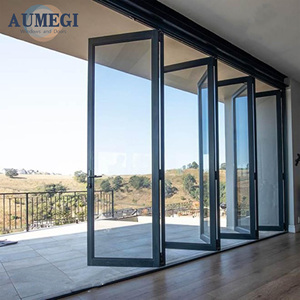
As China’s premier aluminum profile manufacturer and exporter, our technical baseline is anchored in advanced metallurgical engineering, strict quality control (ISO 9001, ISO 14001), and compliance with global fenestration benchmarks. Modern architectural demands have shifted far beyond standard extrusions; today’s high-rise curtain walls, ultra-slim sliding systems, and energy-efficient building envelopes demand exact structural alloy formulations and precise thermal break integration.
We utilize prime-grade 6063-T5, 6061-T6, and 6005A aluminum alloys. By maintaining tight control over magnesium and silicon ratios during billet homogenizing and extrusion, our engineering team guarantees tensile strength values exceeding 230 MPa and yield strengths above 190 MPa—ensuring structural integrity under heavy wind-load pressure (EN 12211 / ASTM E330 standards).
To satisfy net-zero energy building codes, our manufacturing facilities integrate multi-cavity PA66GF25 (25% glass-fiber reinforced polyamide) thermal break strips and pour-and-debridge polyurethane insulation barrier technology. This minimizes profile thermal transmittance (Uf), enabling custom window and door assemblies to achieve system Uw values as low as 0.8 to 1.2 W/m²K when combined with triple Low-E argon-filled glazing.
.webp)
A comprehensive analysis for global buyers, structural engineers, and architectural project managers on navigating decarbonization, material science, and supply chain shifts.
Global environmental mandates, including the EU’s Carbon Border Adjustment Mechanism (CBAM), are reshaping raw material selection. Strategic procurement now prioritizes low-carbon primary aluminum smelted using renewable hydro-power, alongside high-ratio post-consumer recycled aluminum (Ecolabel compliant). Leading Chinese exporters are offering verified Environmental Product Declarations (EPD) to lower scope 3 carbon footprints for international developers.
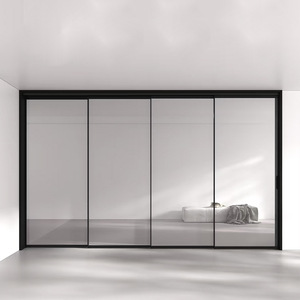
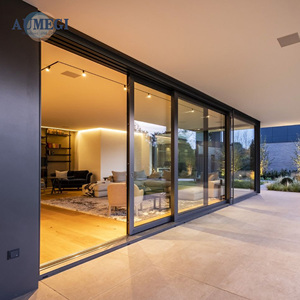
Modern minimalist architectural design demands maximum natural light paired with ultra-thin profile frames. The market is accelerating toward minimalist sliding doors with 20mm to 25mm visible interlocking stiles. Achieving structural rigidity at these slim dimensions requires structural silicone bonding, high-modulus alloy extrusions, and multi-point concealed stainless steel roller tracks capable of carrying pane weights up to 450 kg.
In coastal, tropical, or highly industrial environments, basic powder coating fails prematurely due to filiform corrosion and UV degradation. Future procurement standards enforce 70% PVDF (Polyvinylidene Fluoride) coatings or 25-micron Qualanod-certified anodizing. These surface technologies withstand 4,000+ hours of salt spray testing (ASTM B117), preserving color retention and structural durability over 30-year lifecycle horizons.
To offset escalating on-site labor costs in Western markets, procurement is shifting from traditional stick-built curtain walls toward fully shop-assembled, unitized glazed facade panels. Chinese extrusion manufacturers are expanding CNC machining, corner crimping, and gasket pre-installation to ship ready-to-hang unitized modules directly to overseas job sites.
Leading global buyers require seamless BIM (Building Information Modeling) compatibility. Advanced manufacturers provide parametric DWG, REVIT, and IFC profile models equipped with thermal break calculations, allowing structural engineers to run FEA (Finite Element Analysis) stress simulations prior to die cutting.
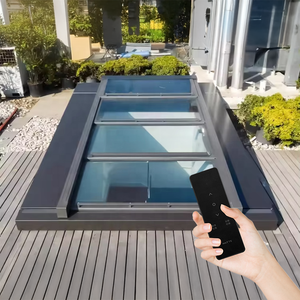
Extrusion technology has extended rapidly into bioclimatic outdoor pergolas, motorized guillotine glass systems, and retractable roof hatches. Heavy-duty extrusions engineered with integrated drainage channels and smart linear actuator housings represent one of the fastest-growing architectural export segments.
Compare standard extrusion benchmarks, alloy selections, surface treatments, and international compliance criteria enforced across our manufacturing facilities.
| Profile Category | Alloy & Temper | Surface Finish Standard | Thermal Transmittance (Uf) | Acoustic Rating (Rw) | Primary Applications |
|---|---|---|---|---|---|
| Ultra-Slim Sliding Systems | 6063-T5 / 6061-T6 | Qualicoat Powder Coating / Anodized 20μm | 1.4 – 1.8 W/m²K | 35 – 42 dB | Luxury Villa Balconies, Minimalist Interiors |
| Passive House Thermal Windows | 6063-T6 High Density | PVDF Fluoropolymer (AAMA 2605) | 0.8 – 1.1 W/m²K | 40 – 48 dB | Cold-Climate Residential, Eco-Hotels |
| Unitized Curtain Wall Profiles | 6005A-T6 / 6061-T6 | PVDF 3-Coat / Electrophoresis | 1.2 – 1.6 W/m²K | 38 – 45 dB | High-Rise Commercial Towers, Skylights |
| Bioclimatic Pergola Beams | 6063-T5 Heavy Wall | Qualicoat Class 2 Architectural Powder | N/A (Structural Rain/Wind) | N/A | Hospitality Outdoor Terraces, Patios |
| Bi-Fold Patio Door Extrusions | 6063-T5 Structural | Wood Grain Sublimation / Anodized | 1.3 – 1.7 W/m²K | 36 – 42 dB | Residential Patio Openings, Resort Villas |
Partnering directly with a premier Chinese aluminum extrusion manufacturer removes middleman markups while providing direct engineer-to-engineer technical collaboration. Our production ecosystem is built around precision, scale, and rigorous compliance:
In-depth answers regarding alloy selection, extrusion tolerances, export logistics, surface treatments, and technical drawing reviews.
Aluminum alloy 6063 is the industry standard for architectural window profiles, doors, and curtain walls because it yields exceptional surface finishes, supports intricate thin-wall extrusion dies, and accepts anodizing and powder coating uniformly. Temper T5 provides an ideal balance of mechanical strength (tensile strength ~200 MPa) and flexibility. Conversely, alloy 6061-T6 offers significantly higher yield strength (~240 MPa) and structural hardness, making it ideal for heavy structural curtain wall mullions, structural connectors, and industrial frameworks where high mechanical load bearing is required.
Aluminum is inherently highly conductive. To prevent thermal bridging between exterior and interior profile surfaces, a thermal break profile isolates the outer aluminum extrusion from the inner section using low-conductivity polyamide (PA66GF25) thermal insulation strips. By broadening the width of the polyamide strip (e.g., from 14.8mm to 24mm or 34mm) and filling internal cavities with aerogel or expanded polyethylene (EPE) foam, profile thermal transmittance (Uf) is dramatically reduced. When paired with Low-E double or triple glazing, system Uw values drop below 1.0 W/m²K, meeting Passive House standards.
For coastal environments (within 5 km of seawater), standard interior-grade powder coatings degrade rapidly due to salt spray and humidity. We strongly recommend specifying 70% PVDF (Fluoropolymer) coatings that comply with AAMA 2605 or Qualicoat Class 3 standards. Alternatively, Class 1 (20 micron) or Class 2 (25 micron) anodizing under Qualanod certification provides outstanding resistance to pitting and filiform corrosion, withstanding salt spray testing in excess of 4,000 hours without chalking or color fading.
Our custom extrusion lines operate in full compliance with European Standard EN 12020-2 (Precision Profiles) and Chinese National Standard GB/T 5237. High-precision tolerances ensure that wall thickness variations, bow, twist, and corner angularity are tightly controlled within ±0.15mm to ±0.3mm depending on profile cross-section size. This precision guarantees flawless gasket channel fitting, effortless corner crimping, and airtight assembly during final fabrication.
To prepare an accurate engineering quote and bill of quantities, we require CAD drawings in DWG, DXF, or PDF format showing cross-sectional elevations, profile wall thicknesses, key dimensions, and specified alloy/temper requirements. Please also indicate preferred surface finishes (RAL color code, PVDF coating, or anodizing micron thickness), estimated linear meters or tonnage, and destination performance standards (e.g., NFRC, CE, AS2047).
Export shipments undergo rigorous protective packaging. Individual profile bars are interleaved with protective PE film or paper tape to eliminate surface friction. Bundles are heat-shrink wrapped in protective plastic film, reinforced with cardboard edge protectors, and loaded into fumigated ISPM-15 wooden crates or heavy-duty steel framed boxes. Pre-assembled window and door units are shipped in vertical A-frame racks with rubber corner protectors and silica gel desiccant packs to prevent condensation damage during multi-week ocean transit.
Send us your project architectural elevations, window schedules, or extrusion drawings. Our senior engineering team will provide profile recommendations, U-value estimations, and factory-direct pricing within 24 to 48 hours.
Get a Quote