Top 10 Slim Sliding Aluminum Doors for Global Buyers examines a fast-changing architectural product category. These doors combine narrow sightlines, large glass areas, and smooth indoor-outdoor movement. Yet appearance alone cannot define quality. A beautiful door can still leak air, bind under load, or lose performance in harsh climates.
Architect Ludwig Mies van der Rohe’s famous principle, “Less is more,” remains useful here. Slim profiles reduce visual obstruction, but they demand careful engineering. This guide compares frame strength, glass compatibility, thermal breaks, drainage, rollers, locks, finish durability, and installation support. It also considers different buyer priorities, from coastal apartments in Australia to energy-conscious homes in Northern Europe. Regional wind exposure, humidity, solar heat, and local building requirements can change the best choice.
The featured Slim Sliding Aluminum Doors are assessed through a practical buyer’s lens. We look beyond catalog photographs. Track movement matters when a panel weighs hundreds of kilograms. Gaskets matter after years of sunlight. Factory testing matters, but installation quality matters too. That point is easy to underestimate.
No ranking can suit every project. Some systems offer exceptional minimalism but limited panel sizes. Others provide stronger performance with slightly wider frames. Budget, lead time, replacement parts, and technical communication also shape ownership. A small weakness may become expensive later.
This introduction sets a clear path through the top ten options. Readers will find useful comparisons, realistic limitations, and questions worth asking before placing an international order.
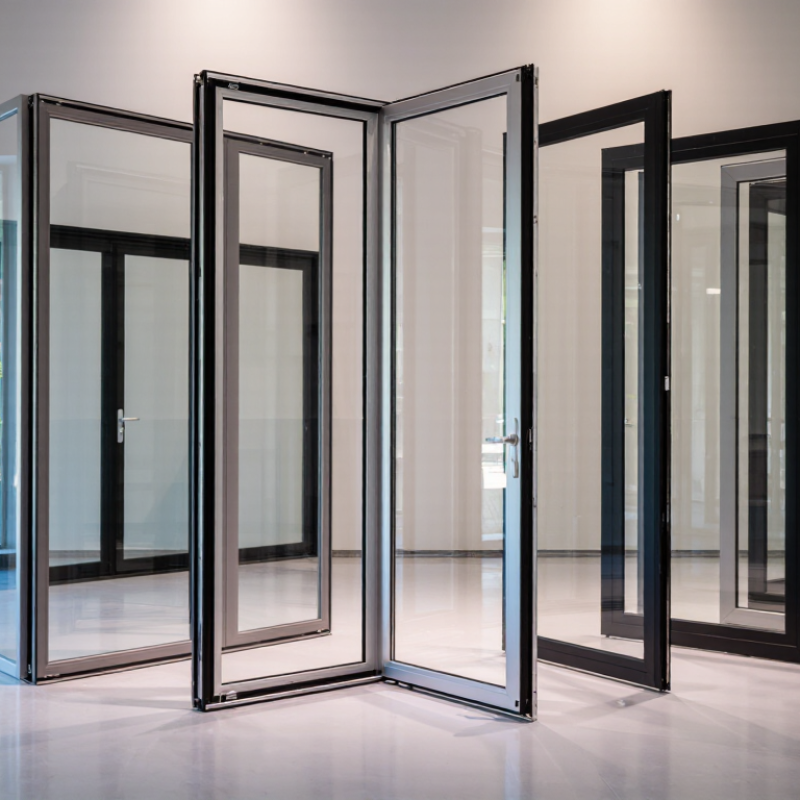
Top 10 Slim Sliding Aluminum Doors for Global Buyers
What Defines a Slim Sliding Aluminum Door?
A slim sliding aluminum door is defined by more than a narrow frame. Its visible sightline, frame depth, and glass proportion create the refined appearance buyers notice. Quality systems use strong aluminum profiles to support large glass panels without excessive bulk. Slim does not mean fragile.
Thermal breaks help reduce heat transfer through the aluminum frame. This matters in both hot and cold regions. Multi-point locks, durable rollers, and continuous weather seals improve daily performance. Proper drainage channels also help prevent water buildup after heavy rain. In coastal areas, buyers should request corrosion-resistant finishes and suitable hardware. A door may look elegant but perform poorly if these details are ignored.
Tips: Check the tested air, water, and wind ratings before ordering. Confirm the maximum panel weight and opening size. Ask whether replacement rollers and seals are available locally. Installation quality matters greatly; uneven floors can make a premium door slide badly. Measure twice.
Real project experience shows that very thin profiles can reduce adjustment tolerance. This is an overlooked compromise. Buyers should compare thermal performance, glass safety, hardware life, and maintenance access, not only the frame width. For apartments, villas, and commercial spaces, the best slim sliding door balances clean sightlines with reliable operation.
Top 10 Slim Sliding Aluminum Doors for Global Buyers
How the Top 10 Doors Are Selected
The top ten are selected through measurable performance, not appearance alone. The U.S. Department of Energy reports that windows can represent 25–30% of residential heating and cooling energy use. Therefore, thermal transmittance receives significant weight. Each door is reviewed for frame U-value, glass specification, air leakage, water resistance, and solar heat gain.
Testing matters.
Performance claims should reference recognized methods, including ASTM E283 for air leakage, ASTM E331 for water penetration, and EN 14351-1 for external doors. We also examine structural deflection, roller durability, lock security, drainage design, and corrosion resistance. A narrow sightline is valuable, but it cannot excuse a weak frame or difficult adjustment.
The selection also considers regional conditions. Coastal projects need stronger corrosion protection. Cold climates require better thermal breaks and low-emissivity glazing. Hot regions may prioritize solar control and ventilation. The International Energy Agency identifies buildings as responsible for about 30% of global final energy consumption, making envelope performance commercially important. Yet test results can differ between laboratories, installation quality, and actual weather. That uncertainty deserves attention. We score documentation, warranty clarity, replacement hardware access, and installer guidance. A beautiful door that cannot be serviced locally is not truly competitive.
How the Top 10 Doors Are Selected
Top 10 Slim Sliding Aluminum Doors for Global Buyers: Key Design and Performance Specifications
The best slim sliding aluminum doors balance narrow sightlines with dependable structural performance. Buyers should check frame depth, panel weight, and maximum tested dimensions. A very thin profile can look elegant, but it may reduce stiffness in large openings. I have seen attractive doors develop difficult movement when roller capacity was underestimated. Choose corrosion-resistant aluminum with a durable powder-coated or anodized finish. Ask for documented air, water, and wind-load test results, not only attractive photographs.
Tips: Compare the door’s U-value with the local climate. Select low-emissivity glazing for stronger thermal control. Inspect the interlock, seals, drainage paths, and locking points. Smooth rollers should carry the actual glass weight with a safety margin. Small details matter.
Glass selection also affects comfort and safety. Double glazing often improves insulation, while laminated glass can reduce breakage risks. A low threshold supports accessibility, but poor drainage may allow water inside. Request section drawings, installation tolerances, warranty terms, and maintenance guidance. Independent laboratory reports add credibility, especially for international projects. Do not assume every “top ten” door performs equally. Site exposure, coastal air, installation quality, and cleaning habits can change results. Even a well-designed system may fail when the opening is measured carelessly.
When screening the top ten slim sliding aluminum doors, start with the glass, not the frame. Double glazing with low-emissivity coatings can reduce radiant heat loss, while laminated glass improves impact resistance. The International Energy Agency reported that buildings used about 30% of global final energy in 2022. Glass selection therefore affects comfort and operating costs. Ask for tested U-value, solar heat gain coefficient, visible transmittance, and acoustic ratings. These figures matter more than attractive product photography.
Frame quality appears in the details. A continuous thermal break limits heat transfer through narrow aluminum sections. Look for clean corner joints, stainless-steel rollers, adjustable guides, and corrosion-resistant fasteners. Hardware should move smoothly with one hand, even after repeated cycles. Security needs closer inspection. Multi-point locking, anti-lift blocks, laminated inner panes, and recessed handles provide useful resistance. EN 1627 classifications or comparable local testing offer stronger evidence than vague “high security” claims. Air and water performance should also be supported by reports using recognized standards, such as ASTM E283 and ASTM E331. I would check drainage paths personally; a beautiful frame can still leak at its track. Some slim systems sacrifice hardware access for appearance. That trade-off deserves honest questioning before purchase.
| No. | Door Configuration | Typical Maximum Panel Size | Recommended Glass | Glass Performance | Visible Frame Sightline | Frame Depth & Thermal Break | Hardware and Operation | Security Features | Best-Suited Application |
|---|---|---|---|---|---|---|---|---|---|
| 1 | Two-Panel Slim Slider One fixed panel and one sliding panel |
Up to 3,000 mm wide × 3,000 mm high per panel | Double-glazed low-e safety glass | Typical Ug value: 1.0–1.3 W/m²K; laminated inner pane available | Approximately 25–35 mm | Approx. 90–110 mm; polyamide thermal break recommended | Stainless-steel rollers, adjustable carriage, flush pull handle | Multi-point lock, anti-lift blocks, internal glazing beads | Apartments, balconies, and compact residential openings |
| 2 | Three-Panel Center-Opening Slider Two sliding panels meeting at the center |
Up to 2,800 mm wide × 3,000 mm high per panel | Tempered or laminated double glazing | Typical acoustic rating: 32–38 dB, depending on glass build-up | Approximately 30–40 mm | Approx. 100–125 mm; insulated multi-chamber frame | Twin stainless-steel roller sets and synchronized closing option | Hook bolts, anti-jump rollers, keyed cylinder or thumb-turn lock | Wide living rooms, terraces, and residential entrances |
| 3 | Four-Panel Bi-Parting Slider Two panels sliding in each direction |
Up to 2,500 mm wide × 3,000 mm high per panel | 6–12–6 mm insulating glass or laminated equivalent | Typical center-glass U value: 1.1–1.5 W/m²K | Approximately 35–45 mm | Approx. 110–140 mm; thermally improved sill available | Heavy-duty tandem rollers, low-friction track, soft-close option | Lockable meeting stiles, anti-lift retainers, reinforced corner joints | Large openings requiring a central clear passage |
| 4 | Lift-and-Slide Door Handle-operated panel lifted off the seal before sliding |
Up to 3,300 mm wide × 3,200 mm high per panel | Triple glazing or laminated low-e double glazing | Typical whole-door Uw value: 1.0–1.6 W/m²K, subject to size and glass | Approximately 40–55 mm | Approx. 120–160 mm; high-performance thermal break | Stainless-steel or coated steel tandem rollers; ergonomic lift handle | Multi-point espagnolette lock, anti-lift hooks, reinforced lock keep | High-end residential projects and large exterior openings |
| 5 | Minimal-Threshold Slider Recessed or near-flush sill for easier access |
Up to 2,700 mm wide × 2,800 mm high per panel | Toughened laminated safety glass | Typical water drainage relies on concealed channels and sill falls | Approximately 30–45 mm | Approx. 100–130 mm; thermal break with isolated sill option | Low-profile stainless-steel rollers and replaceable drainage inserts | Multi-point lock, anti-lift device, laminated security glass | Accessible homes, hospitality areas, and indoor-outdoor transitions |
| 6 | Thermal-Break Slim Slider Insulated frame focused on energy performance |
Up to 2,600 mm wide × 3,000 mm high per panel | Low-e insulating glass with warm-edge spacer | Typical frame-and-glass Uw value: 1.2–1.8 W/m²K | Approximately 35–50 mm | Approx. 95–130 mm; 20–34 mm polyamide isolators | Adjustable tandem rollers, compression seals, optional restrictor | Multi-point locking rail, anti-lift blocks, impact-resistant glass options | Cool or mixed climates where thermal insulation is important |
| 7 | Coastal-Grade Slim Slider Corrosion-resistant components for marine exposure |
Up to 2,500 mm wide × 2,800 mm high per panel | Laminated low-e glass with silicone edge seal | Salt-air durability depends on coating, drainage, and fastener selection | Approximately 35–50 mm | Approx. 100–135 mm; thermally broken frame recommended | Marine-grade stainless-steel rollers and corrosion-resistant fixings | Laminated glass, multi-point lock, tamper-resistant handle fixings | Coastal homes, resorts, and high-humidity environments |
| 8 | Acoustic Slim Slider Configuration optimized for noise reduction |
Up to 2,400 mm wide × 2,700 mm high per panel | Asymmetric laminated acoustic double glazing | Typical sound reduction: approximately 38–45 dB, subject to testing | Approximately 40–55 mm | Approx. 105–140 mm; deeper glazing pocket may be required | Precision rollers, continuous perimeter seals, controlled closing hardware | Laminated security glass, multi-point lock, reinforced lock-side stile | Urban apartments, offices, and properties near busy roads |
| 9 | Large-Format Slim Slider Oversized panels with reinforced load-bearing frame |
Up to 3,500 mm wide × 3,300 mm high per panel | 6–16–6 mm or laminated triple glazing, subject to structural calculation | Panel weight commonly requires engineered rollers and verified deflection limits | Approximately 45–65 mm | Approx. 130–180 mm; reinforced thermally broken sill | Heavy-duty tandem or quadruple rollers, optional motor-assisted operation | Multipoint locking, anti-lift system, laminated glass, motor safety sensors | Luxury residences, villas, showrooms, and panoramic façades |
| 10 | Automatic Sliding Aluminum Door Sensor-controlled powered opening |
Up to 2,000 mm wide × 2,600 mm high per moving panel | Tempered laminated safety glass | Safety glazing and monitored closing force required for public access areas | Approximately 45–70 mm | Approx. 100–150 mm; thermal break optional by climate and system | Brushless motor, presence sensors, emergency release, battery backup option | Electromechanical lock, anti-pinch monitoring, access-control integration | Hotels, offices, retail entrances, and controlled-access buildings |
Technical note: Dimensions, thermal values, acoustic performance, air and water resistance, and panel weights are typical design ranges for slim sliding aluminum door systems. Final performance must be verified through project-specific structural calculations and applicable local or international testing standards.
For global buyers, slim sliding aluminum doors should be judged beyond frame width. Confirm the thermal performance, wind-load rating, water resistance, and acoustic data. Requirements vary by climate and building type. A coastal project may need stronger corrosion protection, while a cold region needs better thermal breaks. Ask for current test reports, product drawings, and installation instructions before ordering.
Installation quality often decides whether a door performs well. Check the opening size on site, not only the architect’s drawing. The sill must sit level, supported, and properly drained. Use compatible membranes and fasteners for the wall system. Installers should verify roller adjustment, glass clearance, locking points, and smooth operation. Small errors matter.
Safety glazing and impact requirements deserve close attention. Local rules may also cover accessibility, emergency escape, energy efficiency, and child safety. A compliant door in one country may need additional testing elsewhere. Consult the local building authority or a qualified engineer before production. Keep serial records and delivery inspections. Details are easy to underestimate.
Some buyers focus too heavily on the narrowest sightline. That choice can increase maintenance demands or reduce hardware tolerance. In real projects, service access matters. We have seen beautiful installations fail because drainage channels were blocked by finish materials. Leave practical clearance, document every adjustment, and challenge specifications that look impressive but lack verified performance.
Check frame depth, panel weight, maximum tested size, and roller capacity. A narrow profile can lose stiffness in large openings. Ask for test reports, not only photographs.
Double glazing can improve insulation. Low-emissivity coatings may reduce heat transfer and cooling demand. Laminated glass can reduce breakage risks and improve impact resistance. The right choice depends on climate and building use.
Request U-value, solar heat gain, visible transmittance, acoustic ratings, air leakage, water resistance, and wind-load results. These figures are more useful than appearance. I would not accept vague performance claims.
Look for stainless-steel rollers, adjustable guides, corrosion-resistant fasteners, and accessible service points. The rollers should carry the actual glass weight with a safety margin. Test movement with one hand.
Check multi-point locks, anti-lift blocks, recessed handles, and laminated inner panes. Ask for recognized security testing or comparable local evidence. A phrase like “high security” proves very little.
Measure the opening on site, not only from drawings. Keep the sill level, supported, and properly drained. Confirm roller adjustment, glass clearance, locking points, and smooth operation. Small errors matter.
Yes. Coastal locations need stronger corrosion protection and careful cleaning plans. Cold regions usually need better thermal breaks and suitable glazing. Local exposure changes the result.
Request section drawings, current test reports, installation instructions, tolerances, warranty terms, maintenance guidance, and delivery records. Keep serial information. Some documents may still be incomplete, so review them critically.
No. Extremely narrow frames may reduce stiffness, hardware tolerance, or service access. A beautiful door can still leak if its drainage path is blocked. Practical performance should win.
Slim Sliding Aluminum Doors combine narrow sightlines with the strength, durability, and low-maintenance benefits of aluminum framing. This guide explains what distinguishes a truly slim sliding system, including balanced proportions, smooth panel movement, thermal performance, weather resistance, and long-term structural stability. The top 10 options are selected through practical criteria such as frame design, glass quality, hardware reliability, security features, customization flexibility, and suitability for different residential and commercial applications.
Readers will also find a clear comparison of glazing types, frame finishes, rollers, locks, seals, handles, and safety components. Beyond appearance and performance, the guide highlights essential considerations for global buyers, including accurate measurements, shipping protection, installation requirements, drainage, climate conditions, local building standards, energy expectations, and compliance documentation. By evaluating these factors together, buyers can choose Slim Sliding Aluminum Doors that provide efficient operation, comfortable interiors, dependable security, and lasting value across a wide range of markets and project conditions.