Choosing a supplier for Aluminum Composite Panel Cladding involves more than comparing prices or browsing finish samples. Panel quality, core composition, coating performance, and fabrication tolerances can affect a project’s appearance and service life. Details matter.
This 2026 guide examines suppliers through practical considerations: product range, technical documentation, customization, delivery capacity, and after-sales support. A reliable supplier should provide clear specifications, relevant test reports, installation guidance, and consistent answers to technical questions. Ask how panels perform under the conditions your project actually faces, including sun exposure, wind, moisture, and temperature changes. A glossy sample can look convincing. It cannot tell the whole story.
Supplier strengths vary by region, project scale, and intended application, so no single shortlist will suit every buyer. Some companies may offer impressive finishes but limited local support; others may be dependable yet provide fewer design options. That trade-off deserves attention. The sections ahead compare notable manufacturers and suppliers, outline questions to ask before requesting a quotation, and highlight common points buyers should verify. Use the information as a starting point, then confirm current product data directly with each supplier. That extra check is not glamorous, but it can prevent avoidable surprises during specification, fabrication, and installation.
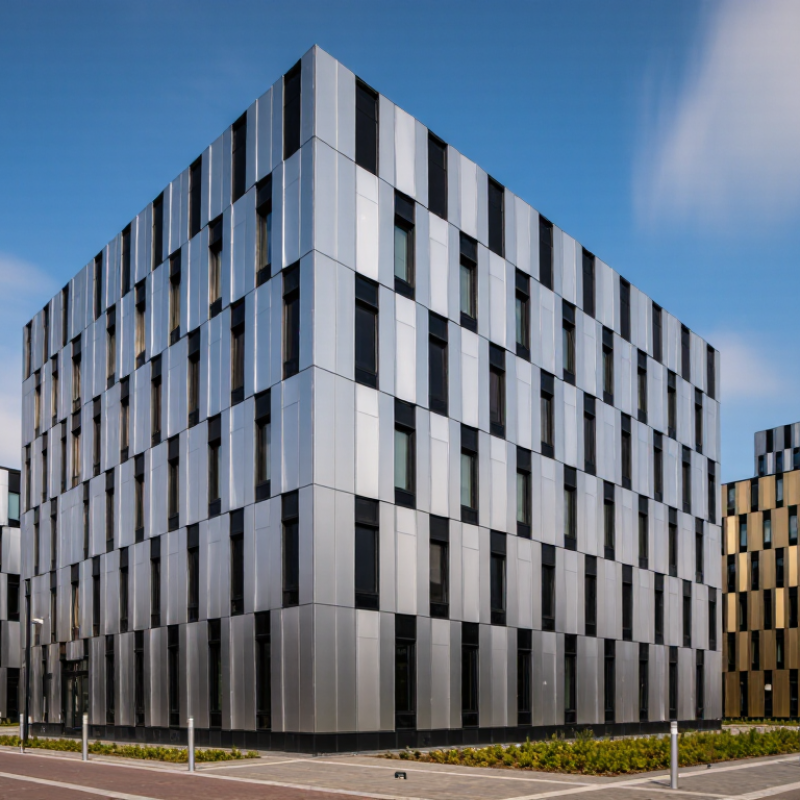
An aluminum composite panel usually has two thin aluminum skins bonded to a central core. The skins provide a smooth, durable surface, while the core helps keep the panel light and relatively rigid. Panel thickness, alloy, coating, and core composition all affect performance. Details matter.
For cladding, panels are commonly fixed to a supporting rail system, with joints designed to manage movement and shed water. Installers need to consider wind loads, drainage, thermal expansion, and the condition of the substrate. A neat façade can still conceal poor detailing. That is worth checking.
These panels are used on commercial façades, entrance canopies, soffits, and renovation projects where a consistent finish and manageable panel weight are useful. Coated surfaces offer a range of colors and textures, but weather exposure and cleaning needs should guide selection. Fire performance cannot be judged by appearance or panel name alone; it depends on the specific core, assembly, and tested system. Verify technical documentation and local project requirements before specifying. Even then, site workmanship can vary, so inspection of fixings, joints, and drainage paths remains important.
Anonymous supplier-evaluation framework. The technical ranges below are indicative industry information, not specifications for any particular supplier or product. Confirm project requirements and test documentation before selection.
| Evaluation area | Typical construction or benchmark | Cladding relevance | What to verify with a supplier |
|---|---|---|---|
| Panel structure | Two aluminum face sheets bonded to a central core; overall panel thickness commonly falls around 3–6 mm, depending on the product. | The bonded sandwich construction combines relatively low weight with a flat, rigid sheet suitable for façade fabrication. | Obtain the product data sheet showing total thickness, face-sheet thickness, core type, tolerances, and intended application. |
| Core and fire performance | Cores may be polymer-based or mineral-filled. Fire performance varies by formulation and complete panel assembly. | Core selection affects fire behavior and suitability for different building types and façade applications. | Request reports for the exact panel and relevant assembly. Check the classification required by local codes, such as EN 13501-1 where applicable. |
| Face sheets and flatness | Aluminum face-sheet thickness and alloy vary by product; both influence stiffness, forming behavior, and resistance to handling damage. | Appropriate face sheets help the panel retain its appearance during cutting, routing, folding, and installation. | Check declared face-sheet thickness, alloy or temper information, dimensional tolerances, and flatness requirements for the project. |
| Coating and finish | Available finishes include solid colors, metallic effects, and other architectural finishes; coating systems and durability vary. | The finish affects color consistency, weathering resistance, cleaning needs, and the façade’s visual appearance. | Request coating-system details, applicable test evidence, color samples, cleaning guidance, and written warranty terms. |
| Fabrication capability | Panels can be cut and routed for folding, cassette fabrication, and other project-specific forms, subject to product instructions. | Correct fabrication supports clean joints and helps avoid damage to the face sheets or bond. | Ask for fabrication manuals, recommended tools and bend details, and confirmation that the selected panel is suitable for the proposed system. |
| Bond integrity and quality control | Bond performance depends on materials and manufacturing controls; test methods and acceptance criteria should be identified for the product. | Reliable bonding helps the face sheets and core act as a composite panel during service. | Review quality-control records, relevant test reports, batch traceability, and procedures for handling or storage. |
| Façade system compatibility | Performance depends on the complete design, including panels, joints, fixings, subframe, insulation, cavity, and supporting structure. | A panel alone does not establish the structural, weather, or fire performance of a finished façade. | Confirm system-specific design details and obtain project approvals, calculations, and assembly test evidence where required. |
| Common cladding uses | Applications include building façades, soffits, entrance features, column covers, and interior architectural finishes, subject to product approval. | The appropriate panel and fixing system depend on exposure, building use, geometry, and applicable regulations. | Match the panel type and installation system to the project’s fire, wind-load, weathering, and maintenance requirements. |
It usually has two thin aluminum skins bonded to a central core. The core helps keep it lightweight and relatively rigid.
They appear on commercial façades, entrance canopies, soffits, and renovation projects. Their manageable weight and consistent finish can be useful.
They are commonly fixed to supporting rails. Joints should manage movement and help shed water.
Check wind loads, drainage, thermal expansion, and the substrate condition. Inspect fixings and joints, too. Small details matter.
Request samples, technical datasheets, and quality-control records. Confirm thickness, core type, finish, and warranty conditions in writing.
Appearance alone cannot show fire performance. Review current test reports for the specific panel construction and proposed assembly.
Consider weather exposure and cleaning needs. View a sample in daylight; indoor lighting can make its color or texture look different.
No. Cladding is one part of the building envelope, not the whole energy picture. I may be overlooking project-specific factors.
Ask about replacement panels, realistic lead times, and included system components. A low quote may leave something out. Verify it.
This article explores Aluminum Composite Panel Cladding, explaining how its layered construction combines lightweight core material with durable metal surfaces to support a range of exterior applications. It outlines common performance considerations, including weather resistance, rigidity, finish options, maintenance needs, and suitability for different building designs. The guide also presents practical criteria for evaluating suppliers in 2026, such as product consistency, technical support, documented certifications, manufacturing capacity, delivery reliability, and service coverage.
A structured comparison of supplier offerings can help project teams understand differences in panel specifications, available finishes, quality documentation, and geographic reach. The article concludes with a project-focused selection process: define performance and design requirements, confirm applicable documentation, assess samples and support, review production and delivery capabilities, and compare proposals against the project’s budget and schedule. These steps help buyers make informed decisions and identify a supplier whose products and services align with the needs of a particular cladding project.

