Choosing Thermal Break Aluminum Windows is not simply a matter of selecting the slimmest frame or the lowest price. A reliable decision begins with your climate, building orientation, glass specification, and installation conditions. Aluminum transfers heat quickly, but a polyamide thermal barrier separates the interior and exterior frame sections. This design can reduce heat flow, condensation risk, and indoor temperature swings when engineered correctly.
Look beyond the product brochure. Check the complete window system, including frame U-value, glass U-value, solar heat gain coefficient, air leakage, water resistance, and wind-load performance. Ask for tested data from recognized laboratories or certification bodies. Local building requirements still matter. A window suitable for a mild coastal home may perform poorly in a cold, windy region. The reverse can also happen.
Inspect the practical details. Are the thermal breaks continuous around the sash? Are corner joints properly sealed? Does the drainage path lead water outside? A skilled installer should explain these points clearly, not hide them behind technical language. Poor fitting can defeat an excellent frame, leaving drafts around the edges.
No window is perfect. Very large glass panels may increase solar gain, while darker frames can become hot in direct sunlight. I would compare at least three quotations, but I would not compare prices alone. Review warranties, maintenance guidance, replacement-part availability, and the installer’s completed projects. This guide will help you question marketing claims, identify meaningful performance data, and choose a balanced solution for comfort, durability, and long-term energy efficiency. Recheck your assumptions before ordering.
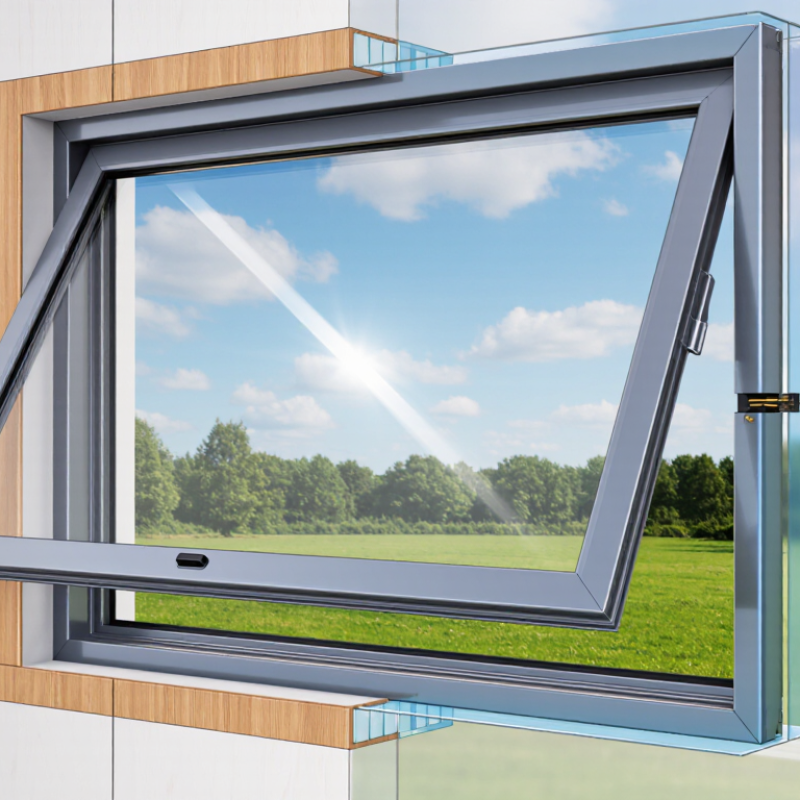
How to Choose Thermal Break Aluminum Windows
Define Thermal Break Windows: Aluminum Conducts 160–205 W/m·K
Aluminum transfers heat quickly. Engineering references, including the ASHRAE Handbook—Fundamentals, commonly report conductivity near 160–205 W/m·K for aluminum alloys. That explains the cold interior frame often found beside winter glass. A thermal break interrupts this path. A reinforced polyamide strip separates the exterior and interior aluminum sections, reducing direct heat flow through the frame.
The detail matters. A wider, continuous thermal barrier usually performs better than a thin interruption with gaps. Check the complete window U-factor, not only the aluminum conductivity. U.S. Department of Energy guidance estimates that windows can contribute 25–30% of residential heating and cooling energy use. Poor installation can erase part of the tested benefit. Foamed gaps, tilted frames, or missing sill drainage create real weaknesses.
Look for independently tested results under recognized standards, such as NFRC procedures or EN ISO 10077 calculations. Ask for frame, glass, spacer, and whole-window values. They are not interchangeable. A low frame U-value may still hide a weaker glass edge. I have seen specifications that looked excellent on paper but ignored installation tolerances. That deserves skepticism. For cold climates, inspect condensation resistance and interior surface temperatures, especially around corners. Small details matter.
The thermal break is the frame’s quiet performance layer. Polyamide insulation usually has thermal conductivity near 0.3 W/m·K, while aluminum is roughly 160–205 W/m·K. This large difference interrupts heat flow through the frame. However, 0.3 W/m·K is not the whole window’s U-value. Frame depth, cavity design, glass, seals, and installation also matter. A low material value alone can create false confidence.
The U.S. Department of Energy states that windows may represent about 25–30% of residential heating and cooling energy use. NFRC guidance also separates frame, glass, and whole-window performance ratings. Ask for tested U-values, not only laboratory material figures. Check whether the supplier references EN ISO 10077-2 or another recognized calculation method. On a sample corner, inspect the continuous polyamide strip. Gaps, weak joints, or short insulation paths deserve questions. Small details matter.
Tips: Request the polyamide’s declared conductivity and operating temperature range. Confirm the thermal break remains continuous around corners, meeting rails, and drainage zones. Compare whole-window U-values under the same test conditions. A thicker frame is not automatically better. This is where selection becomes less tidy. Installation can still undermine good factory data, especially around the perimeter seal. A careful site inspection is worth more than a glossy specification sheet.
How to Choose Thermal Break Aluminum Windows
A thermal break separates the inner and outer aluminum frames with a low-conductivity material. This interrupts the metal’s heat path. When comparing windows, check the NFRC label for the whole assembly, not glass alone. The listed U-factor includes the frame, glazing, spacer, and operating configuration. Lower numbers indicate better resistance to heat flow. For many energy-conscious projects, target a U-factor of 0.30 Btu/h·ft²·°F or lower.
Read the exact product configuration. A fixed window may rate better than the same model with operable hardware. Small changes matter. Confirm the size, glass package, and frame type match your quotation. NFRC ratings create a reliable comparison because manufacturers follow a common testing method. Still, a laboratory number is not a guarantee of field performance. Installation can change the result.
Look closely at the perimeter.
A poorly sealed joint can waste the benefit of a strong U-factor. During a site review, inspect shims, backer rod, sealant continuity, and insulation around the frame. Also compare air leakage and solar heat gain coefficient, especially for sunny elevations. A low U-factor may reduce winter losses, yet excessive solar gain can raise summer cooling loads. I have found that design teams sometimes chase one impressive number. That approach is convenient, but incomplete. Weather, glass area, shading, and installation quality all deserve equal attention.
Compare U-Factors: Use NFRC Ratings to Target ≤ 0.30 Btu/h·ft²·°F
Lower U-Factor values indicate better resistance to heat transfer. In this comparison, thermally improved aluminum frames with low-emissivity double glazing are near the 0.30 target, while thermally broken frames with low-emissivity triple glazing typically provide the lowest heat-transfer rates. Always verify the complete window assembly U-Factor on the NFRC label.
When choosing thermal break aluminum windows, inspect the whole-window U-value, not only the glass center. A lower U-value means less heat moves through the complete window assembly. The frame, glass, spacer, seals, and installation edge all influence this result. A high-performing pane can lose much of its benefit through a conductive frame or poor perimeter sealing.
Low-E double glazing often provides a practical balance between insulation, daylight, weight, and cost. Its coating reflects interior heat toward the room while allowing useful sunlight to enter. An argon-filled cavity and warm-edge spacer can further reduce heat transfer. Check the certified whole-window value rather than relying on a product brochure’s glass-only figure. Small differences matter.
Triple glazing usually lowers the U-value further, especially in cold climates or highly conditioned buildings. However, it adds weight and may reduce solar heat gain or visible light. More glass is not automatically better. I have seen designs where triple units created unnecessary structural demands because the actual heating benefit was modest. Frame depth, sash strength, orientation, and local climate must be reviewed together. Ask for documented test data, spacer details, coating locations, and installation guidance. Condensation performance also deserves attention, since indoor humidity and thermal bridges can change real-world results. A carefully installed Low-E double unit may outperform a poorly fitted triple unit.
How to Choose Thermal Break Aluminum Windows
A thermal break improves frame insulation, but it does not prove weather performance. Ask for test reports based on AAMA/WDMA/CSA 101/I.S.2/A440. This standard evaluates air leakage, water penetration, and structural performance. Check the tested window size, glass configuration, specimen orientation, and laboratory date. Small samples can produce comforting results. They may not represent a large sliding unit.
Air leakage deserves close attention. The U.S. Department of Energy reports that window heat gain and loss can represent 25–30% of residential heating and cooling energy use. A reliable report should show the tested leakage rate and pressure. Lower leakage generally indicates tighter construction, but installation quality still matters. A perfect factory test can fail beside a poorly sealed sill.
Water testing should identify the pressure applied and whether leakage occurred. Wind testing should show design pressure, structural pressure, and any permanent deformation after testing. Compare these values with the project’s exposure, building height, and local wind conditions. Do not choose by a single “passed” label. For coastal or high-rise projects, request site-specific engineering review and field verification under applicable AAMA methods. Thermal breaks can reduce conductive heat transfer. They cannot correct weak corners, damaged gaskets, or inaccurate installation. I would also inspect a full-size mock-up, because paper evidence is useful, but real joints are less forgiving.
| Performance Dimension | What to Verify | Applicable Standard or Test Method | Realistic Acceptance Criteria or Reference Value | Selection Guidance |
|---|---|---|---|---|
| Air Leakage | Air volume passing through the closed and locked window assembly under a controlled pressure difference. |
AAMA/WDMA/CSA 101/I.S.2/A440 ASTM E283 laboratory air-leakage test |
Common product-class limits:
|
Request the complete laboratory report, including the tested size, configuration, hardware, glazing, and product class. Do not apply a result from one configuration to every window size or opening type. |
| Water Penetration | Resistance to uncontrolled water entry through joints, seals, drainage paths, and operating components during simulated wind-driven rain. |
AAMA/WDMA/CSA 101/I.S.2/A440 ASTM E331 laboratory water-penetration test |
No uncontrolled water penetration is permitted during the standard test. The test pressure is determined by the product performance class; the standard commonly relates water-test pressure to the product's design pressure. | Select a water rating appropriate for the building exposure. Coastal, high-rise, wind-driven-rain, and heavily exposed elevations generally require more conservative project-specific criteria. |
| Wind Load and Structural Strength | Ability of the frame, sash, glass, hardware, anchors, and connections to resist positive and negative wind pressure without unacceptable damage or permanent deformation. |
AAMA/WDMA/CSA 101/I.S.2/A440 ASTM E330/E330M structural-performance test |
The required design pressure is project-specific. A typical laboratory structural test uses pressure equal to 1.5 times the specified design pressure. The assembly must meet the standard's deflection, damage, and operability requirements. | Confirm the required design pressure from the project wind-load calculation and local building code. Compare it with the window's tested performance grade or product grade, not only with the glass thickness. |
| Performance Grade | Overall classification combining air leakage, water penetration, structural performance, operating force, and related durability requirements. | AAMA/WDMA/CSA 101/I.S.2/A440 | Performance grades are expressed as PG values, such as PG 30, PG 50, or PG 70. The number represents the product's specified design pressure in pounds per square foot; it is not a universal substitute for a project wind-load calculation. | Choose a PG value equal to or greater than the required project design pressure, while also checking the tested product size, configuration, and installation condition. |
| Thermal Break Continuity | Continuity and effectiveness of the non-metallic separator between the interior and exterior aluminum components. |
Project specification and product construction review NFRC 100 for whole-product U-factor calculations or ratings, where applicable |
There is no single AAMA/WDMA/CSA air, water, or wind value that proves thermal-break quality. A credible evaluation should identify the thermal-break material, location, continuity, and calculated or rated whole-window U-factor. | Check corners, mullions, meeting rails, hardware zones, and frame-to-sash interfaces. A thermal break that is interrupted by conductive metal paths can reduce thermal performance even when the nominal frame design appears thermally improved. |
| Condensation Resistance | Resistance of the complete window to interior-surface condensation under defined indoor and outdoor temperature and humidity conditions. | NFRC 500 for condensation-resistance rating methodology, where applicable | Condensation resistance is reported as a rating or calculated result rather than as an AAMA/WDMA/CSA air, water, or wind pass/fail value. Higher ratings generally indicate better resistance under the tested conditions. | Use the project's indoor humidity, outdoor design temperature, glazing type, spacer, frame, and thermal-break details when comparing products. Condensation performance is climate- and installation-dependent. |
| Factory Testing Documentation | Traceability between the tested product and the proposed product supplied to the project. |
AAMA/WDMA/CSA 101/I.S.2/A440 test documentation Accredited laboratory report, certification record, or product evaluation documentation |
The documentation should identify the product type, dimensions, operable configuration, glazing, hardware, test pressures, air leakage, water results, structural results, and applicable standard edition. | Reject reports that omit the tested configuration or provide only general marketing statements such as “weather resistant” or “high performance.” |
| Field Water Testing | Performance of the installed window, perimeter sealants, flashing, sill pan, drainage, and adjacent wall interface. |
AAMA 502 for newly constructed fenestration field testing AAMA 503 for newly installed fenestration in occupied or existing buildings AAMA 501.1 for field water penetration testing using a spray rack |
Field testing verifies the installed assembly and surrounding interface. The test method and project specification determine the test pressure, duration, and pass/fail requirements. | Perform testing on representative elevations and critical conditions before the installation is complete. Laboratory performance cannot compensate for deficient flashing, sealants, anchors, or rough-opening preparation. |
| Installation and Drainage | Compatibility of the window's sill drainage, end dams, weeps, perimeter seals, anchors, shims, and flashing with the wall system. |
AAMA 2400 installation practices, where applicable CSA A440.4 window installation practice, where applicable Project specifications and local building code |
The installation must preserve the designed drainage path and must not block weep holes or bridge the thermal break with unintended conductive materials. | Review shop drawings and installation details before ordering. The window, rough opening, insulation, air barrier, water-resistive barrier, and flashing must be treated as one connected system. |
| Important: Air, water, and structural values are dependent on the applicable edition of the standard, product class, tested size, configuration, glazing, hardware, and installation method. Always verify the adopted local code, project design pressure, current laboratory documentation, and field-testing requirements before approving a thermal break aluminum window system. | ||||
It separates interior and exterior aluminum sections with a reinforced polyamide strip. This interrupts direct heat transfer through the frame. The frame feels less cold indoors. No shortcut.
Aluminum conducts heat quickly, at roughly 160–205 W/m·K. Without separation, winter heat can escape through the frame. A thermal break reduces this conductive path. It does not solve every window problem.
No. Polyamide may conduct about 0.3 W/m·K, but the complete U-value includes glass, spacers, seals, and installation. A low material figure can create false confidence. Ask for tested whole-window results.
Check whether the polyamide strip remains continuous around corners, meeting rails, and drainage areas. Look for gaps, weak joints, or short insulation paths. A sample corner can reveal poor continuity. Small details matter.
Not necessarily. Frame depth, cavity design, glazing, seals, and installation all influence performance. A thick frame may still have weak thermal paths. This choice is less tidy than a specification sheet suggests.
Request separate frame, glass, spacer, and whole-window U-values. Compare results tested under identical conditions. Also review condensation resistance and interior surface temperatures. Corners deserve special attention.
They show whether the window resists leakage, water entry, and structural movement. Ask for the tested size, glass arrangement, pressure, and laboratory date. A small sample may not represent a large sliding unit. “Passed” is not enough.
No. Poorly foamed gaps, tilted frames, damaged gaskets, or missing sill drainage can reduce performance. Inspect the perimeter seal and request a full-size mock-up. Real joints are less forgiving.
Choosing Thermal Break Aluminum Windows requires evaluating thermal insulation, energy performance, glazing, and overall durability. Aluminum naturally conducts heat at approximately 160–205 W/m·K, so an effective polyamide thermal barrier is essential for reducing heat transfer; its thermal conductivity is about 0.3 W/m·K. When comparing products, review verified U-factor ratings and aim for a whole-window value of 0.30 Btu/h·ft²·°F or lower where suitable for the project.
Glazing also plays an important role in performance. Low-E double or triple glass can improve the whole-window U-value while supporting better indoor temperature control. In addition to thermal efficiency, confirm that the window has been tested for air leakage, water resistance, and wind loads under applicable AAMA, WDMA, or CSA standards. Considering all these factors together helps ensure the selected window provides balanced insulation, comfort, and long-term reliability.