Choosing reliable Architectural Window Hardware suppliers in China requires more than comparing product photos or factory claims. This guide examines ten notable manufacturers and exporters serving residential, commercial, and high-performance building projects. It considers product range, material quality, manufacturing experience, customization ability, certifications, export support, and communication standards. Details matter. A stainless-steel friction hinge should open smoothly, while a multipoint lock must engage firmly without excessive force. Even small defects can create installation delays, air leakage, or repeated service calls.
The selected companies are assessed through practical purchasing criteria rather than popularity alone. Evidence may include factory capabilities, technical documentation, testing procedures, project experience, and customer feedback. Suppliers offering casement handles, window hinges, sliding systems, restrictors, locks, and concealed hardware receive closer attention. Their ability to support drawings, samples, packaging, and after-sales claims also affects suitability. Not every supplier fits every project. A developer may need certified systems, while a fabricator may value flexible minimum orders and fast sample revisions. No ranking is permanent. Product lines, management teams, and certifications can change. Public information may also be incomplete, which deserves honest attention. Buyers should verify current certificates, production capacity, material grades, and warranty terms before signing contracts. This introduction provides a practical starting point for comparing China’s leading Architectural Window Hardware suppliers with greater confidence and fewer costly assumptions.
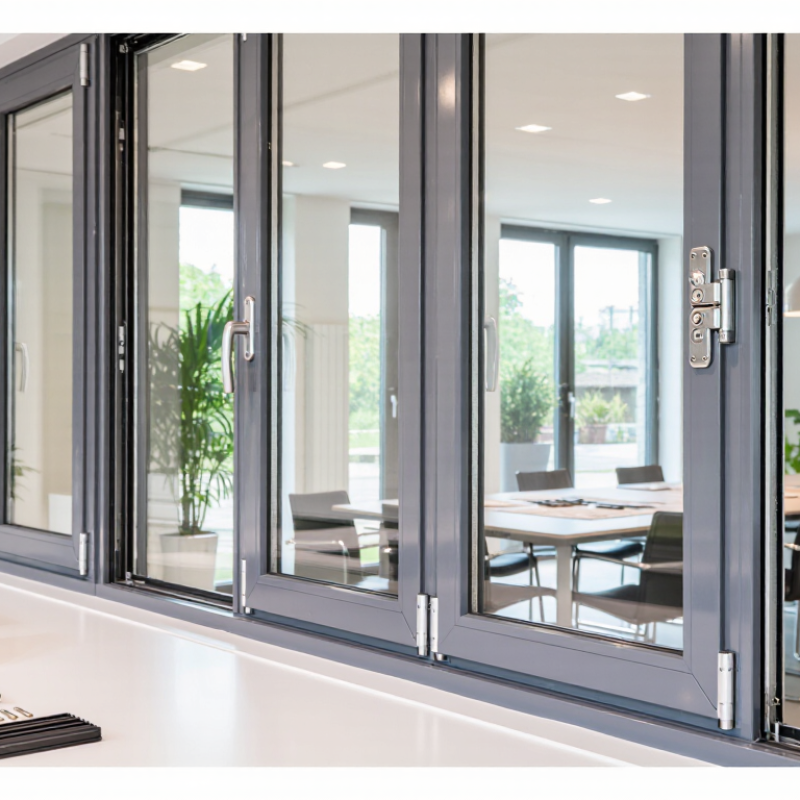
China Top 10 Architectural Window Hardware Suppliers?
Defining Architectural Window Hardware and Supplier Selection Criteria
Architectural window hardware includes handles, hinges, locks, stays, restrictors, and opening mechanisms. These components control security, ventilation, user comfort, and service life. A handle may look minor, yet it transfers force through the entire window system. Poor alignment can create friction, noise, and premature failure.
Supplier evaluation should begin with tested performance, not catalogue variety. Request cycle-test results, load ratings, corrosion data, and installation tolerances. EN 13126 provides performance requirements for window hardware, while ISO 9227 supports neutral salt-spray testing. These standards do not replace project judgement. They create a comparable baseline.
Energy performance also matters. The United Nations Environment Programme reported that buildings consume about 30% of global energy and produce roughly 26% of energy-related emissions. Hardware cannot solve envelope problems alone. However, reliable compression and adjustment help maintain seals and reduce air leakage. Ask suppliers for documented compatibility with the specified frame, glass weight, and opening size.
Look closely at production evidence. Factory quality plans, batch traceability, inspection records, and replacement-part availability reveal operational maturity. The International Organization for Standardization links quality management with consistent processes, not attractive claims. That distinction matters.
Price comparisons are often incomplete. Installation time, adjustment access, and future maintenance can change the real cost. A lower-priced mechanism may require more site labour. I would also question unusually perfect test results. Independent verification is stronger than a polished spreadsheet. Supplier selection remains partly technical and partly practical.
This chart presents a practical evaluation framework for comparing architectural window hardware suppliers. The criteria reflect common requirements in commercial and residential construction, including technical compliance, durability, system compatibility, customization, delivery capability, and after-sales support. The percentages are recommended reference weights rather than company or brand performance data.
China’s architectural window hardware market serves residential, commercial, and high-rise construction projects. The leading ten suppliers are usually assessed through product range, factory capacity, testing records, and export experience. Common products include hinges, handles, friction stays, locks, restrictors, and concealed mechanisms. Demand is shifting toward energy-efficient windows, slim profiles, corrosion resistance, and smoother operation. Custom finishes also matter, especially for coastal developments.
Tips: Request samples before approval. Check material grades, coating thickness, load performance, and cycle-test results. Ask for traceable inspection reports and installation guidance. A polished catalogue proves little. Site conditions often expose weak assumptions, such as poor drainage or incorrect screw selection.
Reliable sourcing requires more than comparing unit prices. Procurement teams should review dimensional tolerances, packaging quality, replacement policies, and technical response times. Suppliers with in-house tooling can often adjust components faster, but this does not guarantee consistent batches. Independent testing adds confidence, particularly for fire-rated, safety-critical, or large-panel applications. However, testing should match the actual window system, not only a similar sample. That difference is easy to miss. Architects and fabricators should also confirm compatibility with frame materials, glass weight, ventilation needs, and local project specifications. Some buyers still evaluate hardware too late, after profiles are fixed. This can create expensive redesigns and avoidable delays.
China’s top ten architectural window hardware suppliers represent different manufacturing strengths, not identical product ranges.
These profiles are practical starting points, not a permanent ranking. Factory capabilities can change quickly.
Tips:
Request physical samples before approval. Check load tests, salt-spray results, coating thickness, and installation drawings. Visit the production line when possible. Ask how rejected parts are recorded and corrected. A polished catalog is useful, but it cannot prove consistent quality. Confirm material grades independently, especially for coastal buildings. Also compare packaging, replacement support, and realistic lead times. I would not judge a supplier from one successful sample alone; repeated batches reveal more. Some factories may communicate well yet lack technical documentation. That gap should be treated seriously.
Comparing Chinese window hardware suppliers requires more than checking catalog size. Strong suppliers usually offer hinges, handles, locks, friction stays, restrictors, and concealed systems for different window profiles. Product range matters when one project combines aluminum, uPVC, and thermally broken frames. Ask for drawings, compatibility tables, and tested load data. A polished catalog is not proof of engineering depth.
Quality should be verified through practical evidence. Look for controlled material grades, coating specifications, batch records, and inspection reports. Relevant testing may include cycle testing, corrosion resistance, air pressure performance, and security loads. ISO 9001 can indicate process discipline, but its scope must be checked. It does not automatically confirm every product’s durability. Request samples from current production, not only showroom pieces. Small details matter, such as smooth handle movement and consistent screw alignment.
Manufacturing capacity also needs careful comparison. A capable factory may combine stamping, CNC machining, die casting, finishing, assembly, and automated inspection. Ask about monthly output, tooling ownership, backup equipment, and average lead times. Site audits can reveal whether production is internal or heavily outsourced. Capacity figures can be optimistic. That deserves scrutiny. Reliable suppliers should explain quality controls during peak orders and provide traceable corrective actions. In my experience, the best comparison includes three sample batches, not one. Even then, long-term coating performance remains difficult to predict without field exposure.
When comparing China’s top architectural window hardware suppliers, start with the window system, not a glossy catalog. Confirm opening size, sash weight, profile material, coastal exposure, and expected operating cycles. A supplier should recommend compatible hinges, handles, locks, restrictors, and fasteners. Ask for drawings and load data. Do not accept vague claims.
Request production samples before signing a large order. Inspect machining marks, plating consistency, screw alignment, gasket contact, and movement under load. Run repeated opening tests and, where relevant, corrosion and weather-resistance testing through qualified laboratories. Check whether the supplier controls critical processes, including die casting, surface treatment, assembly, and final inspection. Batch records matter. They help trace defects quickly.
A reliable Chinese supplier explains tolerances, lead times, packaging protection, replacement procedures, and quality responsibilities in writing. Verify certifications against the destination market, and confirm that test reports match the exact product configuration. An audit should include worker training, calibration records, incoming inspection, and randomly selected finished goods. Price remains important, but the cheapest quote may conceal weak coatings or inconsistent dimensions. That risk is expensive. Keep communication technical and direct. Even experienced buyers can overlook small details, such as left- and right-hand components or metric screw compatibility. A short pilot order exposes these problems earlier, although it may feel slower at the start.
| Rank | Anonymous Supplier Profile | Main Hardware Category | Common Materials | Typical Surface Finishes | Relevant Standards to Verify | Typical MOQ | Sample Lead Time | Typical Bulk Lead Time | Recommended Buyer Type |
|---|---|---|---|---|---|---|---|---|---|
| 1 | High-volume architectural hardware manufacturer | Multi-point locks, espagnolette systems and window handles | Zinc alloy, stainless steel, carbon steel and reinforced polyamide | Powder coating, anodizing, plating and electrophoresis | ISO 9001; EN 13126; EN 1670; applicable local building codes | 500–1,000 sets per model | 7–15 days | 30–60 days | Large residential and commercial projects |
| 2 | Precision die-casting and machining supplier | Casement handles, friction stays, hinges and corner drives | Aluminum, zinc alloy, stainless steel and brass | Anodized, brushed, polished, powder-coated and PVD finishes | ISO 9001; dimensional inspection; salt-spray test reports | 300–800 pieces per specification | 10–20 days | 35–65 days | OEM buyers requiring tight dimensional tolerances |
| 3 | Energy-efficient window hardware specialist | Tilt-and-turn fittings, compression locks and sealing-compatible hardware | Galvanized steel, stainless steel, aluminum and engineering polymers | Zinc plating, passivation, powder coating and protective lacquer | EN 13126; EN 12207 compatibility requirements; corrosion testing | 500–1,500 sets per configuration | 10–18 days | 35–55 days | Energy-efficient residential window manufacturers |
| 4 | Stainless-steel coastal and high-corrosion specialist | Marine-grade handles, hinges, restrictors and locks | 304 and 316 stainless steel, brass and corrosion-resistant polymers | Satin, mirror-polished, PVD and brushed finishes | EN 1670; ASTM B117 or equivalent salt-spray testing; ISO 9227 | 200–600 pieces per model | 12–20 days | 40–70 days | Hotels, coastal buildings and marine environments |
| 5 | Aluminum sliding-door hardware supplier | Rollers, lift handles, lock bodies, cylinders and track accessories | Aluminum, stainless steel, zinc alloy, nylon and POM | Anodized, powder-coated, plated and natural metal finishes | EN 13126; load and cycle testing; profile compatibility checks | 500–2,000 pieces per item | 7–14 days | 25–50 days | Sliding-door fabricators and system-window producers |
| 6 | Custom OEM and private-label hardware factory | Custom handles, covers, locks and project-specific assemblies | Zinc alloy, aluminum, stainless steel, brass and ABS | Custom color matching, powder coating, plating and laser marking | ISO 9001; approved drawings; material and finish inspection reports | 1,000–3,000 pieces per design | 15–30 days | 45–90 days | Distributors and buyers needing exclusive designs |
| 7 | Standardized replacement-parts supplier | Window handles, stays, hinges, rollers and replacement locks | Zinc alloy, steel, aluminum, nylon and rubber components | White, black, silver, bronze and standard plated finishes | Dimensional compatibility; cycle testing; batch inspection records | 100–500 pieces per SKU | 5–12 days | 20–40 days | Hardware wholesalers and maintenance suppliers |
| 8 | Fire, smoke and emergency-exit hardware supplier | Exit devices, emergency window fittings and controlled-opening hardware | Stainless steel, galvanized steel, aluminum and fire-rated polymers | Powder coating, zinc plating, stainless satin and high-temperature coatings | Project-specific fire, smoke, escape and emergency-exit certifications | 100–500 sets per approved model | 15–25 days | 45–75 days | Public buildings and regulated construction projects |
| 9 | Smart and electronically integrated window hardware supplier | Motorized actuators, sensors, electronic locks and access components | Aluminum, stainless steel, engineering plastics and electronic components | Anodized, powder-coated, plated and molded finishes | Electrical safety, EMC, radio and cybersecurity requirements where applicable | 100–500 units per configuration | 20–35 days | 50–90 days | Smart buildings and automated ventilation projects |
| 10 | Small-batch project and renovation supplier | Mixed window accessories, repair kits and made-to-order fittings | Steel, aluminum, zinc alloy, stainless steel and plastic | Standard powder coating, plating, anodizing and painted finishes | Material certificates; dimensional reports; project-specific approval documents | 50–300 pieces per item | 7–18 days | 25–55 days | Renovation contractors and low-volume importers |
Selection note: The rankings represent supplier profiles for comparison rather than named companies. MOQ, lead time, certifications and testing documents are typical procurement benchmarks and should be confirmed through drawings, samples, factory audits and current quotations before purchase.
It includes handles, hinges, locks, stays, restrictors, and opening mechanisms. These parts control security, ventilation, comfort, and window service life.
Poor alignment creates friction, noise, and premature failure. A small handle transfers force through the complete window system. Tiny errors matter.
Request cycle-test results, load ratings, corrosion data, installation tolerances, and technical drawings. Ask for reports matching the exact product configuration.
Check the frame material, sash weight, glass size, opening dimensions, and operating cycles. Confirm screw types and left- or right-hand components.
Samples reveal machining marks, coating consistency, screw alignment, and gasket contact. Repeated opening tests can expose weak movement or poor adjustment.
Review batch traceability, inspection records, calibration logs, worker training, and replacement-part procedures. A polished catalogue proves little.
Reliable compression helps seals remain effective and reduces air leakage. Hardware cannot repair poor glazing, weak frames, or envelope design.
Include installation time, adjustment access, packaging, maintenance, and replacement costs. The cheapest mechanism may demand more site labour. That risk is easy to miss.
Inspect incoming materials, critical manufacturing processes, surface treatment, assembly, and finished goods. Random checks are useful. They are not perfect.
A small order can expose dimensional errors, packaging damage, inconsistent batches, and communication gaps. It may feel slower initially, but it reduces avoidable surprises.
This article provides a practical guide to China’s Architectural Window Hardware industry, explaining the main product categories, including hinges, handles, locks, friction stays, rollers, and concealed mechanisms. It outlines the key criteria for evaluating suppliers, such as material quality, corrosion resistance, precision manufacturing, product compatibility, testing procedures, customization capabilities, production capacity, and export experience. It also presents an objective overview of the Chinese market and profiles ten representative supplier types without focusing on brand promotion.
The comparison section examines differences in product range, quality management, technical standards, manufacturing resources, delivery reliability, and after-sales support. Finally, the article offers a step-by-step approach to selecting the right supplier, encouraging buyers to assess project requirements, request samples, verify certifications, review quality-control systems, confirm lead times, and communicate clearly about pricing and customization. This information is designed to help architects, fabricators, contractors, and distributors make informed sourcing decisions.