Choosing the best Architectural Aluminum Systems from China requires more than comparing prices or catalogue photos. Performance depends on alloy quality, thermal breaks, drainage design, surface treatment, fabrication accuracy, and installation control. The U.S. Geological Survey’s Mineral Commodity Summaries 2024 reported approximately 41 million metric tons of primary aluminum production in China during 2023. The International Aluminium Institute also identifies China as the world’s largest aluminum-producing region. This industrial scale creates broad supplier choices. It does not guarantee consistent performance.
A reliable evaluation should connect factory evidence with recognized standards. This guide considers systems aligned with China’s GB/T 5237 aluminum extrusion requirements and GB 55015-2021, the national building energy-efficiency standard. Where relevant, it also checks compatibility with EN 14351-1, ASTM testing methods, and project-specific performance requirements. Look for independently verified results covering air permeability, water tightness, wind resistance, thermal transmittance, acoustic insulation, and coating adhesion. A supplier’s catalogue is only a starting point.
Real experience matters. Examine extrusion samples under direct light, inspect corner joints, and check whether gaskets remain continuous around the frame. Ask for batch records, coating certificates, thermal-break specifications, and completed project references. Strong manufacturers can explain tolerances, tooling control, lead times, and replacement procedures without vague promises. The “best” system is rarely universal. A coastal curtain wall, a high-rise window, and a residential sliding door need different solutions. No ranking is perfect. Buyers should still challenge impressive claims, because elegant profiles can conceal weak testing, poor installation, or inadequate after-sales support.
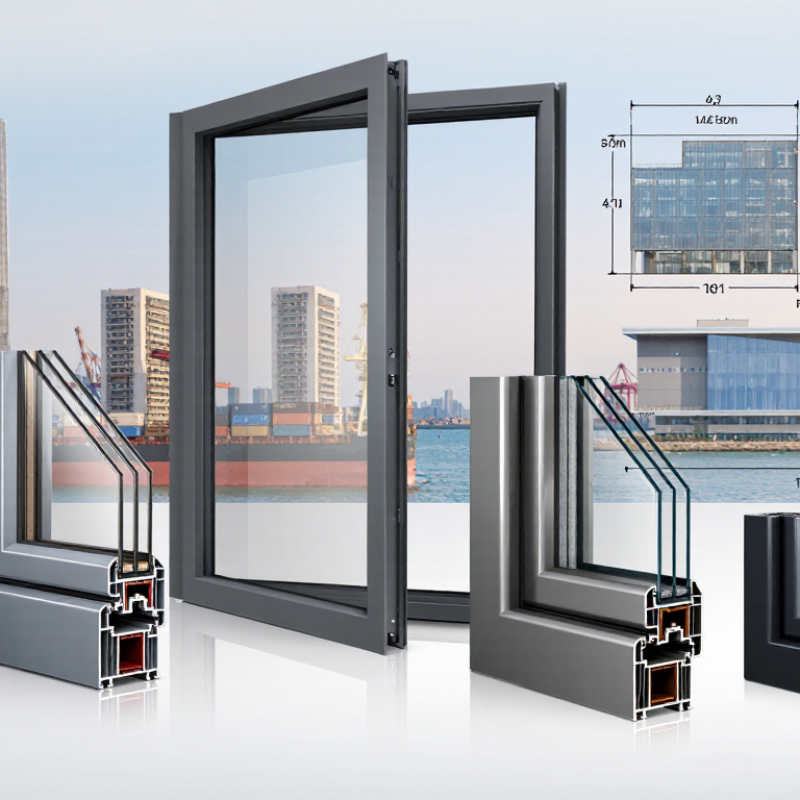
A high-quality architectural aluminum system begins with verified performance, not a polished sample. The International Energy Agency reports that buildings consume about 30% of global final energy and produce roughly 26% of energy-related emissions. Therefore, thermal performance deserves serious attention. A reliable system should include continuous thermal breaks, controlled air leakage, tested water resistance, and suitable glass compatibility. On site, a small gap around a frame can defeat an excellent specification.
Material efficiency also matters. The International Aluminium Institute states that recycled aluminum requires about 5% of the energy used for primary aluminum production. However, recycled content alone does not prove quality. Buyers should request clear declarations, traceable alloy grades, coating specifications, and verified environmental data. Environmental Product Declarations can improve comparison, although they are not magic certificates.
Testing should reflect real building conditions. Look for documented results under recognized standards for air, water, wind, thermal transmission, and hardware durability. Fabrication quality is equally important. Poor corner crimping, uneven gaskets, or careless drainage can cause failures before installation is complete. I have seen attractive frames perform badly because the workshop ignored tolerances. That is an uncomfortable lesson.
A dependable Chinese architectural aluminum system should offer engineering calculations, shop drawings, inspection records, and responsive technical support. It should also admit its limits. No system suits every climate, span, or façade geometry. Independent testing is worth the extra time.
The best Chinese architectural aluminum system depends on the building, climate, and installation method. High-rise offices often suit unitized curtain walls. Factory-assembled panels can shorten site work and improve quality control. They also require accurate structural coordination before production. For low-rise offices and apartment buildings, thermally broken windows and doors offer practical insulation. Choose systems with multi-point locks, reliable gaskets, and accessible drainage paths. Small details matter.
Residential towers need strong acoustic and thermal performance. Sliding doors may look attractive, but their air sealing can be weaker than hinged designs. Schools and hospitals usually benefit from durable framed windows, controlled ventilation, and simple hardware replacement. Public buildings need tested fire-stopping at every floor line. Do not rely only on catalog figures. Ask for laboratory reports, material certificates, coating data, and project-specific wind calculations. Independent verification remains valuable.
Coastal buildings require corrosion-resistant finishes and careful fastener selection. In hot regions, external louvers can reduce solar heat before it reaches the glass. Large retail spaces may need wide-span curtain walls, but heavier mullions can affect sightlines and cost. That trade-off is easy to underestimate. Factory quality may be strong, yet installation errors can still cause leakage. Mock-up testing, site inspections, and documented tolerance checks should guide acceptance. No system is perfect. The right choice is the one matched to the building’s risks, maintenance capacity, and local code requirements.
When comparing architectural aluminum systems from China, start with the profile design, not the catalog image. Experienced project teams check wall thickness, dimensional tolerance, corner joints, drainage paths, and hardware compatibility.
A well-designed profile should feel rigid without becoming unnecessarily heavy. I have seen attractive sections fail because their drainage holes were too small for driving rain. That detail matters.
Finishes also deserve practical testing. Powder coating offers broad color choices and a consistent surface for residential and commercial façades. Anodizing preserves a metallic appearance and can suit projects requiring a natural aluminum texture.
However, color variation may appear between production batches. Request sample panels, coating thickness records, and adhesion results before approval.
Coastal projects need stronger corrosion protection.
A beautiful finish is not enough.
Thermal breaks usually use reinforced polyamide strips between interior and exterior aluminum chambers. Wider strips can reduce heat transfer, but frame geometry, glazing, gaskets, and installation quality also control performance.
Ask for calculated U-values and independent test evidence, rather than relying on a general claim.
Site installation often exposes weaknesses. Poorly aligned seals can create drafts around otherwise capable frames. No system is perfect.
A careful comparison should include thermal movement, condensation risk, maintenance access, and replacement procedures. Factory audits, documented quality checks, and clear communication reduce uncertainty, although they cannot replace testing on the actual project configuration.
Chinese architectural aluminum systems are not governed by one universal rule. The core reference is GB/T 5237, which covers alloy grades, dimensions, surface treatment, and mechanical properties. For curtain walls, engineers commonly consult JGJ 102 and JGJ 133. These standards address design, fabrication, installation, and acceptance. GB/T 21086 also helps classify curtain wall performance. Wind calculations usually follow GB 50009, while fire-related details must meet GB 50016 and project requirements.
Export projects may specify EN 13830, ASTM E330, ASTM E331, or AAMA requirements, depending on the destination and contract. EN 13830 evaluates air permeability, watertightness, wind resistance, and other curtain wall properties. ASTM E330 tests structural performance under uniform static air pressure. ASTM E331 checks water penetration. These standards are not interchangeable automatically. Not interchangeable. Test reports should identify specimen size, joints, pressure, duration, and failure criteria. Small details matter.
In practical inspections, buyers should compare certified drawings with the actual extrusions delivered. Calibrated tools can check wall thickness and coating depth. Inspectors should also examine corner joints, fasteners, drainage paths, and thermal breaks. Laboratory tests must match the proposed system, not a simplified sample. A certificate alone is insufficient. Some project files look complete but omit installation tolerances or sealant compatibility. That gap deserves review. The most reliable assessment compares Chinese mandatory standards with local codes and contract-specific testing. Even strong paperwork cannot replace careful site verification.
| Architectural System | Typical Application | Common Aluminum Alloys and Tempers | Key Performance Criteria | Principal Chinese Standards | Relevant International References | How Performance Is Verified | Best-Suited Project Conditions |
|---|---|---|---|---|---|---|---|
| Thermally Broken Curtain Wall | High-rise offices, commercial buildings, hotels, and large glazed façades | 6063-T5 or 6063-T6 extruded profiles; 6061 may be used for higher-strength components | Air permeability, watertightness, wind-load resistance, thermal transmittance, condensation control, acoustic performance, and structural movement | GB/T 21086; JGJ 102; GB/T 5237.1–5237.6; GB/T 7106; GB/T 8484; GB 55015 | EN 13830; ASTM E283; ASTM E331; ASTM E330/E330M; ISO 10077-2 | Project-specific laboratory testing, structural calculations, thermal simulation, and on-site water or air testing where required | Buildings requiring improved energy efficiency and reliable façade performance across different climates |
| Unitized Curtain Wall | High-rise buildings with repetitive floor-to-floor façade modules | 6063-T5/T6 for frames; 6061-T6 or equivalent higher-strength profiles for selected structural parts | Module dimensional accuracy, inter-story movement, wind resistance, drainage, air and water control, installation tolerance, and fire-stopping continuity | GB/T 21086; JGJ 102; GB/T 5237; GB 55037; GB 55016 | EN 13830; ASTM E330/E330M; ASTM E283; ASTM E331; AAMA 501 series | Mock-up testing, site quality inspection, movement testing, fastener and anchor verification, and inspection of perimeter fire barriers | Fast-track construction, tall buildings, and projects where factory assembly and installation speed are important |
| Stick-Built Curtain Wall | Low- and mid-rise commercial buildings, schools, and façades with varied geometry | 6063-T5/T6 extruded mullions and transoms; alloy selection depends on span and calculated loads | Wind-load capacity, glazing support, drainage, air and water resistance, thermal bridging, and field installation quality | GB/T 21086; JGJ 102; GB/T 5237; GB/T 7106; GB/T 8484 | EN 13830; ASTM E283; ASTM E331; ASTM E330/E330M | Engineering calculations, representative mock-up tests, profile inspection, and field water or air testing | Projects with irregular elevations, moderate building height, or limited factory-module repetition |
| Thermal-Break Aluminum Windows | Residential, hospitality, office, and institutional window openings | 6063-T5/T6 profiles with polyamide thermal barriers; hardware and glazing are selected separately | Air permeability, watertightness, wind-load resistance, thermal insulation, sound reduction, operating durability, and resistance to driving rain | GB/T 8478; GB/T 5237; GB/T 7106; GB/T 8484; GB/T 9158 | EN 14351-1; EN 12207; EN 12208; EN 12210; ASTM E283; ASTM E547 | Window specimen testing, thermal calculations or hot-box testing, hardware-cycle testing, and site installation inspection | Energy-conscious buildings, exposed façades, and projects requiring better indoor comfort than non-thermally broken windows |
| Non-Thermal-Break Aluminum Windows | Interior partitions, mild-climate applications, garages, and areas with limited thermal requirements | 6063-T5/T6 extruded profiles are commonly used | Weather resistance, wind resistance, dimensional stability, corrosion resistance, and safe operation; thermal performance is comparatively limited | GB/T 8478; GB/T 5237; GB/T 7106 | EN 14351-1; EN 12207; EN 12208; EN 12210 | Air, water, and wind testing; dimensional inspection; coating or anodizing inspection; hardware operation testing | Interior or low-energy-demand locations where condensation and thermal bridging are not critical |
| Aluminum Sliding Doors | Balconies, terraces, residential openings, retail entrances, and indoor-outdoor transitions | 6063-T5/T6 profiles; reinforced sections may use higher-strength alloys where required | Track load capacity, anti-derailment protection, air and water resistance, wind resistance, operating force, impact safety, and corrosion resistance | GB/T 8478; GB/T 5237; GB/T 7106; GB/T 9158 | EN 14351-1; EN 12207; EN 12208; EN 12210; EN 13126 series | Repeated-cycle testing, hardware and roller inspection, air-water-wind tests, and safety-glazing verification | Wide openings where horizontal operation is preferred and adequate drainage can be provided |
| Aluminum Entrance and Storefront System | Retail fronts, office entrances, public buildings, and interior commercial partitions | 6063-T5/T6; reinforced door stiles may use stronger sections depending on size and hardware loads | Door-cycle durability, deflection, security, accessibility, water control, impact resistance, and glazing retention | GB/T 8478; GB/T 5237; GB 55037; applicable project door and safety-glazing requirements | EN 14351-1; EN 1627; ASTM F842; AAMA 501 series | Cycle testing, structural calculations, hardware testing, water penetration testing, and inspection of safety glass and fixings | High-traffic entrances and glazed façades where appearance, accessibility, and maintainability are important |
| Aluminum Louvers and Solar-Shading System | Sun-control façades, ventilation screens, parking structures, and mechanical-equipment enclosures | 6063-T5/T6 for blades and frames; alloy and wall thickness depend on span and wind exposure | Wind resistance, blade deflection, solar-control effectiveness, drainage, corrosion resistance, and attachment durability | GB/T 5237; GB/T 21086 where integrated with a curtain wall; GB 50009; JGJ 133 where applicable | EN 13659; EN 1991-1-4; ASTM E330/E330M; ISO 52022 series | Wind-load calculations, anchorage inspection, deflection checks, coating or anodizing verification, and project-specific mock-up testing | Hot climates, façades with high solar exposure, and designs requiring passive solar control or visual screening |
| Aluminum Cladding and Rainscreen Support System | Ventilated façades, feature walls, parapets, soffits, and lightweight exterior cladding | 6063-T5/T6 support profiles; sheet or panel alloy depends on the cladding product specification | Wind resistance, panel retention, drainage and ventilation, thermal movement, corrosion compatibility, fire behavior, and maintainability | GB/T 5237; GB/T 21086 where part of a curtain wall; GB 55037; GB 50016; GB 50009 | EN 14782; EN 1991-1-4; NFPA 285 or local equivalent where required; ASTM E330/E330M | Substrate and anchor inspection, wind-load calculations, pull-out testing, fire-performance assessment, and façade mock-up review | Ventilated façades and lightweight exterior envelopes requiring drainage and replaceable cladding components |
| Aluminum Balustrade and Guardrail System | Balconies, stairs, ramps, terraces, galleries, and public circulation areas | 6063-T5/T6; 6061-T6 may be selected for posts, brackets, or heavily loaded components | Horizontal and line loads, concentrated loads, glass retention, deflection, corrosion resistance, and fall protection | GB/T 5237; GB 55037; GB 50009; applicable building safety and guardrail provisions | EN 1991-1-1; EN 1991-1-4; ASTM E985; ASTM E894 | Structural calculations, post and anchor pull-out tests, load testing, glass safety verification, and dimensional inspection | Locations where occupant safety and reliable anchorage are more important than façade weather tightness |
| Aluminum Roof Glazing and Skylight System | Atriums, canopies, conservatories, transit halls, and daylighting roofs | 6063-T5/T6; higher-strength profiles may be required for long spans or concentrated loads | Wind uplift, snow or maintenance loads, water drainage, thermal movement, solar gain, condensation, and glass safety | GB/T 5237; GB/T 21086 where applicable; GB 50009; GB 50016; GB 55037 | EN 13830; EN 1991-1-3; EN 1991-1-4; ASTM E330/E330M; ASTM E331 | Structural calculations, water-penetration testing, glass and sealant review, drainage inspection, and project-specific mock-up testing | Daylighting applications exposed to wind, rain, snow, and significant solar radiation |
| Selection principle: The best Chinese architectural aluminum system is determined by verified project performance, alloy and temper suitability, profile geometry, thermal-break design, coating quality, glazing compatibility, drainage, fire safety, installation control, and compliance with the governing code. Standard references should always be checked against the latest adopted edition and the requirements of the project location. | |||||||
The best architectural aluminum system from China is not always the cheapest profile. Buyers should compare tested performance, fabrication quality, and delivered cost. The 2023 UNEP Global Status Report states that buildings consume about 32% of global energy and produce roughly 34% of global carbon emissions. Thermal performance deserves serious attention.
Request independent test reports for U-values, air leakage, water penetration, and wind resistance. European standards EN 12207, EN 12208, and EN 12210 provide useful comparison points. Check whether the tested configuration matches your project, including glass, gaskets, drainage, and hardware. A strong factory should provide alloy certificates, coating records, dimensional tolerances, and sample inspection reports. Ask for production photos. Better still, arrange a pre-shipment inspection.
Cost evaluation must include tooling, packaging, inland transport, ocean freight, duties, installation accessories, and replacement parts. A factory quote can look attractive and still become expensive after revisions. Compare thermal-break depth, wall thickness, finish durability, and minimum order quantities. Custom colors, curved profiles, hidden drainage, and oversized panels may require new tooling. Confirm ownership and reuse terms for those molds. Customization is valuable, but uncontrolled changes create delays.
I would not rely on a polished showroom sample alone. Test a full corner assembly. Check miters, locks, seals, and drainage with your own inspection checklist. The World Bank’s logistics performance research also shows that cross-border reliability affects delivery risk, not just price. Leave time for corrective work. Mistakes happen, even with experienced suppliers.
Verified performance matters more than a polished sample. It should control heat transfer, air leakage, water entry, and glass compatibility. Continuous thermal breaks are important. A small frame gap can undermine excellent specifications. No system fits everything.
Poor installation can create drafts, leaks, and condensation. Inspectors should check frame alignment, gasket placement, sealant joints, and drainage paths. Even strong laboratory results may fail on site. That is an uncomfortable lesson.
Recycled aluminum can require far less production energy than primary aluminum. However, recycled content alone does not prove quality. Request alloy grades, traceability documents, coating details, and environmental declarations. These documents help comparison, but they are not magic certificates.
Check wall thickness, dimensional tolerance, corner joints, drainage openings, and hardware compatibility. A rigid profile should not become unnecessarily heavy. Small drainage holes may struggle during driving rain. That detail matters.
Powder coating provides many colors and a consistent surface. Anodizing preserves a more natural metallic appearance. Color differences may appear between production batches. Request sample panels, coating thickness records, and adhesion results. Coastal projects need stronger corrosion protection.
Thermal breaks commonly use reinforced polyamide strips between aluminum chambers. Wider strips may reduce heat transfer, but they are not the only factor. Ask for calculated U-values and independent test evidence. Review glazing, gaskets, frame geometry, and installation details together. Claims need evidence.
Chinese projects may reference standards covering alloy quality, curtain walls, wind loads, fire safety, and acceptance. Export projects may require destination-specific air, water, wind, and structural tests. These requirements are not automatically interchangeable. Test reports should state specimen size, pressure, duration, joints, and failure criteria. A certificate alone is insufficient.
Compare certified drawings with the delivered extrusions. Measure wall thickness and coating depth with calibrated tools. Inspect corner joints, fasteners, thermal breaks, drainage, and sealant compatibility. Confirm that laboratory tests match the actual project configuration. Paperwork can look complete. Review the missing details too.
This guide explains how to identify high-quality Architectural Aluminum Systems for modern construction projects. It examines the essential qualities of reliable systems, including structural strength, dimensional accuracy, corrosion resistance, weather protection, energy efficiency, and long-term durability. It also compares how different system types can serve residential buildings, commercial properties, institutional facilities, and large-scale developments, helping buyers select solutions that match a project’s design, climate, and performance requirements.
The article further evaluates aluminum profile designs, surface finishes, glazing compatibility, and thermal-break technologies, with attention to insulation, condensation control, and appearance. It outlines the importance of recognized testing methods and applicable standards for air tightness, water resistance, wind pressure, fire performance, and thermal behavior. Finally, it provides practical guidance for assessing suppliers through production capacity, quality control, technical support, customization options, lead times, documentation, and total project cost rather than price alone.